
Cannabis flower legal status: what consumers need in 2026
Written by Trevor

TL;DR:
- Federal law prohibits cannabis flower with over 0.3% THC, but many states have varying laws.
- The hemp loophole closing in November 2026 will make most high-THCA hemp products federally illegal.
- Consumers should check product COAs for total THC and stay informed on state-specific regulations to remain compliant.
The legal ground beneath cannabis flower is shifting faster than most consumers realize. What you legally purchased last month may be federally prohibited by November 2026, and the rules vary so dramatically between states that buying the same product in two neighboring states can mean the difference between a legal transaction and a criminal offense. Federal rescheduling debates, a closing hemp loophole, and new total THC caps are colliding at once. If you care about making safe, informed choices about hemp-derived CBD, THCA flower, or any cannabis product, understanding these layers right now is not optional.
Table of Contents
- Federal vs. state cannabis flower laws: Where things stand in 2026
- The hemp loophole and THCA flower: Why it’s closing in late 2026
- How do CBD and hemp-derived THC products fit in?
- How state differences and enforcement will shape your choices
- Why the crackdown matters more than ever: What most guides leave out
- Ready to stay compliant and informed?
- Frequently asked questions
Key Takeaways
| Point | Details |
|---|---|
| Federal law tightening | Most intoxicating hemp and THCA flower will be federally illegal after November 2026. |
| State laws vary dramatically | Some states offer full adult-use access, others total prohibition, affecting what you can buy in practice. |
| CBD and THC product caps | New rules limit hemp-derived products to 0.4mg total THC per container, removing most current items. |
| Know your local rules | Always check both federal and state cannabis regulations before purchasing any product. |
Federal vs. state cannabis flower laws: Where things stand in 2026
Now that we’ve established why the legal landscape is confusing, let’s break down the two key legal layers affecting cannabis flower access.
At the federal level, cannabis flower remains illegal if it contains more than 0.3% total THC. This has been the rule since the Controlled Substances Act classified marijuana as a Schedule I drug, meaning no accepted medical use and high abuse potential. A rescheduling debate is ongoing, with proposals to move marijuana to Schedule III, which would acknowledge medical value but stop well short of full legalization. Nothing has changed yet, and federal prohibition still applies everywhere in the country regardless of what your state says.
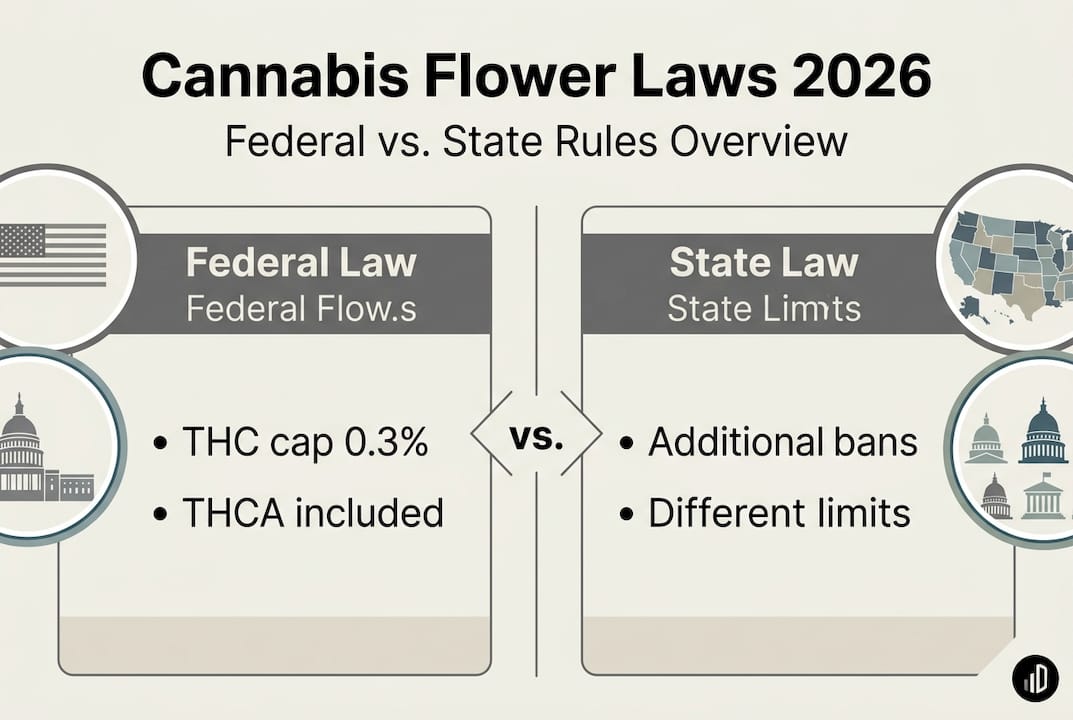
State law, however, tells a very different story. Currently, 24 states plus Washington D.C. allow recreational marijuana, while others permit only medical use, low-THC products, or nothing at all. This creates a patchwork that confuses even experienced consumers.
Here is a quick breakdown of how states currently approach cannabis flower:
- Full recreational access: 24 states plus D.C., with possession limits typically ranging from 1 to 2.5 ounces
- Medical only: Several states allow cannabis flower only with a physician recommendation
- Low-THC only: Some states permit CBD or low-THC products but not intoxicating flower
- Full prohibition: Four states still treat any cannabis possession as a criminal offense
“The federal-state gap is not just a technicality. It determines whether you can legally possess, purchase, or travel with cannabis flower depending entirely on geography.”
For consumers who rely on hemp legality background to guide purchases, the state layer adds another filter on top of federal rules. You also need to understand your state CBD laws because even hemp-derived products face state-specific restrictions that go beyond federal guidelines. The tension between federal and state law creates real risk, especially if you live in or travel through a state with stricter rules.
The hemp loophole and THCA flower: Why it’s closing in late 2026
With state and federal law differing, the hemp rule became a workaround for many consumers. Let’s dive into how this is changing.
The 2018 Farm Bill defined hemp as cannabis containing 0.3% or less delta-9 THC by dry weight. This created a massive market opportunity. THCA flower, which is raw cannabis that converts to THC only when heated, technically passed the delta-9 test while being functionally identical to marijuana once smoked. That legal gap fueled a $30 billion hemp market packed with intoxicating products.
That window is closing. As of November 2026, total THC including THCA after heating will be capped at 0.3%, meaning most high-THCA hemp flower becomes federally illegal marijuana overnight. The chemistry has not changed. The law has.
| Product type | Current status | Status after November 2026 |
|---|---|---|
| High-THCA hemp flower | Legal if delta-9 <0.3% | Federally illegal |
| Low-THCA hemp flower | Legal | Likely still compliant |
| CBD flower (no THC) | Legal | Legal |
| Delta-9 THC edibles | Legal under 0.3% | Depends on total THC cap |
THCA flower is chemically identical to marijuana flower in effect once heat is applied, and federal enforcement will now target total THC rather than just delta-9. This matters enormously for anyone who has been buying THCA products assuming they were in a legal gray area. That gray area is being erased.
“Enforcement may not be uniform on day one, but the legal exposure is real. Brands, retailers, and consumers all carry risk after November 2026.”
Pro Tip: Before buying any hemp flower product, check the certificate of analysis (COA) for total THC, not just delta-9 THC. If total THC exceeds 0.3%, the product will be federally non-compliant after the deadline.
For a deeper look at how THCA flower is classified and why the distinction matters, or to brush up on THCA and CBD basics, the science behind these compounds is worth understanding before you shop.
How do CBD and hemp-derived THC products fit in?
Beyond flower itself, these new rules reshape the landscape for other popular hemp-derived products. Here’s what to look out for.
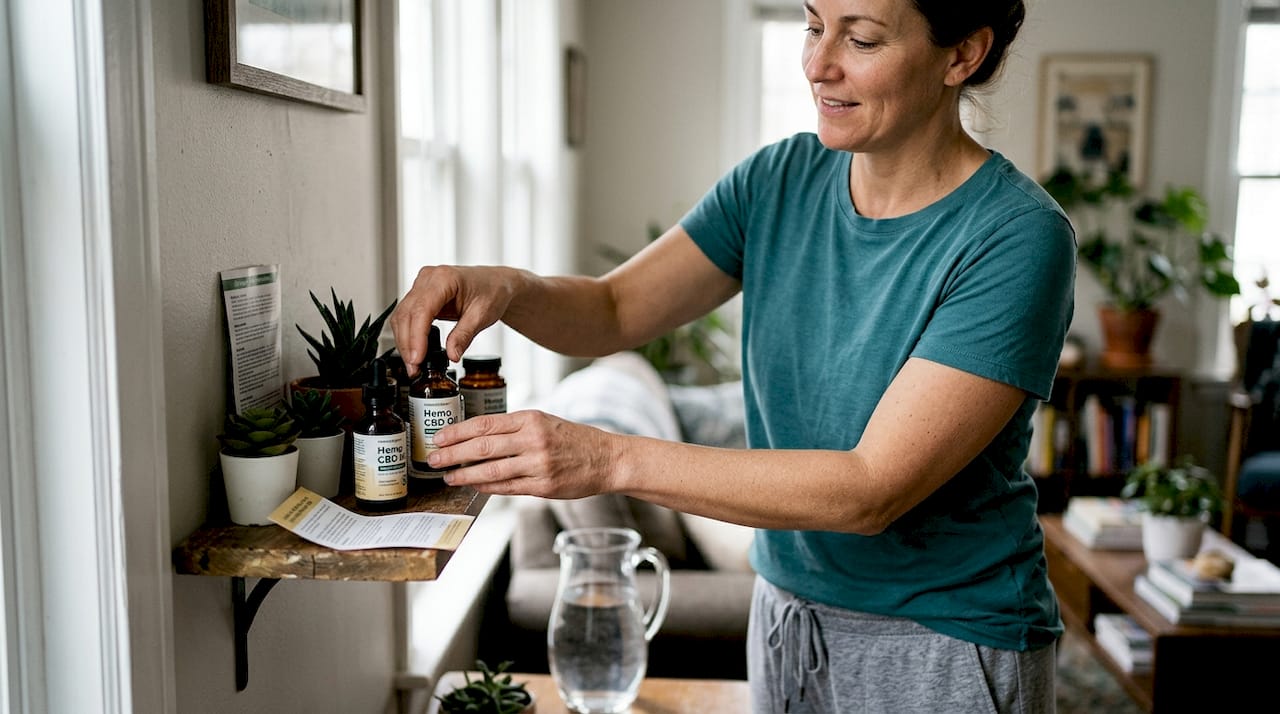
CBD from compliant hemp remains legal as long as the finished product stays under the new federal THC cap. But here is where it gets complicated for everyday shoppers. The new federal law sets a 0.4mg total THC cap per container for finished hemp products. That is an extremely small amount, and it effectively bans the majority of full-spectrum wellness products currently on shelves.
Full-spectrum CBD products that contain even trace amounts of total THC above 0.4mg per container will be non-compliant. Most tinctures, gummies, and capsules marketed as full-spectrum today will not survive that threshold. Industry analysts expect more than 90% of current hemp-derived products to be pulled from shelves or reformulated before enforcement begins.
Here is what consumers should watch for right now:
- Read COAs carefully: Look for total THC, not just CBD content or delta-9 THC alone
- Check serving size vs. container size: The 0.4mg cap applies per container, not per serving
- Favor broad-spectrum or isolate products: These are more likely to remain compliant
- Watch brand announcements: Reputable brands will publish compliance statements before the deadline
- Avoid unlabeled or unverified products: The risk of buying non-compliant products from unknown sellers rises sharply
Pro Tip: If a brand cannot provide a current COA showing total THC per container, that is a red flag. Trustworthy brands update their lab results regularly and make them easy to find.
For guidance on hemp flower state rules and a breakdown of latest hemp-derived cannabinoid rules, staying current on what is and is not compliant in your state is the smartest move you can make right now.
How state differences and enforcement will shape your choices
With new rules imminent, understanding how your state adapts is crucial. Here’s what to expect depending on where you live.
Federal law sets the floor, but states build the walls. Some states have already moved to ban intoxicating hemp products outright, ahead of the federal deadline. Others are waiting to see how enforcement plays out. The result is a transition period where your options depend heavily on your zip code.
Federal-state tension persists, and as the hemp loophole closes, many consumers will naturally shift toward state-licensed dispensaries as their primary source for cannabis products. This is especially true in states with mature recreational markets where regulated products are already widely available and tested.
| State category | Current hemp access | Post-November 2026 outlook |
|---|---|---|
| Recreational legal | Broad hemp and cannabis access | Dispensaries absorb hemp demand |
| Medical only | Limited hemp, medical cannabis | Shift to medical dispensaries |
| Low-THC only | Restricted hemp products | Very limited legal options |
| Fully prohibited | Minimal legal access | Highest legal risk for consumers |
State-legal cannabis operators have largely supported the hemp crackdown because unregulated hemp products undercut their licensed businesses. Expect dispensaries to expand product lines to capture former hemp customers.
Here is a practical numbered guide for navigating the transition:
- Find out your state’s current stance on intoxicating hemp and cannabis flower
- Identify whether your state has a licensed dispensary system you can access
- Review any hemp products you currently use for total THC compliance
- Follow brand communications and look for reformulated products
- If you live in a prohibited state, consult legal guidance before purchasing anything
Keep up with recent hemp legal updates, check what is happening with California hemp changes specifically, and understand federal THCA changes so you are not caught off guard when enforcement ramps up.
Why the crackdown matters more than ever: What most guides leave out
Most legal guides frame the November 2026 changes as a compliance problem for brands. That framing misses the bigger picture for you as a consumer.
What is actually happening is a forced restructuring of the American cannabis market. The hemp loophole allowed millions of people to access cannabis-like products legally, often in states where marijuana remained prohibited. That access is disappearing. For some consumers, this means turning to state-licensed dispensaries for the first time. For others in fully prohibited states, it means losing access entirely.
What most guides also underestimate is the enforcement confusion that will follow the November deadline. Federal agencies have limited resources, and not every non-compliant product will disappear immediately. But buying a product that is technically illegal is a different risk calculation than buying something in a clear gray area. The gray area is gone.
The real consumer skill right now is not knowing every law by heart. It is knowing how to evaluate a brand. Does the company publish current COAs? Do they source from verified growers? Do they update their guide to safe cannabinoid use as laws change? Those questions separate trustworthy brands from risky ones, and that distinction will matter more in the next 12 months than it ever has before.
Ready to stay compliant and informed?
If you want to make safe, informed choices in this fast-changing market, here’s your next step.
Navigating this much legal change on your own is a real challenge, especially when product labels do not always tell the full story. California Blendz is built for exactly this moment. We publish ongoing legal updates, share third-party lab results for every product we carry, and source exclusively from California’s Emerald Triangle, where organic growing standards and transparent practices are the baseline.
Our CBD legality guide is updated regularly to reflect the latest federal and state changes, so you always know what is compliant before you buy. Whether you are new to hemp-derived wellness or a longtime cannabis enthusiast adjusting to the new rules, we give you the information and the products to make confident, legal choices.
Frequently asked questions
Is cannabis flower federally legal in the U.S. in 2026?
No, cannabis flower with over 0.3% THC remains federally illegal, though a rescheduling to Schedule III is under debate, which would change its classification without making it fully legal.
Can I still buy THCA hemp flower legally after November 2026?
Most THCA hemp flower will be federally illegal after November 2026 because the total THC cap includes THCA converted after heating, pushing most products over the 0.3% limit.
Are CBD gummies and oils legal under the new rules?
Only if the product contains less than 0.4mg total THC per container and is derived from federally compliant hemp, which eliminates most current full-spectrum products.
What happens if I buy hemp-derived THC in a state where cannabis is illegal?
You risk violating both state and federal law. Four states fully prohibit cannabis in any form, and possession can still result in criminal penalties even for products previously sold as legal hemp.


