
CBD legal states 2025: Complete U.S. consumer guide
Written by Trevor

Navigating CBD legality across the United States remains surprisingly complex in 2025 despite federal changes. You face conflicting state laws, varying THC limits, and shifting regulations that can make purchasing CBD products confusing and risky. This guide cuts through the uncertainty by clarifying exactly where CBD stands legally in each state, what restrictions apply, and how you can confidently buy and use CBD products without legal concerns.
Table of Contents
- Federal Legal Framework For CBD In 2025
- State-By-State Variations In CBD Legality
- Nuances And Challenges In Navigating CBD Legality
- How To Safely Buy And Use CBD Products In 2025
- Explore Legal CBD Products With Confidence
- Frequently Asked Questions
Key takeaways
| Point | Details |
|---|---|
| Federal legality established | Hemp-derived CBD with under 0.3% THC is federally legal under the 2018 Farm Bill, but state laws create significant variations. |
| State regulations vary widely | 25 states fully permit CBD while 19 impose medical requirements or conditional restrictions on products and usage. |
| THC content matters critically | Product legality hinges on maintaining THC levels below 0.3% and proper hemp origin documentation. |
| Local bans still exist | Cities and counties may ban CBD sales despite state-level legalization, requiring local verification before purchase. |
| Interstate transport remains risky | Moving CBD across state lines creates legal uncertainty even between states where CBD is permitted. |
Federal legal framework for CBD in 2025
The 2018 Farm Bill fundamentally changed CBD’s legal status by removing hemp-derived CBD from Schedule I classification. This federal legalization applies specifically to hemp-derived products containing less than 0.3% THC by dry weight. The distinction between hemp and marijuana became the critical legal dividing line, with hemp defined solely by its THC concentration.
However, federal legality doesn’t create blanket permission. The FDA restricts CBD in food products and dietary supplements, approving only Epidiolex for specific medical conditions. This creates a paradox where CBD is federally legal to produce and sell but restricted in how you can market and use it.
Understanding hemp legal frameworks in 2025 helps explain why state laws diverge so dramatically. The federal government established baseline criteria but gave states authority to implement stricter regulations. Some states mirror federal standards while others add layers of restrictions or expand permissions beyond federal minimums.
The relationship between THCa federal legality and CBD regulations further complicates the landscape. THCa converts to THC when heated, creating measurement challenges that states address differently through various testing protocols and compliance requirements.
Key federal requirements you must understand:
- Products must derive from legally cultivated hemp with proper licensing
- THC content cannot exceed 0.3% by dry weight at any stage
- Interstate commerce requires compliance with both origin and destination state laws
- CBD cannot be marketed as a dietary supplement without FDA approval
- Manufacturers must follow Good Manufacturing Practices and testing standards
Pro Tip: Federal legality provides a floor, not a ceiling. Always verify that your state hasn’t implemented stricter rules that override federal permissions before purchasing CBD products.
State-by-state variations in CBD legality
CBD legal status in 2025 varies dramatically across states despite federal legalization. Twenty-five states have fully legalized CBD for recreational and wellness use without significant restrictions beyond federal THC limits. Nineteen states impose conditional legalization requiring medical documentation, specific product types, or additional THC restrictions.
States like California, New York, and Montana exemplify full legalization where you can purchase and use CBD products freely. These states typically allow various product forms including oils, edibles, topicals, and flower with minimal bureaucratic barriers. They’ve integrated CBD into broader cannabis legalization frameworks or created standalone hemp programs.
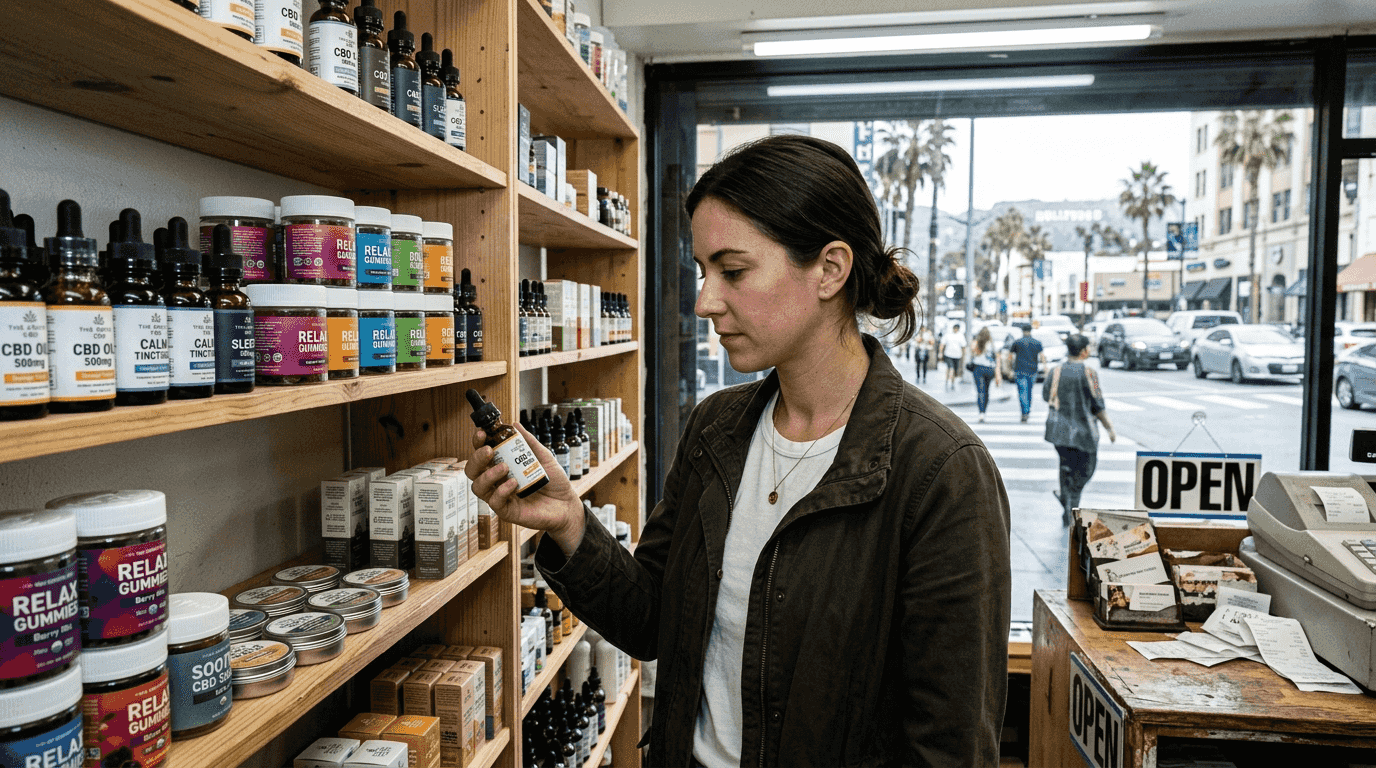
Conversely, states maintaining medical-only frameworks require physician recommendations or registrations. Alabama and Arkansas restrict CBD to patients with qualifying conditions, limiting recreational access entirely. These states often specify approved conditions like epilepsy, chronic pain, or PTSD before permitting CBD use.
State categorization breakdown:
| Legal Category | Number of States | Requirements | Example States |
|---|---|---|---|
| Fully Legal | 25 | Federal THC limits only | California, Colorado, Oregon, Washington |
| Conditionally Legal | 19 | Medical prescription or registration | Texas, Florida, Georgia, Louisiana |
| Medical Only | 5 | Specific qualifying conditions | Alabama, Arkansas, Mississippi |
| Restricted/Unclear | 1 | Varying local interpretations | Idaho |
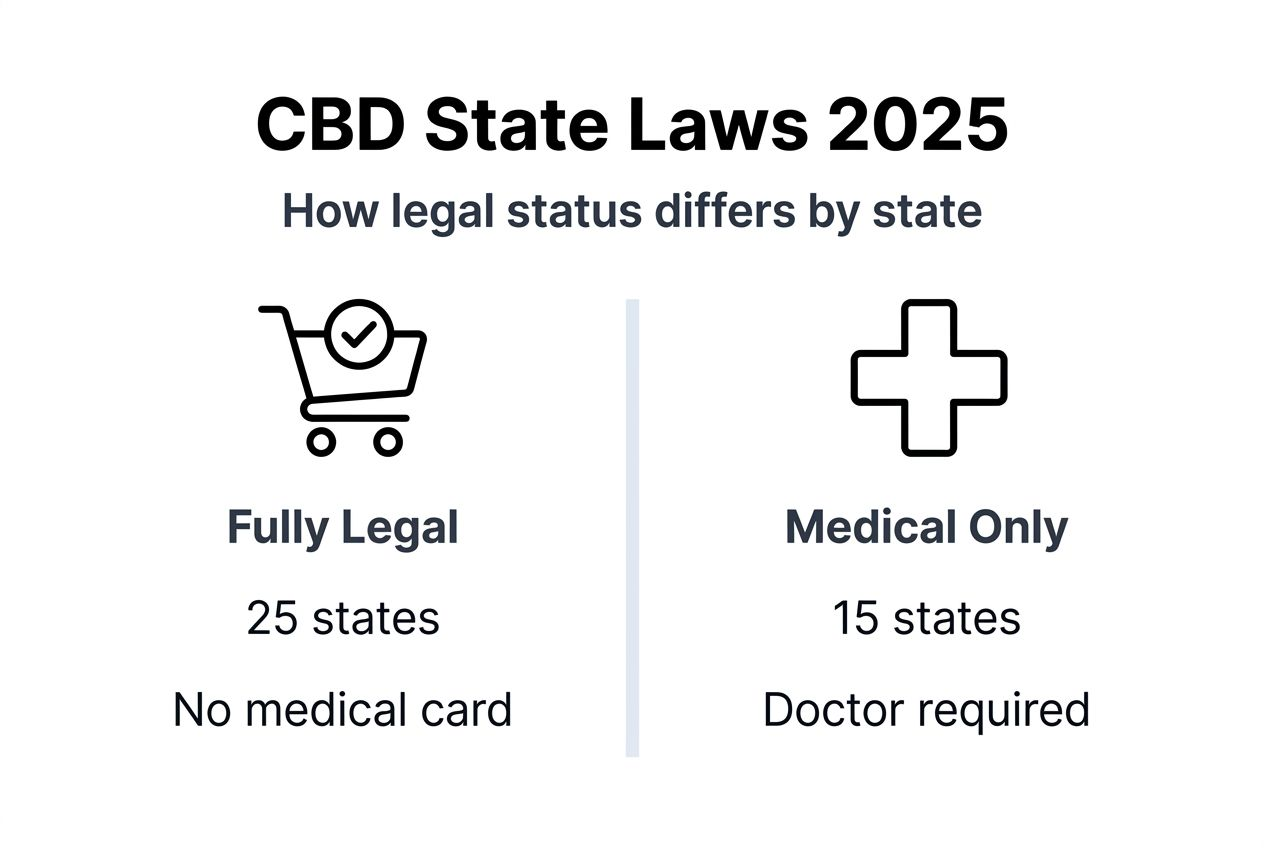
Texas presents a complex conditional model where CBD is technically legal but heavily regulated. You can purchase products only from licensed dispensaries, and the state maintains strict THC testing protocols. Florida allows CBD but requires medical marijuana cards for certain product types, creating confusion about which items need documentation.
Local jurisdictions add another complexity layer. Counties and cities within legal states may ban CBD sales through local ordinances. Before purchasing, verify both state and municipal regulations where you live and shop.
Pro Tip: Bookmark your state’s CBD legal status and check quarterly for updates. Regulations change rapidly as legislatures respond to constituent concerns and emerging research.
Stay informed about hemp legal updates that affect product availability and compliance requirements in your area.
Nuances and challenges in navigating CBD legality
The hemp-derived CBD threshold of 0.3% THC creates the foundation for federal compliance, but states interpret and enforce this standard differently. Some require third-party lab testing for every batch while others accept manufacturer certifications. Testing methodology varies, with some states measuring total THC and others distinguishing between delta-9 THC and THCa.
Local bans within permissive states create unexpected legal traps. A city council or county board can prohibit CBD sales locally despite statewide legalization. You might legally purchase CBD in one county but face restrictions or bans in the next county over. These hyper-local regulations rarely receive widespread publicity, making accidental violations common.
Interstate transport remains federally problematic even between legal states. While technically permitted for hemp-derived CBD, law enforcement may not distinguish between legal CBD and illegal cannabis during traffic stops. Crossing state lines with CBD products risks confusion, detention, and potential legal complications.
Steps to verify CBD legality before purchase:
- Confirm your state’s current CBD legal status through official government websites
- Check county and city ordinances where you plan to buy and use products
- Verify the seller maintains proper licensing and compliance documentation
- Review product lab reports confirming THC content below legal thresholds
- Understand product-specific restrictions (edibles vs. topicals vs. flower)
- Document your purchase with receipts showing legal compliance
Understanding THC content in CBD products prevents accidental purchases of non-compliant items. Full-spectrum CBD contains trace THC amounts that must stay within legal limits, while broad-spectrum and isolate products contain zero or undetectable THC.
California’s CBD compliance framework offers a model for navigating complex regulations, but other states implement vastly different systems.
Pro Tip: Save digital copies of product certificates of analysis (COAs) and purchase receipts on your phone. If questioned by law enforcement, you can immediately demonstrate legal compliance and proper sourcing.
How to safely buy and use CBD products in 2025
State CBD laws change frequently as legislatures respond to constituent demands and emerging research. What’s legal today may face new restrictions tomorrow, making ongoing monitoring essential for compliance. Subscribe to state health department newsletters and cannabis industry updates to catch regulatory changes before they affect you.
Product labels provide critical compliance information when you know what to examine. Look for hemp source state, harvest date, THC percentage, and third-party lab verification. Reputable vendors display batch-specific COAs showing cannabinoid profiles and contaminant testing. Missing documentation signals potential non-compliance or quality issues.
Essential safety practices for CBD purchases:
- Purchase only from licensed retailers with transparent supply chains
- Verify products display clear THC content and hemp origin information
- Request and review current COAs before completing purchases
- Avoid products making medical claims beyond FDA-approved uses
- Research vendor reputation through independent reviews and ratings
- Start with small quantities until you verify product quality and legality
Staying current with CBD legality requires checking multiple information sources. State agriculture departments, health departments, and attorney general offices each publish relevant guidance. Industry associations provide updates, though always verify through official government channels.
Hemp legal updates for 2025 affect product availability and vendor compliance requirements throughout the year.
When traveling with CBD, research destination state laws before departure. Some states permit possession but ban sales, while others restrict both. Airport security follows federal law permitting hemp-derived CBD, but destination state law governs use after arrival. International travel introduces additional complications, as many countries ban CBD entirely regardless of U.S. legal status.
Consulting legal experts becomes necessary when facing unclear situations or potential violations. Cannabis attorneys specialize in navigating these complex regulations and can provide state-specific guidance tailored to your circumstances.
Pro Tip: Create a simple spreadsheet tracking your state’s CBD laws, local ordinances, favorite vendors’ compliance status, and law update dates. Review and update quarterly to maintain current knowledge and avoid accidental violations.
Explore legal CBD products with confidence
Navigating CBD’s complex legal landscape requires reliable sources offering compliant, tested products with transparent documentation. California Blendz provides a carefully curated selection of federally compliant CBD products sourced from California’s Emerald Triangle, where sustainable cultivation meets rigorous quality standards. Every product includes third-party lab verification and clear THC content disclosure, eliminating guesswork about legal compliance.
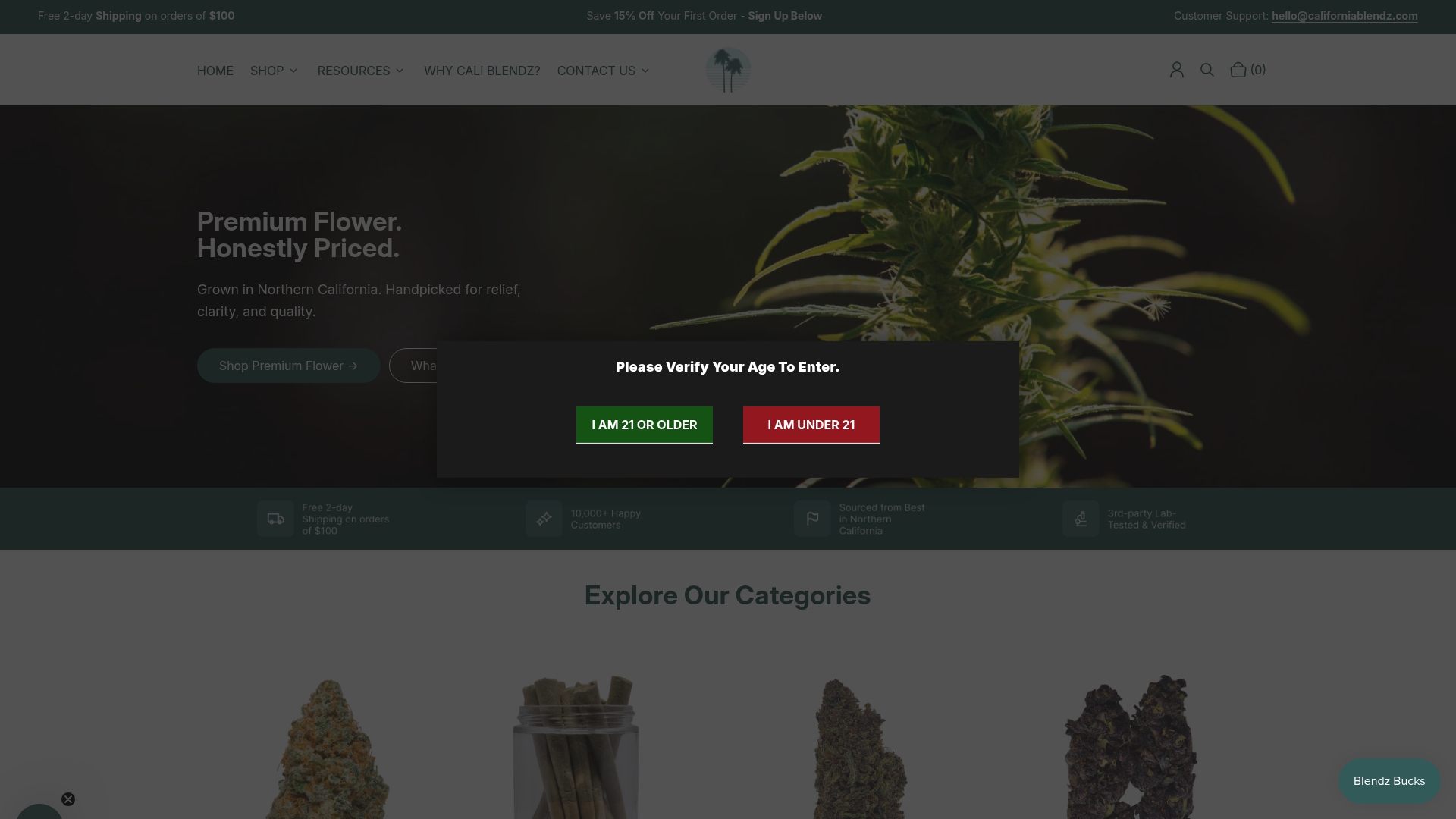
Our site regularly updates legal resources helping you stay informed about changing state regulations and federal guidance. Whether you’re exploring CBD for the first time or seeking premium options, you’ll find detailed cannabinoid profiles, terpene information, and effect-based filtering to match products with your specific needs. Shopping with California Blendz means accessing legal, lab-tested CBD while supporting transparent practices that prioritize your safety and compliance.
Frequently asked questions
Is CBD legal in all US states in 2025?
No, CBD legality varies significantly across states despite federal legalization. Twenty-five states fully permit CBD while nineteen impose conditional restrictions, five limit CBD to medical use only, and Idaho maintains unclear or restrictive policies. Always verify your specific state’s current regulations before purchasing or using CBD products.
What’s the difference between hemp-derived and marijuana-derived CBD legality?
Hemp-derived CBD containing less than 0.3% THC is federally legal under the 2018 Farm Bill and permitted in most states. Marijuana-derived CBD contains higher THC levels and remains federally illegal, legal only in states with comprehensive cannabis legalization programs. The source plant and THC content determine legal status, not the CBD itself.
Do I need a medical card to buy CBD in my state?
This depends entirely on your state’s regulations. Twenty-five states allow CBD purchases without medical documentation for adults over 21. Nineteen states require medical cards or physician recommendations for certain product types or conditions. Five states restrict CBD exclusively to patients with qualifying medical conditions registered in state programs.
Can I travel across state lines with CBD products?
Interstate transport of hemp-derived CBD is technically legal federally but practically risky. Law enforcement may not distinguish between legal CBD and illegal cannabis during stops. Destination state laws govern possession and use after crossing borders, even if your origin state fully permits CBD. Research destination regulations before traveling and maintain product documentation proving legal compliance.
How do I know if a CBD vendor is legally compliant?
Legally compliant vendors display clear business licenses, provide batch-specific certificates of analysis from third-party labs, transparently disclose THC content and hemp sources, and avoid making unauthorized medical claims. They should readily answer questions about their supply chain, testing protocols, and compliance measures. Avoid vendors lacking documentation or making suspicious health promises beyond established research.


