
Explore Cannabis Flower Aroma Profiles for Wellness
Written by Trevor

TL;DR:
- Scent is essential for evaluating cannabis quality, signaling terpene complexity and cultivation care.
- Four main aroma clusters—fruit, citrus, cheesy, and earthy—correlate with cannabinoid types and effects.
- Human sensory panels reveal detailed aroma profiles beyond lab terpene tests, improving selection confidence.
When you pick up a jar of THCa or CBD flower, what actually guides your decision? For most experienced enthusiasts, scent hits first, and it hits hard. Aroma is far more than a pleasant bonus; it signals terpene complexity, cultivation quality, and even the kind of experience waiting for you. Yet most buying guides still lead with cannabinoid percentages and lab numbers. This article breaks that habit. You’ll learn how experts scientifically evaluate aroma, which four major scent clusters define cannabis flower, what’s really behind those smells at the molecular level, and how to match specific aroma profiles to your wellness goals with confidence.
Table of Contents
- How cannabis flower aroma is evaluated
- The four major cannabis aroma clusters
- Terpenes, volatile sulfur compounds, and what they really mean
- Matching aroma profiles to your wellness goals
- Aromas: The overlooked dimension in cannabis wellness
- Explore premier organic flower for your perfect aroma
- Frequently asked questions
Key Takeaways
| Point | Details |
|---|---|
| Human senses matter | Sensory evaluation by trained panels gives a more accurate aroma profile than lab-only analysis. |
| Four main aroma clusters | Cannabis flower aromas are grouped into four core clusters that help guide selection. |
| Terpenes aren’t everything | Compounds beyond terpenes, like VSCs, shape the most distinctive cannabis scents. |
| Aroma guides your choice | Choosing flower by aroma lets you match experience to your wellness goals better than focusing only on potency. |
How cannabis flower aroma is evaluated
Most people assume a lab test tells the full story of a flower’s quality. It doesn’t. Aroma evaluation in cannabis science uses trained human panels, not just gas chromatography machines, because scent perception is a deeply human experience.
The method researchers rely on is called CATA, short for Check-All-That-Apply. In a CATA panel, trained sensory evaluators smell uncombusted flower samples and check every descriptor that applies from a standardized list. These descriptors form what’s known as an aroma lexicon, essentially a shared vocabulary for scent. A 25-term lexicon has been developed from consumer data and refined with physical reference materials, giving panels a consistent, repeatable framework to work within.
Why does this matter when you’re shopping for flower? Because a lexicon-based panel captures nuance that numbers simply can’t. A certificate of analysis (COA) might show similar terpene totals across two strains, yet one smells brightly fruity and the other smells like a damp forest floor. The difference lives in the interaction of dozens of aromatic molecules, and only a trained nose catches that interaction reliably.
Here’s how the sensory evaluation process typically unfolds:
- Sample preparation: Flower is kept at a controlled temperature and presented in sealed jars to preserve volatile compounds.
- Blind evaluation: Panelists evaluate each sample without brand or strain information to remove bias.
- Lexicon check: Each panelist marks every descriptor from the standardized list that applies to their sample.
- Statistical analysis: Data is pooled across all panelists to find consensus aroma profiles and cluster groupings.
- Cross-reference with chemistry: Findings are compared to terpene and VSC data to identify gaps and correlations.
Pro Tip: When identifying top-quality flower, trust your nose as seriously as you trust a lab report. A complex, rich aroma profile is often the clearest signal of careful cultivation and proper curing.
“The development of a standardized sensory lexicon for cannabis brings rigor to a category that has long relied on informal, inconsistent descriptors. It allows growers, retailers, and consumers to finally speak the same language.”
Sensory methodology also levels the playing field for consumers. When you’re selecting CBD flower online without being able to smell it first, understanding what aroma descriptors mean gives you a much stronger basis for making a smart choice.
The four major cannabis aroma clusters
Researchers analyzed 91 flower samples and identified four dominant aroma clusters that appear consistently across cannabis varieties. These clusters are not arbitrary; they reflect statistically meaningful groupings of co-occurring scent descriptors. Importantly, aroma clusters in cannabis also correlate with cannabinoid type, meaning your nose may be telling you more than you think.
| Aroma cluster | Key descriptors | Common in |
|---|---|---|
| Fruit/berry/candy | Sweet, grape, blueberry, floral | Type III (CBD-rich) |
| Citrus/chemical | Lemon, pine, fuel, sharp | Both types, more Type III |
| Cheesy/fecal | Barnyard, ammonia, aged cheese | Type I (THC-rich) |
| Funky/earthy | Woody, musty, soil, herbal | Type I (THC-rich) |
The split between Type I (high THC, low CBD) and Type III (low THC, high CBD) is significant. Type I varieties tend toward skunky, musty, and animalic notes, while Type III varieties are more likely to present citrus, fruity, and candy-forward profiles. This doesn’t mean one is better than the other; it means the clusters give you a reliable shorthand for what you’re likely to experience.
Here’s a quick breakdown of what each cluster tends to signal:
- Fruit/berry/candy: Expect a smooth, approachable experience. These aroma families for calm are often associated with relaxation without intensity.
- Citrus/chemical: Bright, energizing, and often uplifting. The sharpness of citrus notes frequently pairs with more alert, focused effects.
- Cheesy/fecal: Sounds unappealing, but enthusiasts who love this cluster are passionate about it. It signals a deeply complex biochemical profile.
- Funky/earthy: Grounding, rich, and herbaceous. Often preferred by users seeking deep physical relaxation.
The hemp aroma profiles within the citrus and fruit clusters are especially well-documented in CBD-rich varieties grown in environments like California’s Emerald Triangle, where soil health and climate contribute directly to terpene expression.
Statistic callout: Out of 91 samples studied, Type I samples dominated the cheesy/fecal and funky/earthy clusters, while Type III samples appeared far more frequently in the fruit/berry/candy and citrus/chemical groupings.
Terpenes, volatile sulfur compounds, and what they really mean
Terpenes get most of the attention when people talk about cannabis aroma, and rightly so. They’re the largest single group of aromatic molecules in flower, responsible for everything from lemon zest to pine forest. But here’s what often gets left out: terpene profiles poorly predict how a flower actually smells in practice.
The real culprit behind some of cannabis’s most distinctive scents, especially that intense skunky character, is a class of molecules called volatile sulfur compounds, or VSCs. Dimethyl sulfide is one example. VSCs are present in tiny concentrations but carry enormous olfactory weight. Standard terpene panels don’t test for them, which means two flowers with near-identical terpene certificates can smell dramatically different.
| Molecule type | Scent contribution | Detected by standard lab tests? |
|---|---|---|
| Monoterpenes | Citrus, pine, floral | Yes |
| Sesquiterpenes | Earthy, woody, spicy | Yes |
| Volatile sulfur compounds | Skunky, sulfurous, onion-like | Rarely |
| Esters and alcohols | Fruity, sweet, fermented | Sometimes |
This gap between chemical data and sensory reality is exactly why human panels matter. A terpene report is a useful starting point, but it’s not the whole picture. Some of the most complex, sought-after aromas in premium flower come from molecules that don’t even appear on a standard COA.
Pro Tip: When reading a product description, look for specific sensory language beyond just “high in myrcene.” Descriptions that reference layered scent notes, like “earthy base with a bright citrus finish,” usually reflect actual sensory panel input rather than just chemical inference.
Understanding the different types of terpenes in CBD flower gives you a strong foundation. But pairing that knowledge with an awareness of VSCs and other aroma-active compounds means you can read a product page far more critically. Learning about terpene roles in hemp flower helps you ask better questions and make more confident purchasing choices.
Matching aroma profiles to your wellness goals
Now that you understand what creates each scent, it’s time to make that knowledge practical. Aroma is arguably better than potency for predicting how much you’ll enjoy and benefit from a particular flower.
Here’s a simple framework for matching profiles to your intentions:
- Define your goal first. Are you looking for deep evening relaxation, a gentle midday lift, creative focus, or relief after physical activity? Your goal narrows the field immediately.
- Identify your preferred scent family. Think back to flowers or everyday scents you’re drawn to. Do you gravitate toward fresh citrus, sweet berries, earthy woods, or something more pungent and bold?
- Cross-reference cluster traits. Use the four-cluster framework to match your scent preference with the associated cluster and its likely experiential characteristics.
- Start with one representative strain. Narrow your choice to one flower from your target cluster and give it honest attention before moving on.
- Record your impressions. Note the aroma, your mood before and after, and whether the experience matched your expectations.
A few quick checks before you commit to a flower:
- Does the product listing include specific aroma descriptors beyond generic terms?
- Is there a sensory or terpene profile provided by the brand?
- Does the aroma match the cluster you’re targeting based on the descriptor words used?
- Are the cultivation methods mentioned, since organic farming directly impacts terpene richness?
Understanding aroma profiles before you buy is the single biggest upgrade you can make to your selection process. And when you’re ready to dig into specific compounds, exploring terpene benefits in CBD flower connects the sensory experience back to the underlying chemistry in a way that’s genuinely actionable.
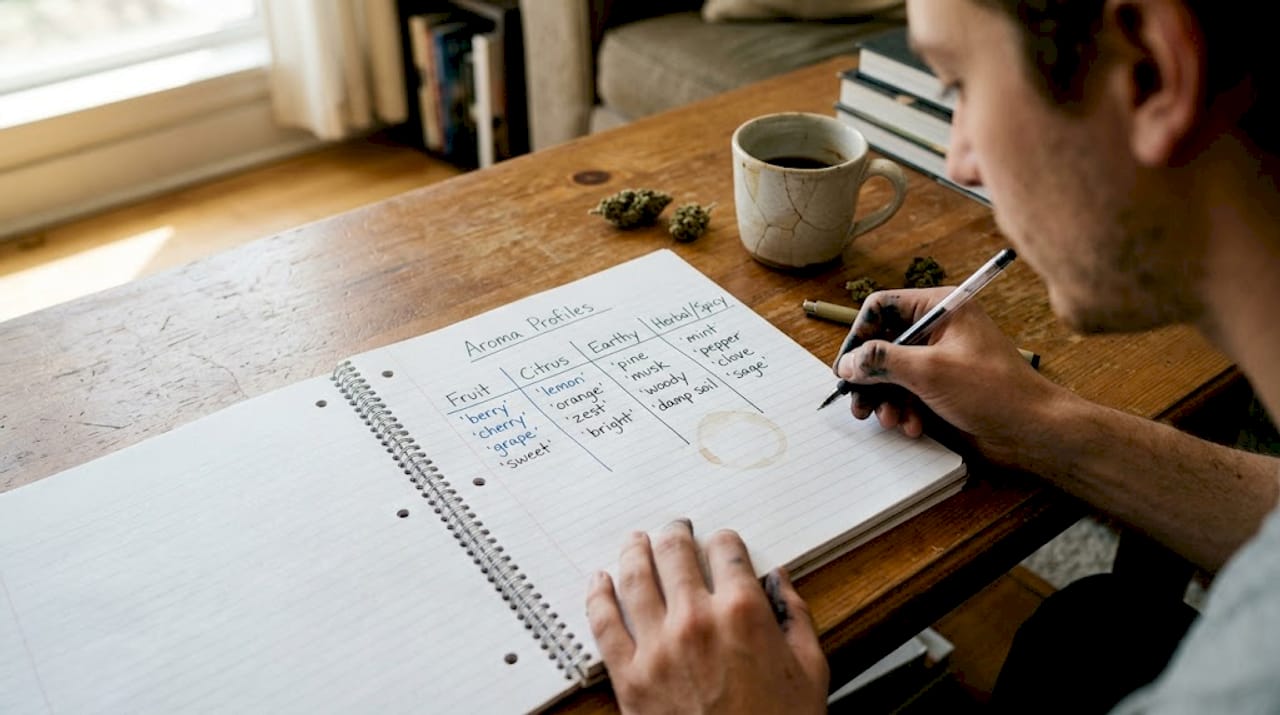
Pro Tip: Keep a simple aroma journal. Even three to four words after each session, like “citrus, pine, light” or “earthy, sweet, relaxing,” builds a personal scent map that makes every future selection faster and more satisfying.
Aromas: The overlooked dimension in cannabis wellness
Here’s a perspective you won’t find in most buying guides: the wellness benefit you get from cannabis flower is inseparable from how much you enjoy the experience. And enjoyment starts with scent.
We spend a lot of energy chasing numbers. Percentage points of THC, milligrams of CBD, terpene ratios. But the enthusiasts who report the most consistent satisfaction from their wellness routines almost always describe their choices in sensory terms first. They know what they love to smell. They seek it out. And their consistency pays off.
Aroma is also deeply personal in a way that potency isn’t. Two people can share the same flower, and one finds the earthy, funky notes grounding and comforting while the other finds them off-putting. Neither is wrong. That’s not a flaw in the system; it’s the system working correctly. Learning what cannabis flower truly is at a sensory level, not just a chemical one, is how you build a sustainable and genuinely enjoyable wellness practice. Stop chasing the highest number and start chasing the best smell for you.
Explore premier organic flower for your perfect aroma
You’ve built a real framework for reading and choosing flower by aroma. Now put it to use.
At California Blendz, every flower in our catalog is organically grown in California’s Emerald Triangle and selected for its full sensory profile, not just its lab numbers. Each product listing includes detailed aroma notes so you can apply exactly what you’ve learned here. Whether you’re chasing bright citrus, deep earthiness, or something sweet and berry-forward, you’ll find transparent sourcing, third-party lab results, and the kind of aroma detail that makes a real difference. Browse our organic flower selection and start matching scent to your wellness goals today.
Frequently asked questions
What are the main aroma clusters in cannabis flower?
The four main clusters are fruit/berry/candy, citrus/chemical, cheesy/fecal, and funky/earthy, each showing a statistical link to either THC-rich or CBD-rich varieties.
Do terpenes fully explain cannabis aroma?
No. While terpenes are important, terpene profiles poorly predict the full scent experience because volatile sulfur compounds and other molecules contribute significantly and are often missed by standard lab analysis.
How do experts classify cannabis aromas?
Experts use CATA sensory panels with a standardized 25-term aroma lexicon, allowing trained evaluators to build consistent, objective aroma profiles across many samples.
Does aroma predict quality more than THC or CBD content?
Many experts believe so. Aroma outperforms potency as a quality indicator because sensory experience, not just chemical content, determines real-world enjoyment and wellness value.


