
Understanding Pre-Rolls: Quality, Effects, and Smart Choices
Written by Trevor

TL;DR:
- Quality pre-rolls depend on whole flower, proper packing, and recent third-party lab testing.
- CBD is non-intoxicating for daytime use, while THCA converts to THC when heated for night.
- Legal status varies by state, so verify local laws and transparent lab results before buying.
Most people grab a pre-roll expecting a consistent, enjoyable experience, but the reality is that two joints sitting side by side on a shelf can deliver wildly different results. Flower quality, rolling technique, cannabinoid type, and lab testing practices all shape what you actually feel. A poorly packed pre-roll with untested flower is not just a bad experience, it can be a safety concern. This guide breaks down exactly what separates a quality pre-roll from a disappointing one, how to match CBD or THCA options to your wellness goals, and what you need to know about the legal landscape heading into 2026.
Table of Contents
- What are pre-rolls and how do they work?
- Key quality factors: Flower, packing, and lab testing
- CBD vs THCA pre-rolls: Choosing for your goals
- Navigating laws, labeling, and safety in 2026
- The truth about buying pre-rolls in 2026: What most guides miss
- Explore quality pre-rolls with confidence
- Frequently asked questions
Key Takeaways
| Point | Details |
|---|---|
| Check for quality | Always choose pre-rolls made with whole flower, recent lab tests, and precise packing for safety and smoothness. |
| Know your cannabinoids | Select CBD pre-rolls for daytime wellness and THCA for evening relaxation based on your goals. |
| Stay compliant | Review current state and federal laws before purchasing hemp-derived or THCA pre-rolls in 2026. |
| Demand transparency | Buy only from sources that provide up-to-date Certificates of Analysis and clear labeling. |
What are pre-rolls and how do they work?
A pre-roll is simply a ready-to-smoke joint prepared in advance, usually by a brand or cultivator. Instead of grinding flower and rolling it yourself, you get a finished product that is ready to light. That convenience is a big part of the appeal, but it also means you are trusting someone else’s materials and process.
Pre-rolls come in a few main forms based on what is inside. What are pre-rolls covers the basics well, but here is a quick breakdown of the most common types you will encounter:
- CBD pre-rolls: Made from hemp flower high in cannabidiol (CBD). Non-intoxicating, meaning they will not get you high. Popular for daytime use, mild relaxation, and general wellness.
- THCA pre-rolls: Made from hemp flower with high THCA (tetrahydrocannabinolic acid) content. When heated, THCA converts to THC, producing psychoactive effects. Often chosen for stronger relaxation or evening use.
- Blended or infused pre-rolls: Some products combine flower with concentrates, kief, or terpene-rich oils for enhanced potency or flavor.
U.S. consumers are turning to hemp-derived pre-rolls in growing numbers for a few practical reasons. First, they remove the guesswork around dosing, since each pre-roll contains a measured amount of flower. Second, they are discreet and portable. Third, they offer a familiar, traditional format without requiring any equipment.
“The experience you get from a pre-roll depends heavily on what is inside it. Cannabinoid type shapes everything from onset time to intensity and duration.”
One of the most common misconceptions is that all pre-rolls are basically the same. They are not. A CBD pre-roll from organically grown, whole flower will feel and taste completely different from one packed with trim, shake, or low-grade material. Similarly, a THCA pre-roll from a reputable source with verified lab results is a very different product from one with no testing documentation. Understanding these differences before you buy protects both your experience and your health.
Key quality factors: Flower, packing, and lab testing
Once you understand what pre-rolls are, the next step is knowing how to judge them. Three factors matter most: the flower itself, how it is packed, and whether the product has been properly tested.
Whole flower vs. trim and shake
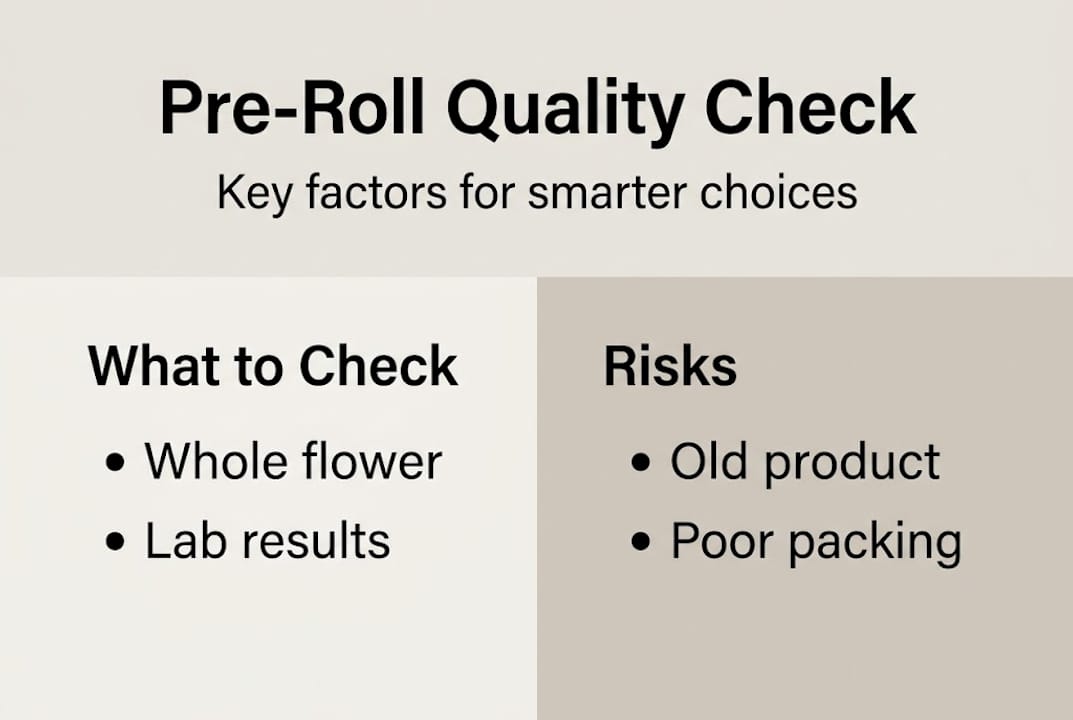
Whole flower refers to the actual bud, the part of the plant richest in cannabinoids and terpenes. Trim and shake are the leftover bits from processing, lower in quality and often harsher to smoke. Pre-rolls made with whole flower burn more evenly, taste better, and deliver a more consistent effect. Always check the label or product description to confirm what is inside.
Packing quality matters more than you think
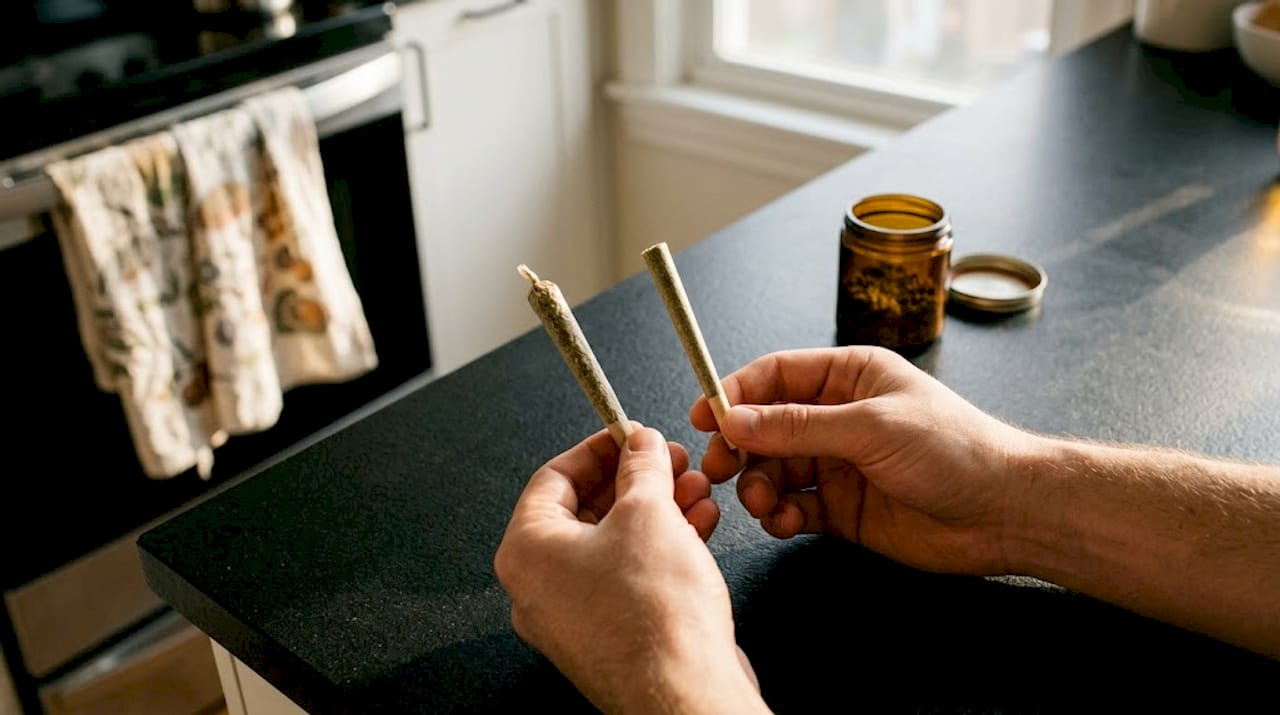
Over- or under-packing creates uneven burns and harshness that can ruin an otherwise good product. An over-packed joint restricts airflow, making it hard to draw. An under-packed one burns too fast and runs unevenly. Good pre-rolls have a firm but consistent pack with a clean, even draw from start to finish.
Lab testing and Certificates of Analysis
A Certificate of Analysis (COA) is a document from a third-party lab confirming what is in a product. It should show cannabinoid potency, terpene content, and results for contaminants like pesticides, heavy metals, and mold. Reputable brands publish these openly. Be cautious of brands that rely on QR codes linking to outdated results or that use labs with a reputation for inflated potency numbers, a practice sometimes called “lab shopping.”
Pro Tip: Always check the date on a COA. Results older than 12 months may not reflect the current batch. Ask the brand directly if you are unsure.
Here is a quick comparison to help you evaluate pre-roll quality at a glance:
| Quality factor | What to look for | Red flag |
|---|---|---|
| Flower type | Whole flower listed on label | “Trim” or “shake” in description |
| Packing | Firm, even, consistent draw | Loose, lumpy, or too tight |
| Lab testing | Recent, full-panel COA from third-party lab | No COA, outdated results, or single-panel test |
| Sourcing | Organic, named origin (e.g., Emerald Triangle) | Vague or no sourcing information |
Before buying any pre-roll, consider asking these questions:
- Is this made from whole flower or trim?
- When was the most recent COA published?
- Which third-party lab conducted the testing?
- Does the potency on the label match the COA?
- Is the brand transparent about where the flower was grown?
For a deeper look at what separates good from great, choosing high-quality pre-rolls walks through each factor in detail.
CBD vs THCA pre-rolls: Choosing for your goals
Knowing the difference between CBD and THCA pre-rolls is not just about chemistry. It is about matching the product to what you actually want from the experience.
How they differ
CBD (cannabidiol) is non-intoxicating. It interacts with your body’s endocannabinoid system to support relaxation, calm, and general wellness without producing a high. THCA (tetrahydrocannabinolic acid) is the raw, acidic form of THC found in the hemp plant. On its own, THCA is also non-intoxicating. But when you apply heat, as in smoking, it converts to THC and produces psychoactive effects. This is a critical distinction for anyone managing their experience or legal exposure.
CBD is often recommended for daytime wellness, while THCA is typically used for evening relaxation. That general framework is a useful starting point, but your personal goals should guide the final call.
Matching your choice to your goals
Here is a simple reference table:
| Goal | Recommended type | Why |
|---|---|---|
| Daytime focus and calm | CBD | Non-intoxicating, supports clarity |
| Evening wind-down | THCA | Converts to THC when heated, deeper relaxation |
| First-time user | CBD | Gentler introduction, no psychoactive effect |
| Experienced user seeking intensity | THCA | Stronger effect profile |
To make the best choice, follow these steps:
- Define your primary goal: relaxation, sleep support, stress relief, or social ease.
- Consider your tolerance and experience level with cannabinoids.
- Check your state’s legal status for THCA products before purchasing.
- Read pre-rolls for wellness to understand effect profiles in more detail.
- Start with a lower potency option and adjust based on your response.
Pro Tip: If you are curious about how THCA pre-rolls feel compared to traditional cannabis, the onset and intensity can be surprisingly similar once heat is applied. Start slow.
For a side-by-side breakdown of strains, THCA strains vs CBD is a solid resource to explore the full range of options.
Navigating laws, labeling, and safety in 2026
The legal landscape around hemp-derived pre-rolls is genuinely complicated right now, and it is shifting. What was clearly legal last year may be in a gray area today, depending on where you live.
Federal vs. state rules
At the federal level, hemp-derived products with less than 0.3% delta-9 THC by dry weight are legal under the 2018 Farm Bill. But THCA is increasingly scrutinized because it converts to THC when smoked. Some federal guidance now proposes counting THCA toward total THC content, which would push many current products over the legal limit. Consumers must check state laws as federal rules on total THC continue to evolve in 2026.
State bans on smokable hemp and shifting federal THC guidelines have created a patchwork of rules that varies dramatically by location. Some states have outright banned smokable hemp. Others have no restrictions at all.
Pro Tip: Before ordering online, check your state’s current hemp laws. Regulations updated in early 2026 may affect what can be shipped to your address. See our breakdown of THCA legal status 2026 for state-by-state guidance.
What responsible labeling looks like
A trustworthy brand will clearly display total cannabinoid content, batch numbers, harvest dates, and a scannable or direct link to current lab results. Vague labels with no COA access are a warning sign. For more on federal changes, federal THCA law changes covers the latest developments.
Use this checklist before purchasing any hemp-derived pre-roll:
- Verify the product is legal in your state
- Confirm the COA is recent and from a certified third-party lab
- Check that total THC (including THCA conversion) is within legal limits
- Look for a batch number that matches the COA
- Review the brand’s sourcing and cultivation practices
- Avoid products with no ingredient list or vague potency claims
The truth about buying pre-rolls in 2026: What most guides miss
Here is something most buying guides will not tell you: a high price tag and a bold potency number are not reliable indicators of quality or safety. In fact, some of the most aggressively marketed pre-rolls have the weakest documentation. We have seen brands lean hard on aesthetic packaging and influencer endorsements while their lab results are months old or sourced from labs with questionable practices.
Testing inconsistencies across the industry highlight the need for multiple information sources, not just the brand’s own website. Smart consumers cross-reference COAs, read independent reviews, and check state compliance databases when available.
The brands worth trusting in 2026 are the ones that make transparency effortless. Current COAs, named cultivation sources, clear labeling, and responsive customer support are the real signals. Building cannabis wellness routines around products you can verify is the only approach that holds up over time. Hype fades. Documentation does not.
Explore quality pre-rolls with confidence
You now have the knowledge to shop smarter, ask better questions, and avoid the products that cut corners. The next step is finding a source you can actually trust.
At California Blendz, every pre-roll in our lineup is sourced from organically grown hemp in California’s Emerald Triangle and backed by full-panel, third-party lab results. We make those results easy to access because we believe you should never have to guess what you are smoking. If you want a step-by-step framework for evaluating any product you consider, our guide to choose quality pre-rolls gives you exactly that. Your wellness journey deserves a solid foundation, and that starts with knowing what is in your pre-roll.
Frequently asked questions
How do I know if a pre-roll is high quality?
Look for pre-rolls made from whole flower with recent full-panel COAs from a third-party lab, and check that the packing is firm and even for a smooth, consistent burn.
Are CBD or THCA pre-rolls better for relaxation?
THCA is typically chosen for evening relaxation because heat converts it to THC, while CBD is generally preferred for daytime wellness without intoxication.
Is it legal to buy hemp-derived pre-rolls in every state?
No. Some states ban smokable hemp and THCA products outright, and federal and state rules are actively shifting in 2026, so always verify your local laws before purchasing.
What are the risks of over/under-packed or dry pre-rolls?
Improper packing causes uneven burns, harsh draws, and hot smoke that degrades the experience. Dry flower compounds these issues and can make the smoke significantly more irritating.
How do I verify a pre-roll’s lab results?
Request a recent full-panel COA from a certified third-party lab and confirm that the potency, batch number, and contaminant results match what is printed on the packaging.
Recommended
- Understanding Why Choose Pre-Rolls for Wellness and Relief – California Blendz
- What are Pre-Rolls: Exploring the Essentials of Cannabis – California Blendz
- How to choose high-quality pre-rolls: 5 key steps – California Blendz
- The Benefits of Pre-Rolls: Convenience, Consistency, and Quality in Ev – California Blendz


