
Cannabinoid Safety Tips: Smart Choices for CBD & THCa
Written by Trevor

TL;DR:
- The unregulated hemp market poses contamination and label accuracy risks for consumers.
- Third-party lab testing and trustworthy brands are essential for safe product selection.
- Responsible use involves starting low, monitoring effects, and avoiding activities like driving.
Millions of Americans are reaching for hemp-derived CBD and THCa flower as part of their wellness routines, but the market they’re shopping in is largely unregulated. Hemp-derived CBD lacks FDA approval and has no federal standards for content, purity, or potency, which puts the responsibility of safe use squarely on you. That’s not a scare tactic. It’s simply the reality of buying cannabinoids in 2026. The good news is that a handful of practical, evidence-based habits can dramatically lower your risk. This guide gives you exactly that: a clear, trustworthy checklist built for real consumers who want real results without the guesswork.
Table of Contents
- Understand cannabinoid safety risks
- Check source quality: Lab tests and reliable brands
- Dose wisely: Start low and monitor your body
- Beware of drug interactions and special populations
- Everyday safety: Operating vehicles, mixing substances, and situational awareness
- What most safety guides miss about cannabinoids
- Next steps: Explore safe CBD and THCa options
- Frequently asked questions
Key Takeaways
| Point | Details |
|---|---|
| Verify product safety | Always choose CBD or THCa with third-party lab test results for clean, accurate products. |
| Start with low doses | Begin with the smallest recommended amount and increase slowly while monitoring effects. |
| Watch for drug interactions | Consult your doctor if taking medications, as CBD can interact with common drugs. |
| Prioritize situational safety | Never drive, operate machinery, or mix cannabinoids with alcohol for your safety. |
Understand cannabinoid safety risks
Before you pick up your next bag of flower or tincture, you need to know what you’re actually dealing with. The hemp market operates in a gray zone where brand promises often outrun actual product quality. Understanding the specific risks is the first step toward protecting yourself.
The biggest issue is contamination. Without mandatory federal testing standards, some products reach consumers carrying pesticide residue, heavy metals, or even synthetic cannabinoids that aren’t listed on the label. Understanding CBD legality and regulation helps explain why this gap exists. The hemp flower legal state status also varies widely, meaning oversight differs depending on where you live.
According to the SAMHSA overview on cannabinoids, labels may not match contents, and the risk of contaminants like pesticides or synthetic compounds is real and documented. That’s not a fringe concern. It’s a systemic problem rooted in the lack of standardized manufacturing oversight.
Key risks every cannabinoid consumer should know:
- Contamination: Pesticides, heavy metals, mold, and synthetic cannabinoids can appear in unverified products
- Label inaccuracy: THC or CBD content printed on the label may be significantly off from actual levels
- No FDA oversight: Hemp-derived products have no federally mandated safety review before going to market
- Unpredictable reactions: Potency inconsistencies from batch to batch can cause unexpected effects
- Drug interactions: Unmonitored use alongside prescription medications can create serious health risks
Beyond contamination, there’s the issue of how cannabinoids affect your body in combination with other substances or conditions. Side effects from inconsistent dosing can range from mild drowsiness to more serious reactions. Knowing the landscape of risk isn’t about fear. It’s about making smarter decisions every time you shop.
Check source quality: Lab tests and reliable brands
If contamination and labeling errors are common, how can you be sure your CBD or THCa product is safe? The answer comes down to one non-negotiable standard: third-party testing.
A Certificate of Analysis, commonly called a COA, is a lab document that breaks down exactly what’s in a product. It should be issued by an independent lab, not the brand itself. Any reputable brand will make these documents publicly available, either on their website or via a QR code on the packaging. If a brand can’t produce a COA, that’s your signal to walk away.
Our CBD buyer’s guide goes deep on how to read these documents. For now, here’s what a solid COA should include:
- Cannabinoid potency panel (CBD, THC, THCa levels by percentage)
- Pesticide and herbicide screening
- Heavy metals testing (lead, arsenic, mercury, cadmium)
- Residual solvents (for extracts and concentrates)
- Microbial contaminant results (mold, bacteria, yeast)
- Batch number matching the product in your hand
| What to check | Why it matters | Red flag |
|---|---|---|
| Cannabinoid potency | Confirms labeled CBD/THCa percentages | No potency results listed |
| Pesticide panel | Rules out chemical contamination | Missing or “passed” without data |
| Heavy metals test | Checks for toxic mineral residue | Not included in COA |
| Batch verification | Confirms test matches your product | Generic or undated COA |
Buy from reputable sources that provide lab testing and align with state laws. That advice sounds simple, but it eliminates the majority of sketchy products instantly.
Pro Tip: Many brands now print QR codes directly on their packaging. Scan the code with your phone before your first use to pull up the specific batch results for your product. If the QR code leads to a generic page or doesn’t load, that’s a red flag worth taking seriously.
For more on what to look for before buying, explore these additional CBD safety tips to round out your pre-purchase checklist.
Dose wisely: Start low and monitor your body
Once you’ve secured a quality product, the next key step is using the right dosage strategy. This is where a lot of otherwise careful consumers go wrong. More is not better with cannabinoids, especially when you’re new to a product or trying a new batch.
The lowest effective dose principle is the foundation here. Titrating slowly means you’re giving your body time to respond before adding more. Here’s a practical step-by-step approach:
- Start at the lowest labeled dose or even half of it on day one
- Wait the full onset window before reassessing (30 to 90 minutes for inhalation, up to 2 hours for edibles or oils)
- Hold that dose for 2 to 3 days and note how your body responds
- Increase by small increments only if you feel no effect and have no side effects
- Set a ceiling based on your goal: sleep, pain, anxiety. Don’t escalate without a clear reason
- Log every session including dose, time, method, and how you felt afterward
Knowing when to stop is just as important as knowing when to start. Watch for these CBD side effects: drowsiness, dry mouth, diarrhea, reduced appetite, and potential liver strain at high doses. If any of these appear, drop your dose immediately. If symptoms persist, pause use and consult a healthcare provider.
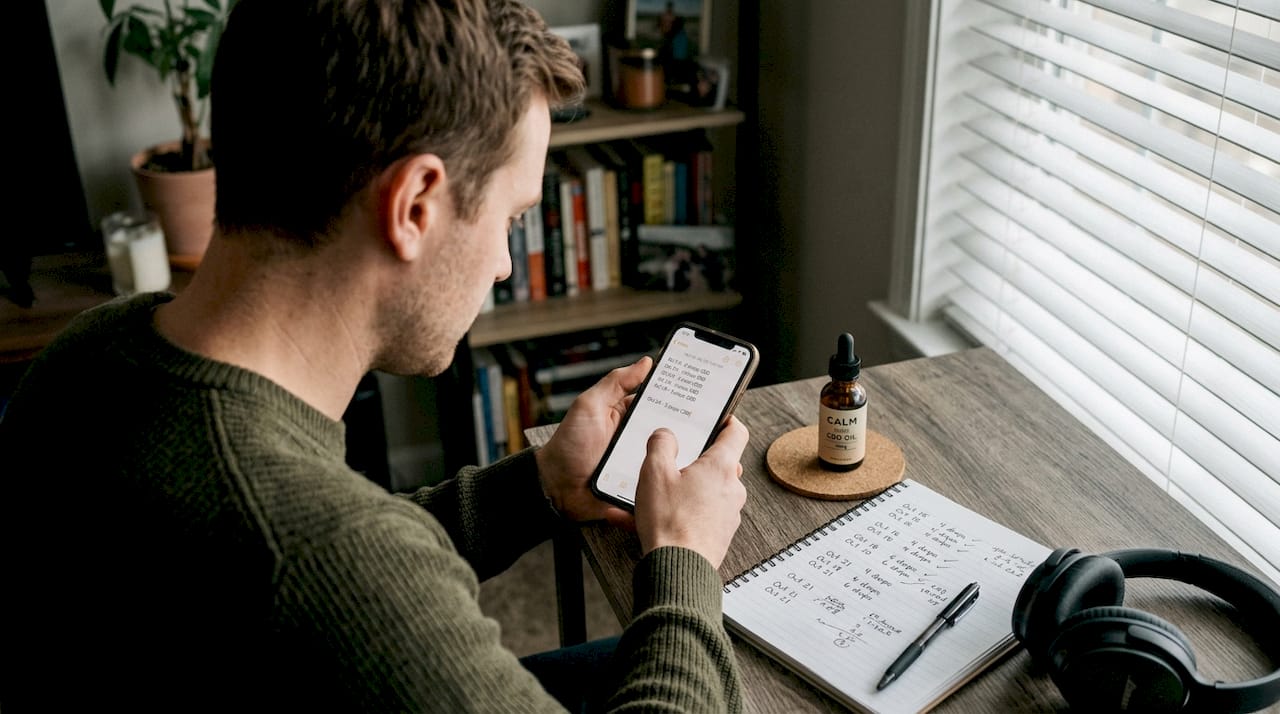
Our CBD dosing guide walks through specific amounts by body weight and condition. Pairing that with a review of safe CBD consumption methods gives you a complete picture.
Pro Tip: Keep a simple dosage journal in your phone’s notes app. Record the product name, batch number, dose, method of use, and your reaction each time. Within a week, patterns emerge that tell you more about your body’s response than any label ever could.
Beware of drug interactions and special populations
Responsible dosing isn’t enough. Understanding interactions and population-specific risks is just as vital. CBD is metabolized by the liver’s cytochrome P450 enzyme system, which is the same pathway used to process many prescription drugs. That overlap creates real interaction risks.
| Drug name | Interaction risk | Potential effect |
|---|---|---|
| Clobazam | High | Increased sedation and drug levels |
| Valproate | High | Elevated liver enzyme risk |
| Carbamazepine | Moderate | Altered cannabinoid metabolism |
| Bupropion | Moderate | Seizure threshold changes |
| Celecoxib | Moderate | Increased anti-inflammatory effects |
CBD interacts with many drugs, and liver disease requires extra caution. That’s not a minor footnote. For anyone on daily prescription medications, a conversation with your doctor before starting CBD or THCa is not optional.
Some groups face elevated risk and should either avoid cannabinoids entirely or use them only under direct medical supervision:
- Pregnant or breastfeeding individuals
- Elderly adults with liver or kidney impairment
- Anyone with a personal or family history of substance use disorder
- People with a history of depression or anxiety disorders without professional guidance
- Children and adolescents
“Avoid CBD if you are pregnant, breastfeeding, elderly with liver or kidney issues, or have a history of substance use or depression. Liver function monitoring may be necessary for prolonged use.”
Regular liver function testing is sometimes recommended for people using CBD consistently at moderate to high doses. Ask your doctor about this if you’re planning long-term use.
Everyday safety: Operating vehicles, mixing substances, and situational awareness
Beyond product and personal safety, situational awareness protects both you and others. Even well-dosed, high-quality CBD or THCa can impair your ability to function safely in certain environments.
“Do not drive or operate machinery after using cannabinoids, and avoid combining with alcohol or CNS depressants. Cognitive and physical impairment can occur even without feeling ‘high.’”
Here’s a clear list of activities to avoid after use:
- Driving any vehicle, including bicycles and e-scooters
- Operating power tools, heavy equipment, or industrial machinery
- Drinking alcohol or taking sleep aids, anxiety medications, or opioids
- Making important decisions that require sharp concentration
- Caring for young children or dependents alone if sedation is possible
Learn more about the specifics of driving after CBD use and what research actually says about impairment windows. Understanding mixing CBD and alcohol is equally worth your time before you combine the two at a social event.
When is it safe to resume normal activities? A general rule: wait until you feel fully alert and your last dose was at least four to six hours ago. That window shortens for low doses and lengthens for high ones or edibles. When in doubt, wait it out.
What most safety guides miss about cannabinoids
Most cannabinoid safety guides focus on labels, third-party testing, and dosing charts. Those things matter, but they skip the most honest part of the conversation: the role of self-monitoring and user transparency.
Short-term benefits from CBD and THCa are real and documented. Health-related quality of life improves short-term with medical cannabis use, but long-term data and risks remain less understood. That gap is where people get into trouble by assuming that because something worked last month, it will always be safe at the same dose.
We’ve noticed that the consumers who stay safest aren’t necessarily the most knowledgeable about cannabinoid chemistry. They’re the ones who keep honest notes, check in with themselves regularly, and ask their doctor real questions. They also gravitate toward brands that publish their lab results without being asked.
Transparency on both sides, brand and user, is what actually moves the needle on safety. No checklist can replace honest self-assessment and open communication with your healthcare provider.
Next steps: Explore safe CBD and THCa options
You now have a solid foundation for safer cannabinoid use. The tips in this guide only work when the products you’re buying actually meet the standards we’ve described.
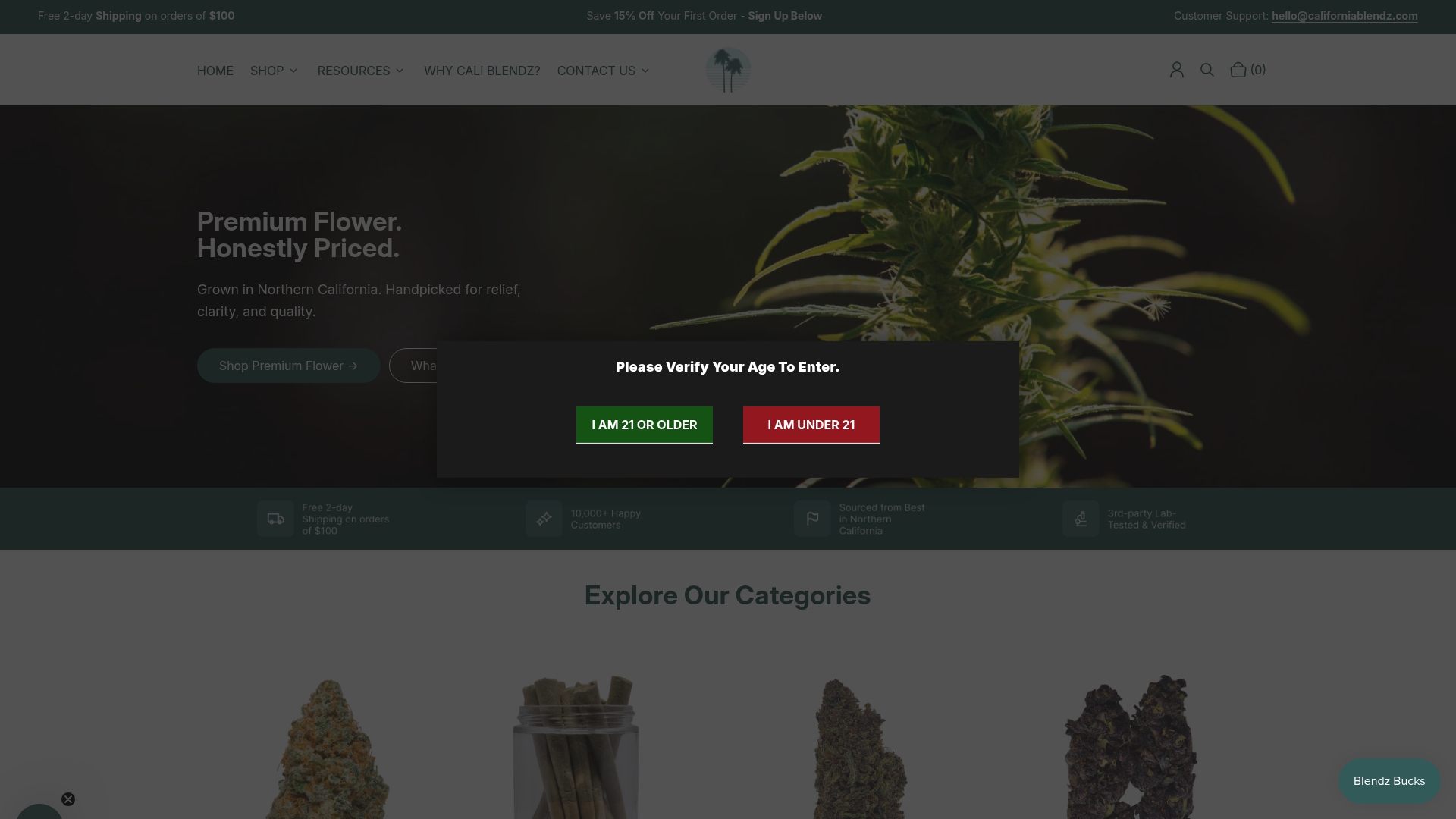
At California Blendz, every product is sourced from California’s Emerald Triangle, grown organically, and backed by accessible third-party lab results. We built our brand around the exact principles covered in this article: transparency, quality, and consumer education. Explore our CBD safety resources for ongoing guidance, or browse our curated flower and pre-roll selection to find products that align with your wellness goals. Safe use starts with a trustworthy source.
Frequently asked questions
What are the main side effects of CBD and THCa products?
Common CBD side effects include drowsiness, dry mouth, diarrhea, and reduced appetite, with potential liver strain at higher doses. THCa is less studied but may produce similar sedation-related effects in some users.
Can I use CBD if I’m already taking medicine for another condition?
CBD interacts with many drugs through shared liver enzyme pathways, so always consult your doctor before adding it to your medication routine. Skipping this step can lead to unpredictable and sometimes serious outcomes.
How can I check if a CBD or THCa product is safe?
Always request or locate a third-party COA that confirms cannabinoid content and screens for contaminants. Reputable sources with lab testing are the single most reliable filter for product safety.
Is it safe to drive after using CBD or THCa?
Avoid driving or operating machinery after cannabinoid use due to possible drowsiness or reduced concentration, even if you don’t feel impaired. Wait until you’re fully alert before getting behind the wheel.
Recommended
- Common Effects of THCa Flower for Wellness – California Blendz
- Top cannabis safe handling tips for freshness and safety – California Blendz
- Safe Dosing of THCA: Achieve Natural Relief Effectively – California Blendz
- Cannabis dosing fundamentals: A clear guide for California users 2026 – California Blendz


