
Cannabis phenotypes: How to choose for desired effects
Written by Trevor

TL;DR:
- Cannabis effects are driven by cannabinoids and terpenes, not plant labels or morphology.
- Chemotypes categorize plants based on THC and CBD levels, informing expected experiences accurately.
- Terpene profiles influence aroma, flavor, and effects, making detailed lab data essential for informed choices.
If you’ve been picking cannabis based on whether it’s labeled Indica or Sativa, you’re not alone. But here’s the thing: those labels are largely a myth when it comes to predicting how you’ll actually feel. Genomic studies show that over 90% of commercial strains are hybrids, and the real drivers of your experience are cannabinoids and terpenes, not plant shape or origin. Understanding cannabis phenotypes gives you a far more reliable way to choose products that match what you’re looking for, whether that’s deep relaxation, creative focus, or pain relief. This guide breaks down what phenotypes actually are and how to use that knowledge.
Table of Contents
- What are cannabis phenotypes and why do they matter?
- Cannabis chemotypes: Understanding Type I, II, and III
- The role of terpenes: How scent and flavor shape your experience
- How California consumers can use phenotype data for better choices
- Why focusing on phenotypes is the future of cannabis selection
- Learn more and shop responsibly with California Blendz
- Frequently asked questions
Key Takeaways
| Point | Details |
|---|---|
| Indica/Sativa labels unreliable | Cannabis effects are mainly determined by chemical profile, not by the Indica or Sativa label. |
| Chemotypes predict effects | Knowing whether a product is Type I, II, or III helps you choose for desired THC and CBD balance. |
| Terpenes shape experience | Scent and flavor come from terpenes, which add personality and specific effects to each chemotype. |
| Lab-tested data matters | In California, reliable cannabinoid and terpene results on labels empower smarter cannabis selection. |
| Focus on your goals | Matching phenotype and chemical data to your intended effect leads to the best personal cannabis experience. |
What are cannabis phenotypes and why do they matter?
A cannabis phenotype is the full expression of a plant’s genetic blueprint. It covers everything you can observe and measure: the color of the buds, the density of the trichomes, the smell, the flavor, and most importantly, the chemical makeup including cannabinoid levels and terpene content. Two plants grown from seeds of the same strain can produce noticeably different phenotypes depending on how their genes interact with the environment.
Here’s why this matters for you as a consumer. When you walk into a dispensary or browse an online menu and see “Sativa” stamped on a product, that label tells you very little about what you’ll actually experience. The Indica vs Sativa differences that most people rely on were originally used to describe plant morphology, meaning how the plant looks, not how it makes you feel. Indica plants tend to be short and bushy; Sativa plants grow tall and thin. That’s a physical description, not a pharmacological one.
The science backs this up. Indica/Sativa labels are not a reliable way to predict cannabis effects, and the market reflects this reality. Most products you’ll find today are hybrids with complex genetic backgrounds that don’t fit neatly into either category.
Focusing on phenotypes instead gives you something real to work with:
- Cannabinoid content: THC percentage, CBD percentage, and the ratio between them
- Terpene profile: The specific aromatic compounds present and their relative concentrations
- Appearance and density: Indicators of cultivation quality and maturity
- Aroma and flavor: Direct sensory clues tied to terpene content
“The chemical fingerprint of a cannabis plant, not its botanical origin, is what shapes your experience. Phenotype data gives you that fingerprint.”
When you start evaluating cannabis by its phenotype rather than its label, you stop gambling on your purchase and start making informed decisions. That’s a meaningful shift, especially if you use cannabis for specific wellness goals.
Cannabis chemotypes: Understanding Type I, II, and III
Understanding phenotype leads us directly to chemotypes, the chemical fingerprint of each plant. A chemotype is a classification based on the dominant cannabinoids a plant produces. Think of it as a shorthand for the chemical personality of a particular cannabis product.
Chemotypes classify by chemical profile: Type I contains high THC and low CBD, Type II offers a balanced THC to CBD ratio, and Type III is high in CBD with very low THC. Each chemotype predicts your experience far more accurately than any Indica or Sativa label ever could.
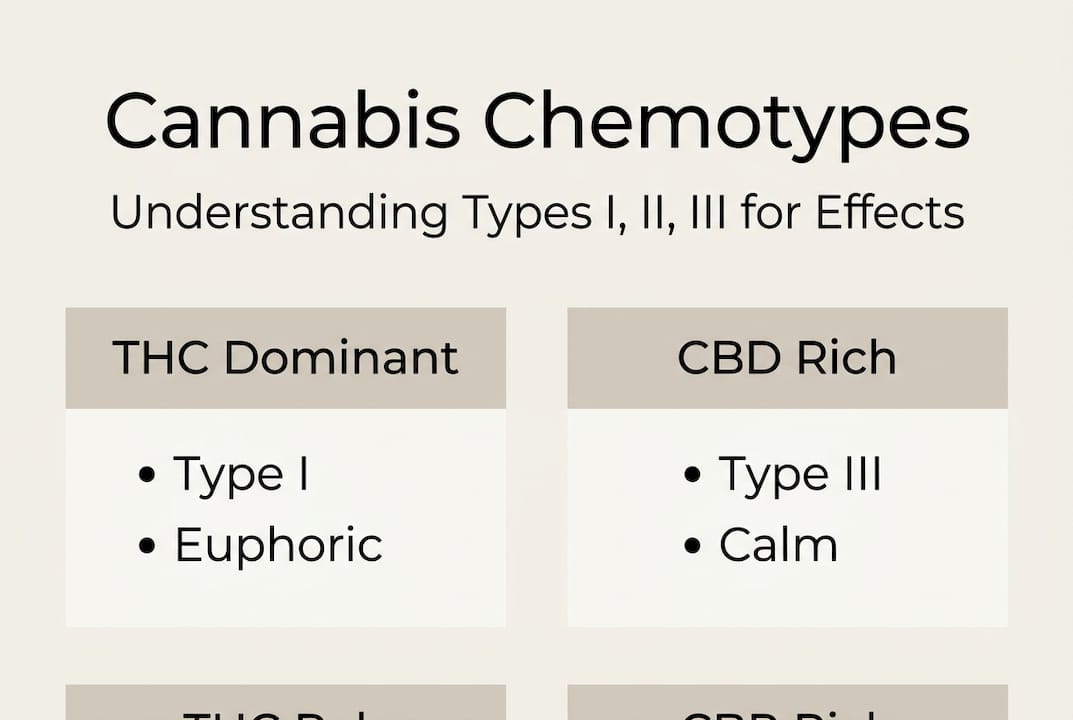
Here’s a quick comparison to make this concrete:
| Chemotype | THC Level | CBD Level | Typical Experience |
|---|---|---|---|
| Type I | High | Low | Strong psychoactive effects, euphoria, potential anxiety at high doses |
| Type II | Moderate | Moderate | Balanced, milder psychoactive effects, often used for daytime wellness |
| Type III | Low | High | Non-intoxicating, calming, commonly used for relaxation and relief |
For California consumers, this classification is especially useful because state regulations require detailed lab testing on all legal cannabis products. That means you can actually verify a product’s chemotype before you buy. If you’re new to cannabis or sensitive to THC, a Type III product gives you the calming effects of CBD without the intensity of a high-THC experience. If you’re a seasoned consumer looking for a specific effect, knowing whether a product is Type I or Type II helps you calibrate your session.
Here’s what to look for on a lab report:
- Total THC percentage (including THCA converted to THC)
- Total CBD percentage
- THC:CBD ratio to identify the chemotype
- Minor cannabinoids like CBG, CBN, or CBC, which can also influence effects
Understanding how cannabis is tested helps you read these reports with confidence. And once you understand lab testing for cannabis, you’ll never go back to relying on a strain name alone.
A quick note on statistics: studies show that the majority of commercially available cannabis strains test as Type I, meaning the market skews heavily toward high-THC products. If you’re specifically seeking CBD-dominant or balanced options, you’ll need to look carefully at the numbers rather than trusting the packaging.
The role of terpenes: How scent and flavor shape your experience
While chemotypes lay the foundation, terpenes create the nuance in cannabis effects. Terpenes are the aromatic compounds found in cannabis and many other plants. They’re responsible for why one strain smells like citrus and another smells like pine or diesel. But they do far more than create pleasant aromas.
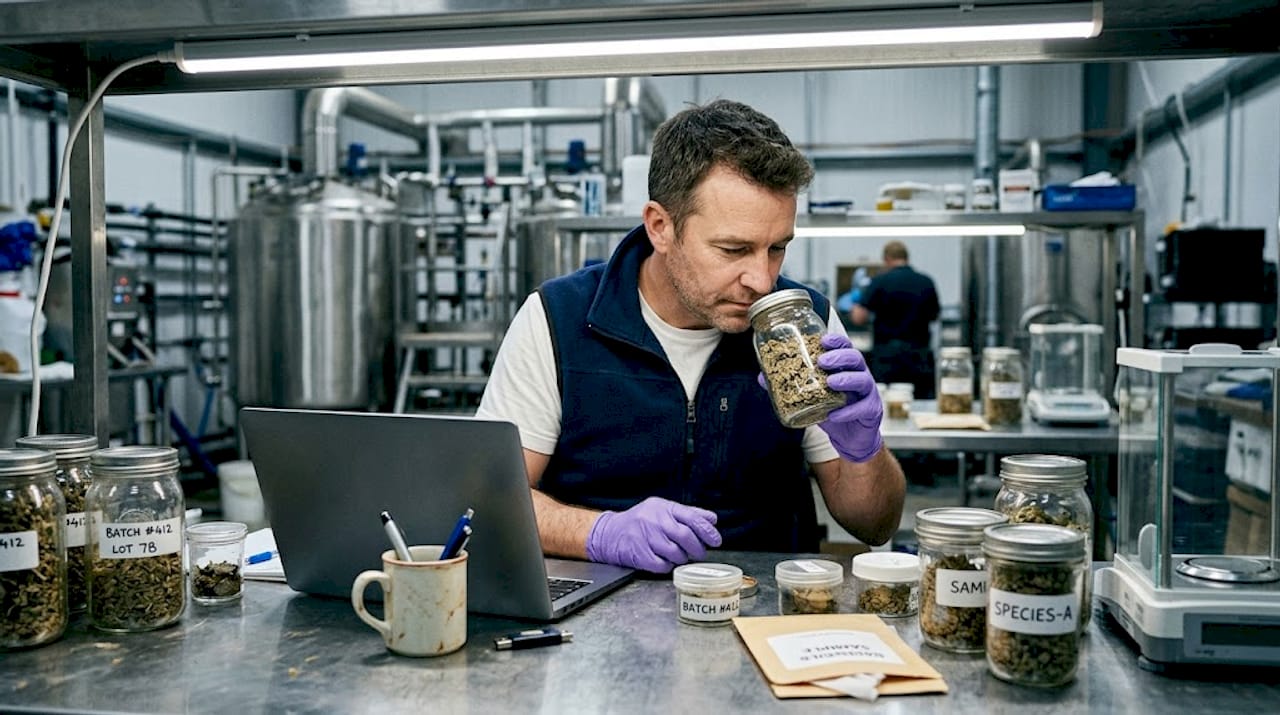
Research shows that effects are driven by cannabinoids and terpenes working together, not by plant classification. This interaction is sometimes called the entourage effect, where terpenes and cannabinoids amplify or modify each other’s impact on your body and mind.
Here’s a breakdown of the most common terpenes and what they bring to the table:
| Terpene | Aroma | Associated Effects |
|---|---|---|
| Myrcene | Earthy, musky, herbal | Relaxing, sedating, body-heavy |
| Limonene | Citrus, lemon | Uplifting, mood-boosting, stress relief |
| Caryophyllene | Spicy, peppery | Anti-inflammatory, calming, may ease anxiety |
| Linalool | Floral, lavender | Calming, sleep-supporting, soothing |
| Pinene | Pine, fresh | Alertness, memory retention, airway opening |
| Terpinolene | Floral, herbal, fruity | Energizing, creative, mildly uplifting |
If you’re chasing a relaxing evening session, look for products high in myrcene and linalool. If you want something more energizing and social, terpinolene and limonene are your friends. This is the kind of specificity that strain names simply cannot provide.
You can go deeper on this topic with a solid terpenes and cannabis effects breakdown, or check out a more thorough guide to cannabis terpenes to understand how individual compounds interact.
Pro Tip: When you read a product’s lab report, don’t stop at THC percentage. Scroll to the terpene section and identify the top two or three terpenes by concentration. Those dominant terpenes are your best predictor of how the product will feel and smell in practice.
One more thing worth knowing: terpene content degrades over time and with improper storage. A product that tested high in myrcene six months ago may have lost a significant portion of that terpene profile by the time it reaches you. Fresh, properly stored cannabis retains its terpene expression far better, which is another reason sourcing from quality-focused producers matters.
How California consumers can use phenotype data for better choices
Now you know what to look for. Here’s how to actually put it into practice when shopping in California, whether online or at a dispensary.
California’s cannabis regulations are among the strictest in the country, and that works in your favor. Every legal cannabis product sold in the state must undergo third-party lab testing, meaning you have access to detailed cannabinoid and terpene profiles before you buy. Lab-tested cannabinoid and terpene profiles are the most reliable way to predict effects, far more so than traditional labels.
Here’s a simple step-by-step process for using phenotype data when you shop:
- Identify your desired effect. Are you looking for sleep support, anxiety relief, creative energy, or physical relaxation? Get specific.
- Determine your chemotype preference. If you want to stay clear-headed, lean toward Type III. If you want a moderate experience, Type II is a good fit. For stronger psychoactive effects, Type I is your range.
- Check the terpene profile. Match the dominant terpenes to your desired effect using the table above.
- Read the full lab report. Look for total THC, total CBD, the ratio between them, and the top terpenes by percentage.
- Ignore the strain name as your primary filter. Use it as a loose reference point, not a decision driver.
Pro Tip: Look for products that list their dominant cannabinoids and terpenes directly on the packaging or product page. Brands that make this information easy to find are the ones prioritizing transparency, and those are the products most likely to deliver a consistent, predictable experience.
Understanding the CBD flavor and effect balance can also help you fine-tune your selection, especially if you’re working with hemp-derived CBD products where terpene expression plays an even bigger role in the overall experience.
Why focusing on phenotypes is the future of cannabis selection
Here’s an uncomfortable truth the cannabis industry has been slow to admit: the Indica/Sativa system survived as long as it did because it was simple to market, not because it was accurate. Budtenders could give quick recommendations, brands could build identity around it, and consumers felt like they understood what they were buying. But that simplicity came at a cost, which was reliability.
We believe California consumers are uniquely positioned to lead the shift toward phenotype-driven selection. The state’s regulatory framework already demands the data. What’s been missing is the consumer education to use it. When you prioritize chemotype and terpene data over strain names, you’re doing what pheno-hunters have done for decades: selecting for specific, repeatable traits rather than hoping a label delivers.
Pheno-hunting, the practice of growing multiple plants from the same seed batch and selecting the one with the most desirable traits, is how the best cultivars get identified. That same logic applies to how you shop. You’re hunting for the phenotype that matches your needs. The entourage effect theory supports this approach, showing that the full chemical profile of a plant matters more than any single compound. The future of cannabis selection is data-driven, personalized, and transparent. And it’s already here for consumers who know where to look.
Learn more and shop responsibly with California Blendz
If you’re ready to put this knowledge into practice, California Blendz makes it straightforward. Every product we carry is sourced from California’s Emerald Triangle, organically grown, and backed by third-party lab results you can actually read.
We’re not just selling flower. We’re giving you the tools to shop with confidence. Browse our full selection at California Blendz and filter by effect, cannabinoid profile, or terpene expression. Want to go deeper on the science before you buy? Our guide on how cannabis is tested walks you through exactly what those lab numbers mean and why they matter for your experience. Smarter choices start with better information, and we’ve built the library to support that.
Frequently asked questions
What is a cannabis phenotype?
A cannabis phenotype is the set of visible and chemical traits a plant expresses, including appearance, scent, and its specific cannabinoid and terpene content. These traits directly shape how a product looks, smells, and affects you.
Do Indica and Sativa phenotypes matter for effects?
Not in the way most people think. Genomic studies show that Indica and Sativa labels have poor correlation with actual chemical profiles, making chemotype and terpene data far more reliable predictors of effects.
What are the three main cannabis chemotypes?
The three main cannabis chemotypes are Type I, II, and III: Type I is high THC with low CBD, Type II offers a balanced THC to CBD ratio, and Type III is high in CBD with very low THC.
How can California consumers find phenotype info?
Check the lab report and product label for cannabinoid percentages and terpene profiles. Lab-tested profiles are required by California law and give you the most accurate picture of what a product will actually do.
Recommended
- 7 Steps to Effect-Based Cannabis Selection for Wellness – California Blendz
- Cannabis strains guide: Choose the right effect for wellness – California Blendz
- Cannabis cultivar differences: Guide for California wellness – California Blendz
- The Best Winter Strains to Keep You Warm and Cozy During Winter – California Blendz


