
Is Hemp Legal in 2025? What Consumers Need to Know
Written by Trevor

Most american consumers in California might not realize that in 2025, hemp products face stricter rules than ever before. The definition of hemp has changed, and new federal and state laws mean some CBD products now risk crossing legal lines. For those focused on wellness and compliance, understanding these evolving regulations is crucial for making safe and informed purchasing choices.
Table of Contents
- Hemp Definition And Common Misconceptions
- Federal Laws Shaping Hemp’s Status In 2025
- Key Product Types And Legal Variations
- California’s Rules And Cross-State Differences
- Impacts For Consumers, Retailers, And Compliance
Key Takeaways
| Point | Details |
|---|---|
| Hemp Definition | Hemp is a variety of Cannabis sativa with no more than 0.3% THC, distinct from marijuana, which is psychoactive. |
| Regulatory Changes | The 2025 regulations introduce stricter THC limits and ban synthetic cannabinoids, impacting product availability. |
| California’s Leadership | California enforces strict regulations, including a ban on THC in food and dietary supplements, influencing national standards. |
| Industry Impacts | Consumers will face limited product options, while retailers must adapt to complex compliance challenges to avoid penalties. |
Hemp Definition and Common Misconceptions
Hemp represents a specific variety of Cannabis sativa with crucial legal distinctions that consumers must understand. Scientifically defined by extremely low delta-9 THC content, hemp contains not more than 0.3% THC by dry weight, which differentiates it fundamentally from psychoactive marijuana strains.
Contrary to widespread misunderstandings, hemp is not synonymous with marijuana. Both belong to the Cannabis sativa family, but they possess dramatically different chemical compositions and legal statuses. The 2018 Farm Bill dramatically reshaped hemp’s legal landscape, reclassifying it from a controlled substance to an agricultural commodity when meeting specific THC threshold requirements.
The key misconceptions about hemp typically revolve around its psychoactive potential. Many consumers mistakenly believe hemp can produce intoxicating effects similar to marijuana. In reality, its minimal THC concentration means hemp cannot generate the “high” associated with cannabis consumption. This critical distinction underpins its widespread use in numerous industries, including textiles, construction materials, nutritional supplements, and wellness products.
Pro tip: Always verify the delta-9 THC content and third-party lab testing when purchasing hemp-derived products to ensure legal compliance and understand the precise cannabinoid profile.
Federal Laws Shaping Hemp’s Status in 2025
The federal landscape for hemp regulation has undergone significant transformation in 2025, with new legislation dramatically redefining hemp’s legal parameters. The most critical change involves a comprehensive redefinition of hemp that extends beyond the previous delta-9 THC measurement, now encompassing total THC content and imposing stricter regulatory constraints on product manufacturing and distribution.
Under the new federal guidelines, hemp products are now subject to more stringent compliance requirements. The 2025 federal rule creates substantial challenges for manufacturers and retailers, introducing a low total THC cap on finished products and explicitly banning synthetic cannabinoids. This legislative shift effectively eliminates many previously legal hemp-derived products, particularly those containing intoxicating or converted cannabinoids.
The implementation timeline represents a strategic approach to industry transition. Lawmakers have instituted a 12-month compliance period, giving businesses an opportunity to adapt to the new regulatory framework. Starting November 2026, the most stringent aspects of these regulations will be fully enforced, including a per-container THC limit of 0.4 milligrams and comprehensive restrictions on synthetic cannabinoid production and distribution.
Pro tip: Consult legal and regulatory experts to ensure your hemp-related business remains compliant with the evolving 2025 federal regulations, as the new laws significantly impact product formulation and marketing strategies.
Key Product Types and Legal Variations
Hemp products in 2025 are now categorized with unprecedented regulatory precision, dramatically shifting the legal landscape for cannabinoid offerings. Industrial hemp continues to remain legal for traditional applications like fiber and seed production, while consumable cannabinoid products face significant new restrictions. The federal government now mandates strict limitations on total THC content, effectively eliminating many previously popular hemp-derived products.
Consumers will encounter substantial changes across product categories. Edibles, vapes, tinctures, and beverage products containing more than 0.4 milligrams of total THC per package are now classified as illegal. Synthetic cannabinoids like delta-8 THC have been explicitly excluded from legal hemp definitions, forcing manufacturers to reformulate their product lines and consumers to reassess their purchasing choices. This regulatory shift fundamentally transforms the hemp product marketplace, prioritizing safety and standardization.
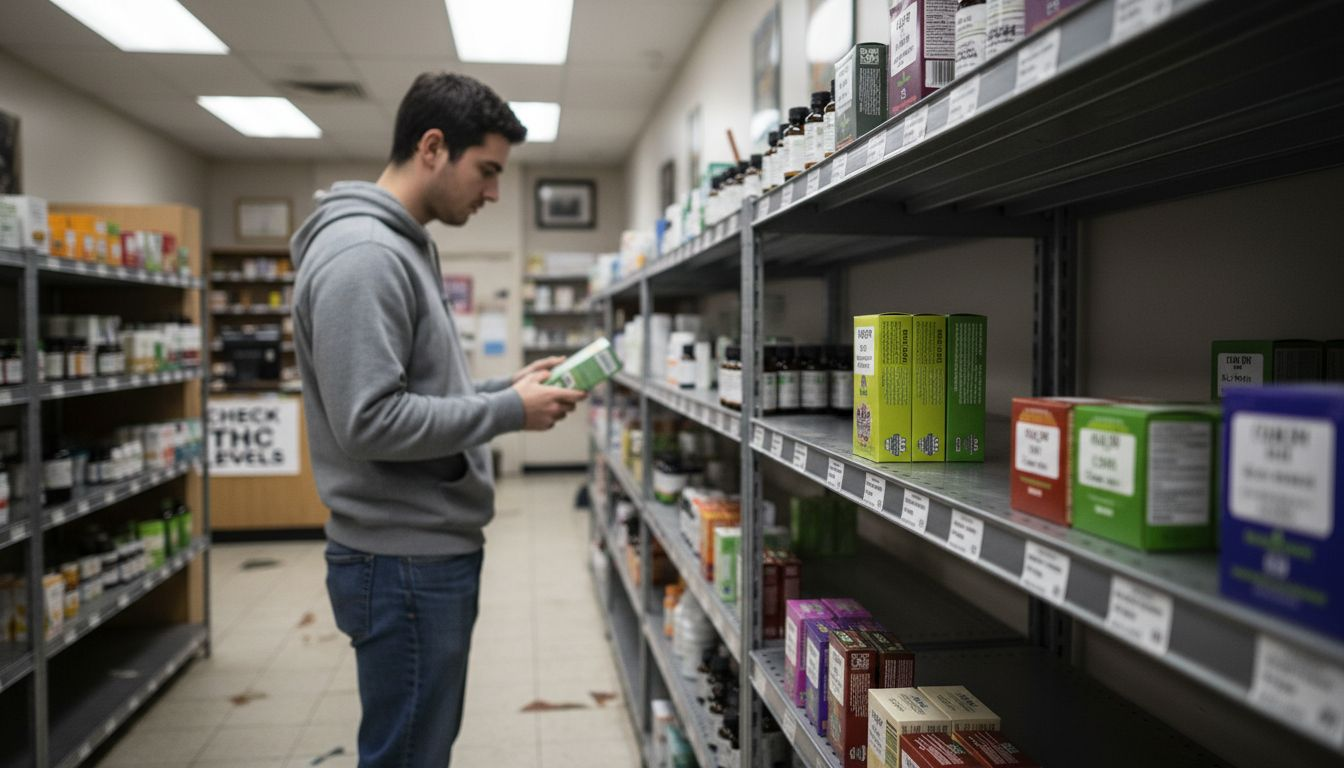
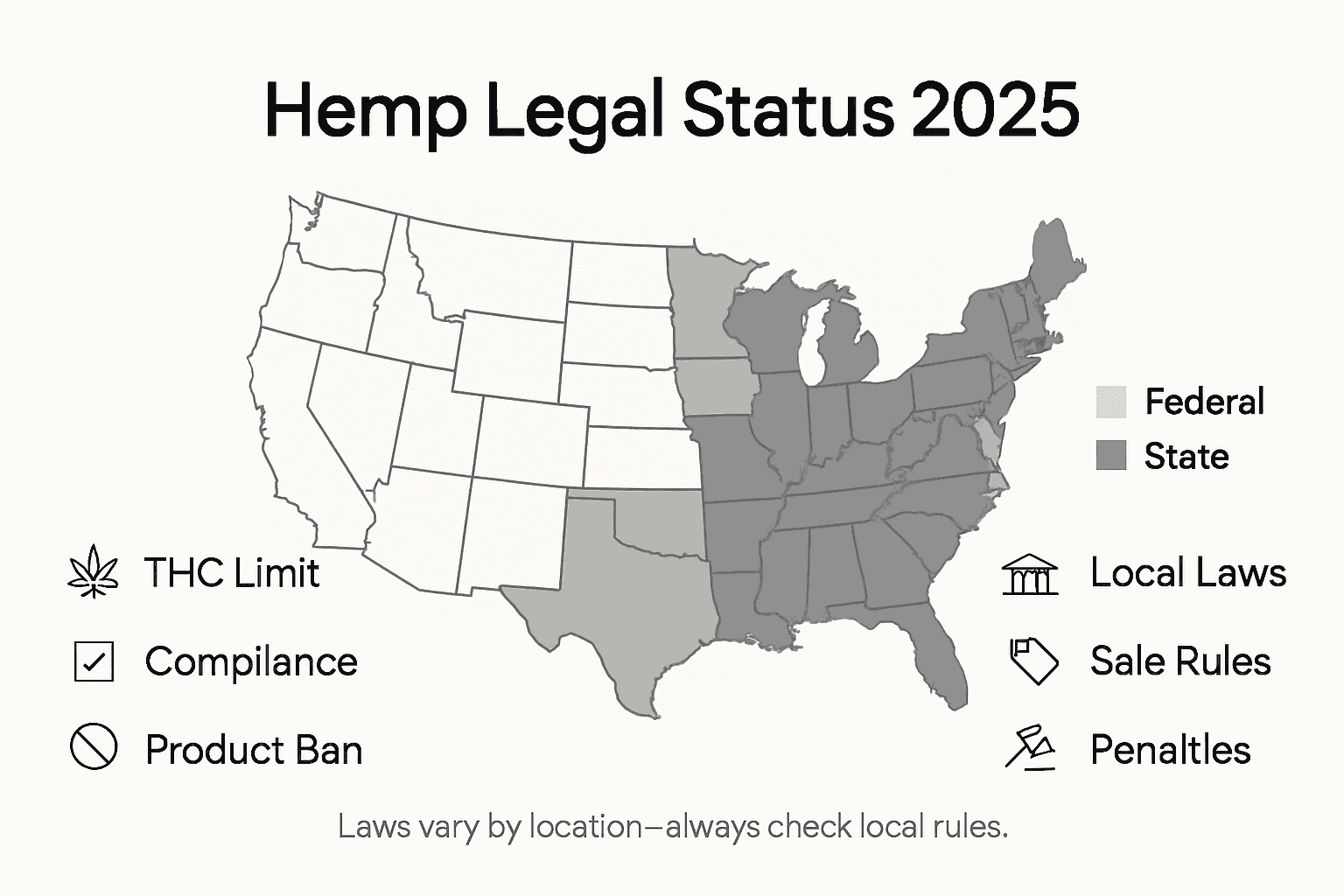
Geographic variations in hemp regulation continue to complicate the legal landscape. While U.S. federal guidelines now provide a comprehensive framework, individual states maintain the ability to implement more restrictive policies. International markets present even more complex regulatory environments, with the European Union maintaining its own distinct approach, including lower THC content limits and ongoing discussions about expanding acceptable hemp product classifications.
Pro tip: Always request and verify third-party lab testing results for any hemp-derived products to ensure compliance with the latest 2025 federal regulations and total THC content limitations.
California’s Rules and Cross-State Differences
California continues to lead the nation in hemp and cannabis regulation, implementing stringent emergency regulations that significantly exceed federal standards. The state has taken an unprecedented approach by banning THC in hemp foods, beverages, and dietary supplements, while enforcing strict sales restrictions that require consumers to be at least 21 years old. These regulations specifically target synthetic and unapproved cannabinoids, creating a protective framework that prioritizes public health and youth safety.
The state’s legislative landscape is rapidly evolving, with Assembly Bill 8 proposing comprehensive integration of hemp products into the regulated cannabis market by 2028. California’s unique regulatory environment stands in stark contrast to other states’ more lenient approaches, establishing a model of strict oversight that could potentially influence national hemp policy. The bill mandates full licensing, extensive product testing, and comprehensive tracking requirements, effectively treating hemp products with the same level of scrutiny as traditional cannabis goods.
Cross-state differences remain significant, creating a complex legal landscape for consumers and businesses. While California imposes some of the most restrictive regulations in the country, other states maintain varying levels of hemp product oversight. This regulatory patchwork means that a product legally purchased in one state might be considered illegal just across the state line, requiring consumers to be exceptionally cautious and well-informed about local legal nuances.
Pro tip: Always verify the specific hemp product regulations in your state before purchasing or transporting hemp-derived items, as legal standards can vary dramatically between jurisdictions.
Here’s a comparison of hemp regulations by jurisdiction in 2025:
| Jurisdiction | THC Limit in Products | Regulation Focus | Notable Restrictions |
|---|---|---|---|
| Federal (U.S.) | 0.4 mg total THC/package | Product safety, standardization | Ban on synthetic cannabinoids |
| California | THC banned in foods, strict testing | Public health, youth protection | Sales age 21+, integrated market |
| European Union | Lower than U.S. limit (varies) | Safety, limited acceptance | Limited product classifications |
Impacts for Consumers, Retailers, and Compliance
The 2025 hemp regulations are creating profound disruptions across the entire industry ecosystem, fundamentally transforming the market landscape for all stakeholders. Consumers will immediately experience the most visible impacts, with dramatically reduced product availability and significantly narrowed options for hemp-derived cannabinoid products. The new regulatory framework effectively eliminates many previously popular intoxicating hemp products, forcing consumers to adapt to a more restricted marketplace.
Retailers face extraordinarily complex compliance challenges that could potentially reshape their entire business model. The regulations demand comprehensive reformulation of existing product lines, rigorous documentation, and strict adherence to new testing and tracking requirements. Small and medium-sized retailers will be particularly vulnerable, as the cost of compliance could potentially force many businesses out of the market. The financial and operational burdens of meeting these new standards will require significant investments in legal expertise, product development, and regulatory monitoring.
The compliance landscape has become significantly more treacherous, with potential legal and financial penalties for businesses that fail to meet the intricate new requirements. Retailers must now navigate a maze of regulations that differ not just federally, but also vary dramatically between states. This regulatory patchwork creates substantial risks for businesses attempting to operate across multiple jurisdictions, requiring unprecedented levels of legal sophistication and regulatory awareness.
Pro tip: Invest in comprehensive legal consultation and robust compliance management systems to effectively navigate the complex and rapidly changing hemp regulatory environment.
This table summarizes industry impacts under the 2025 hemp regulatory framework:
| Stakeholder | Main Challenge | Adaptation Required |
|---|---|---|
| Consumers | Fewer product choices, legality risk | Verify compliance, product research |
| Retailers | Costly compliance, reformulation | Legal expertise, new tracking systems |
| Manufactures | Product reformulation, THC limits | Testing protocols, labeling changes |
| Cross-State Operations | Regulatory inconsistencies | State-by-state legal checks |
Stay Ahead in the 2025 Hemp Market With Trusted, Compliant Products
Navigating the complex legal changes around hemp in 2025 can be overwhelming. With strict federal THC limits and varying state rules like California’s rigorous bans, finding safe and fully compliant hemp-derived products is crucial. Whether you are concerned about total THC content or want transparency on lab testing, California Blendz offers a reliable solution. Explore our curated selection in The Founder’s Collection for high-quality, lab-tested hemp flower and CBD Edibles that meet evolving legal standards and deliver trusted effects.
Don’t risk your health or legal standing by purchasing unverified products. Visit California Blendz now to shop premium hemp options with full transparency on cannabinoid content and sustainable sourcing. Act today to enjoy safe hemp wellness products that keep pace with the latest regulations to support your relaxation and relief needs safely.
Frequently Asked Questions
Is hemp legal in 2025?
Yes, hemp remains legal in 2025, but it is subject to stricter regulations regarding total THC content and product formulation.
What is the new total THC limit for hemp products?
The total THC limit for hemp products is now set at 0.4 milligrams per package, which is a significant change from previous regulations.
Are synthetic cannabinoids still legal under the new regulations?
No, synthetic cannabinoids, including delta-8 THC, have been explicitly banned under the new hemp regulations implemented in 2025.
How will the new regulations affect consumers of hemp-derived products?
Consumers will experience reduced product availability, as many previously popular hemp-derived products may no longer be legal or available for purchase.


