Cannabis Flower Basics: THCa & CBD Guide for Wellness
Written by Trevor

Most people assume all cannabis flower gets you high. That assumption is wrong, and it costs consumers real money and real peace of mind. Hemp-derived THCa and CBD flower are distinct products with different chemistry, different legal standing, and different effects depending entirely on how you use them. Cannabis flower is the dried bud of the female Cannabis sativa plant, packed with cannabinoids like THCa or CBD. Whether you’re new to hemp or a seasoned buyer, understanding these basics protects you legally and helps you get the experience you’re actually looking for.
Table of Contents
- What is cannabis flower? Key types and definitions
- The science behind THCa and CBD: How effects differ
- From harvest to use: Drying, curing, and quality essentials
- Is it legal? Navigating U.S. hemp flower laws in 2026
- Why THCa flower basics matter more than ever
- Explore quality, lab-tested cannabis flower options
- Frequently asked questions
Key Takeaways
| Point | Details |
|---|---|
| THCa vs CBD basics | THCa and CBD flower offer different effects and legal considerations, so it’s important to know the difference. |
| Drying and curing matter | Proper post-harvest handling preserves quality, potency, and safety in your cannabis flower. |
| Legal status is complex | THCa flower falls in a legal gray area, making it crucial to check federal and state laws before use. |
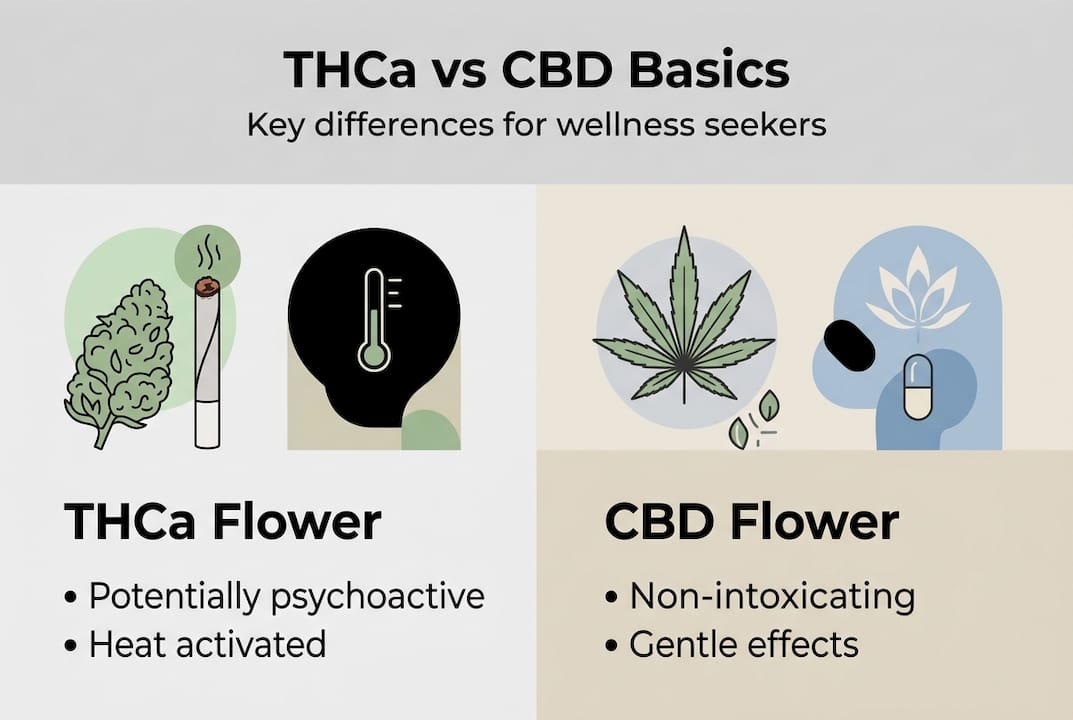
| Consumption impacts effects | Heating THCa flower activates THC and psychoactive effects, while CBD flower remains non-intoxicating. |
What is cannabis flower? Key types and definitions
Cannabis flower refers to the trimmed, dried buds of the female Cannabis sativa plant. These buds are where cannabinoids and terpenes concentrate, making them the most potent part of the plant. When people talk about hemp flower, they’re referring to varieties bred to stay under the federal 0.3% Delta-9 THC threshold. That single number separates legal hemp from controlled marijuana in the eyes of federal law.
The two most popular types you’ll encounter are THCa flower and CBD flower. They look nearly identical, but their chemistry is very different. THCa flower carries 20 to 30% THCa with under 0.3% Delta-9 THC, while CBD flower is high in cannabidiol and non-intoxicating regardless of how it’s consumed. Understanding is it hemp or marijuana comes down to that chemical profile, not just appearance.
Key differences at a glance:
| Feature | THCa flower | CBD flower |
|---|---|---|
| Primary cannabinoid | THCa (20-30%) | CBD (10-20%) |
| Intoxicating raw? | No | No |
| Intoxicating when heated? | Yes (converts to THC) | No |
| Common use | Relaxation, recreation | Wellness, calm |
| Legal status | Federal gray area | Federally legal |
- Smoking or vaping THCa flower activates the THC through heat, producing psychoactive effects.
- Raw consumption (juicing, capsules) keeps THCa in its non-intoxicating form.
- CBD flower stays non-intoxicating no matter how you consume it.
- Organic and lab-tested options matter because unverified flower can carry pesticides, heavy metals, or mold.
Pro Tip: Always request a Certificate of Analysis (COA) from a third-party lab before buying any flower. It confirms cannabinoid percentages and screens for contaminants. The effects of THCa flower depend heavily on whether you heat it or consume it raw, so knowing your method before you buy is essential.
The science behind THCa and CBD: How effects differ
THCa and CBD both come from the same plant, but they interact with your body in very different ways. THCa (tetrahydrocannabinolic acid) is the raw, acidic precursor to THC. In its natural state, it does not bind strongly to the brain’s CB1 receptors, which means no high. CBD (cannabidiol) works through different pathways entirely, supporting balance without triggering intoxication.
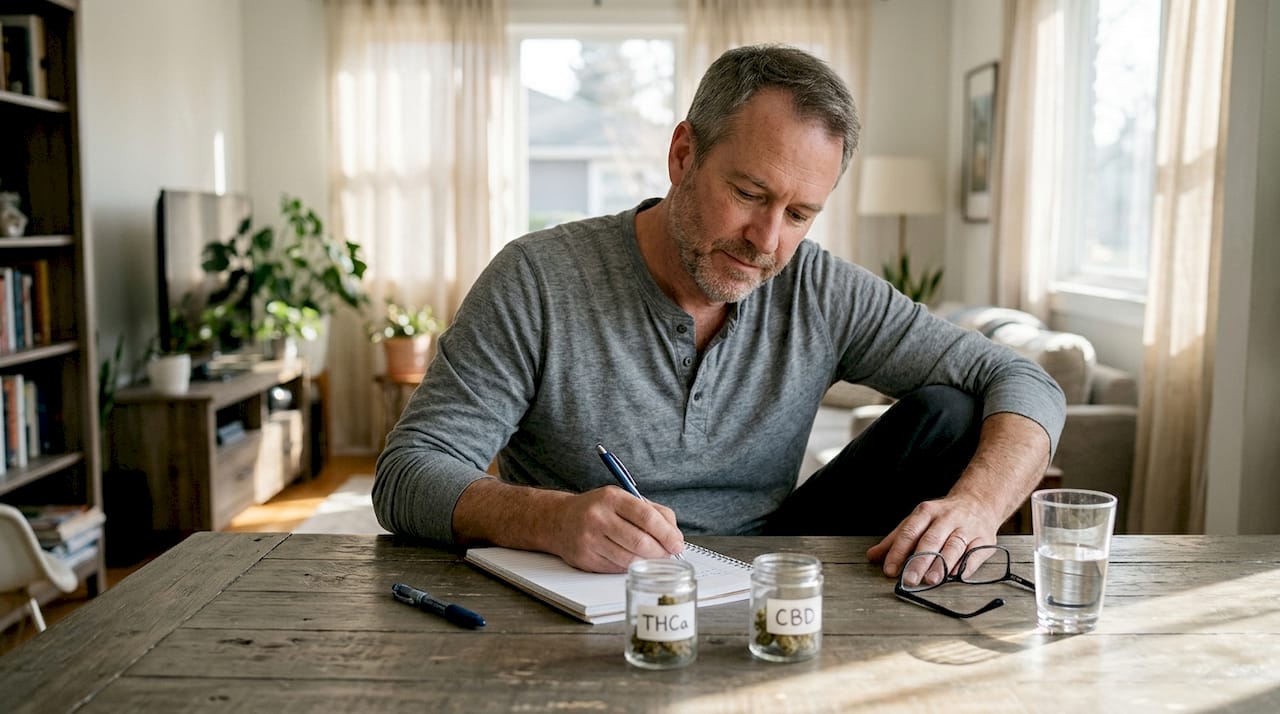
The game-changer for THCa is heat. THCa is non-psychoactive in raw form, but heating converts it to psychoactive THC through a process called decarboxylation. At around 220°F, the carboxyl group drops off the THCa molecule and it becomes Delta-9 THC. That’s why smoking or vaping THCa flower produces a high, while eating it raw does not.
How consumption method changes your experience:
- Smoking or vaping THCa flower triggers full decarboxylation, producing relaxing or euphoric effects.
- Raw THCa consumption (smoothies, tinctures) preserves the non-intoxicating form for wellness support.
- Smoking CBD flower does not produce intoxication because CBD does not convert to THC with heat.
- CBD tinctures or edibles offer the same calm, non-intoxicating support as smoked CBD.
- Combining both (CBD and THCa) may create an entourage effect where cannabinoids work together.
| Consumption method | THCa effect | CBD effect |
|---|---|---|
| Smoked or vaped | Psychoactive (THC) | Non-intoxicating |
| Raw or cold | Non-intoxicating | Non-intoxicating |
| Edible (baked) | Psychoactive (THC) | Non-intoxicating |
Research into THCa benefits and uses suggests potential anti-inflammatory and neuroprotective properties in its raw form, though clinical evidence is still building. Understanding how THCa flower is made also helps you appreciate why cultivation and handling matter so much to the final product.
Worth knowing: CBD does not convert into any intoxicating compound when heated. This makes CBD flower a consistent, predictable option for wellness-focused users who want zero psychoactive risk.
From harvest to use: Drying, curing, and quality essentials
Knowing the science is only half the picture. What happens between harvest and your hands matters just as much. Poor drying and curing can ruin even the best genetics, stripping away terpenes, inviting mold, and making the smoke harsh and unpleasant.
Drying comes first. Freshly harvested buds hang upside down in a controlled environment at 60 to 70°F with 45 to 55% relative humidity for 5 to 14 days. Too hot or too dry and the outer layer seals before the inside dries, trapping moisture that leads to mold. Some producers use quick hot-air drying or freeze drying, but slow hang drying is still the gold standard for preserving terpene profiles.
Curing follows drying. Buds go into airtight glass jars, filled about 75% full. For the first week, you open the jars once or twice daily to release moisture and refresh oxygen. This is called “burping.” A proper cure runs 2 to 8 weeks. Proper drying and curing retains 15 to 20% more terpenes and cannabinoids, while skipping these steps risks microbial growth and a noticeably weaker product.
- Overdrying degrades terpenes and makes flower crumble and burn harshly.
- Under-drying traps moisture, creating a breeding ground for mold and bacteria.
- Skipping curing leaves chlorophyll in the flower, causing a grassy, unpleasant taste.
- Organic cultivation reduces chemical residue risk, making the curing process cleaner overall.
Pro Tip: When buying flower, squeeze a bud gently. It should feel slightly springy, not bone dry or wet. That texture signals proper moisture content and a well-executed cure.
“The difference between mediocre and exceptional flower often comes down entirely to the cure, not the genetics.”
Understanding how THCa flower is produced from seed to shelf gives you the context to evaluate any product you’re considering. Lab-tested flower should show terpene percentages alongside cannabinoid data, confirming the cure was done right.
Is it legal? Navigating U.S. hemp flower laws in 2026
Legality is where most consumers get tripped up. The 2018 Farm Bill made hemp federally legal if it contains under 0.3% Delta-9 THC by dry weight. CBD flower fits comfortably inside that definition. THCa flower is more complicated.
The issue is decarboxylation. Because THCa converts to THC when heated, some regulators argue that THCa-rich flower should count as marijuana under a “total THC” formula: (0.877 x THCa%) + Delta-9 THC% = Total THC. A flower with 25% THCa and 0.2% Delta-9 THC would calculate to roughly 22% total THC, well above the legal limit. Several states have already moved to ban intoxicating hemp products, including THCa flower, regardless of federal status.
Steps to stay legally protected in 2026:
- Check federal THCa laws in 2026 before purchasing online.
- Confirm your state’s specific rules using resources on THCa legality in 2026.
- Review the COA for both Delta-9 THC and THCa percentages.
- Check which hemp legal states currently allow THCa flower for retail sale.
- Never assume a product labeled “hemp” is automatically legal in your state.
Drug testing is another real concern. Even if you purchase THCa flower legally, smoking it converts THCa to THC, and standard drug tests detect THC metabolites. Legal purchase does not protect you from a positive result. Know your situation before you use.
Why THCa flower basics matter more than ever
Here’s what most guides skip: the regulatory window for THCa flower is narrowing fast. The Farm Bill loophole that allows high-THCa hemp to be sold legally at the federal level is under serious pressure in 2026, and state-level crackdowns are accelerating. Consumers who treat THCa flower as a permanent, stable market may be in for a surprise.
But there’s a deeper issue. Even buyers who consider themselves informed often overlook the connection between handling quality and actual safety. “Organic” and “lab-tested” labels are meaningful, but only if you understand what they’re testing for and whether the testing is current. A COA from 18 months ago tells you very little about the flower in your hands today.
The consumers who consistently have the best experiences are the ones who understand THCa myths versus facts, read lab reports critically, and match their consumption method to their actual goal. Buying premium flower without that knowledge is like buying a high-performance car and never learning how the engine works. The practical knowledge you build now will serve you regardless of how regulations shift.
Explore quality, lab-tested cannabis flower options
You now have the foundation to shop smarter and use cannabis flower more responsibly. Knowing your cannabinoids, understanding the cure, and checking your state laws puts you ahead of most buyers in the market.
At California Blendz, we source organic, lab-tested flower directly from California’s Emerald Triangle, where craft cultivation and transparency are non-negotiable. Every product comes with current third-party lab results so you can verify exactly what you’re getting. Whether you’re drawn to THCa flower for relaxation or CBD flower for daily wellness support, our catalog is built around clarity, quality, and your confidence as a consumer.
Frequently asked questions
What is the difference between THCa flower and CBD flower?
THCa flower contains 20 to 30% THCa, which only becomes psychoactive when heated, while CBD flower is high in non-intoxicating cannabidiol regardless of consumption method. The key distinction is that THCa flower can produce a high when smoked or vaped, and CBD flower never does.
How do I know if cannabis flower is legal in my state?
Confirm the product is under 0.3% Delta-9 THC by dry weight and then check your state’s specific rules on THCa, since many states are restricting intoxicating hemp products in 2026. Federal compliance alone is not enough.
Why is drying and curing important for cannabis flower?
Proper drying and curing retains 15 to 20% more terpenes and cannabinoids while preventing mold and harsh taste. Skipping or rushing these steps directly reduces potency and safety.
Can THCa flower make you fail a drug test?
Yes. Once heated, THCa converts to THC, and standard drug tests detect THC metabolites regardless of whether the original product was legally purchased as hemp. If drug testing is a concern, CBD flower is the safer choice.
Recommended
- Unlocking the Secrets: How is THCA Flower Made and What Makes it Uniqu – California Blendz
- Common Effects of THCa Flower for Wellness – California Blendz
- Demystifying THCA Flower: Is it Hemp or Something Else? – California Blendz
- Exploring the Benefits and Uses of THCA Flower: What You Need to Know – California Blendz


