
Calculate the Perfect Cannabis Dosage for Wellness
Written by Trevor

Choosing the right cannabis dose can feel like guesswork when similar THC or CBD products deliver wildly different effects. The confusion stems from product variety, consumption methods, and individual body chemistry. This guide walks you through evidence-backed calculation steps to master your ideal THC and CBD amounts for relaxation and wellness. You’ll learn to read labels, apply dosing formulas, adjust for your method, and personalize your experience with confidence.
Table of Contents
- Why cannabis dosage matters for wellness and relaxation
- How to read cannabis labels and understand percentages
- The math behind THC and CBD dosage: Formulas and examples
- How different consumption methods affect dosage needs
- Personalizing your cannabis dose: Factors and tracking
- Microdosing, edge cases, and safety with cannabis
- When to consult a professional about cannabis dosage
- Find your perfect dose with California Blendz support
- Frequently asked questions
Key Takeaways
| Point | Details |
|---|---|
| Label accuracy is vital | Always check THC and CBD content on California-tested products for correct dosing. |
| Calculation defines your dose | Proper formulas turn percentage and weight into precise milligrams per serving. |
| Personalize for best results | Track dose and effects over time to fine-tune your cannabis experience. |
| Microdosing can boost routines | Low-dose cannabis supports relaxation and wellness with minimal side effects. |
| Consult with experts if needed | Seek professional guidance if using cannabis with medical conditions or daily medications. |
Why cannabis dosage matters for wellness and relaxation
Accurate THC and CBD dosing directly impacts your relaxation, stress relief, and overall wellness outcomes. California’s lab-tested cannabis provides precise label information, but understanding how to use those numbers makes all the difference. Low-THC and high-CBD ratios support relaxation without unwanted side effects, while improper dosing can trigger anxiety, over-sedation, or no effect at all.
CBD:THC ratios modulate effects, with 1:1 balances offering relaxation and wellness benefits. Tracking your effects in a journal helps you identify patterns and refine your approach over time.
Key dosing considerations:
- Precision prevents unwanted side effects and maximizes therapeutic benefits
- Lab-tested products in California ensure accurate potency information
- Individual responses vary based on metabolism, tolerance, and consumption method
- Tracking effects creates a personalized roadmap to your optimal dose
“Start with the lowest effective dose and increase gradually. Your body’s response is the best guide to finding your sweet spot for relaxation and wellness.”
Understanding safer CBD use practices ensures you approach dosing with both confidence and caution.
How to read cannabis labels and understand percentages
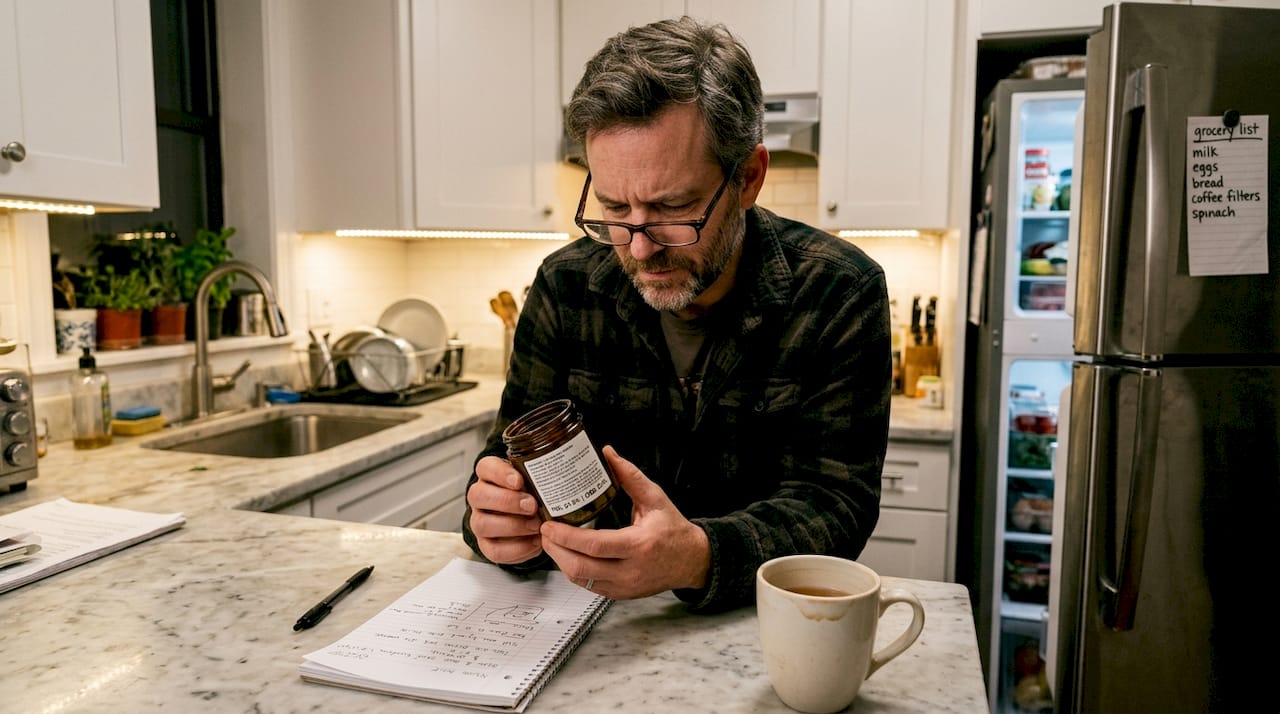
California cannabis products display THC and CBD as percentages by weight. Converting these percentages to milligrams per gram gives you the precision needed for accurate dosing. Lab-tested products are required to show accurate potencies, and reviewing Certificates of Analysis adds an extra layer of confidence.
A 20% THC flower label means 200mg THC per gram of dried flower. When you see both THC and THCA listed, remember that THCA converts to THC through decarboxylation when heated. For edibles, this conversion factor becomes critical in your calculations.
Label reading essentials:
| Label Element | What It Means | Calculation |
|---|---|---|
| THC % | Active THC by weight | % × 10 = mg/g |
| THCA % | Precursor requiring heat | % × 10 × 0.877 = THC mg/g |
| CBD % | Active CBD by weight | % × 10 = mg/g |
| Total cannabinoids | Sum of all compounds | Reference for potency |
Pro Tip: Always check for both THC and THCA percentages on flower labels. The THCA number is typically higher and requires the 0.877 conversion factor to estimate actual THC after heating.
For deeper insights into interpreting cannabis labels and understanding CBD percentages, explore these comprehensive guides.
The math behind THC and CBD dosage: Formulas and examples
Turning label percentages into actual doses requires straightforward formulas tailored to your consumption method. Whether you’re using flower, edibles, or tinctures, these calculations ensure precision.
Flower to edibles formula:
THC calculation accounts for decarboxylation: (grams flower × 1000 × THCA% × 0.877) ÷ servings = mg THC per dose. For example, 3.5g of flower at 18% THCA yields approximately 53mg total THC after conversion.
Step-by-step edible calculation:
- Multiply grams of flower by 1000 to convert to milligrams
- Multiply by THCA percentage (as a decimal)
- Multiply by 0.877 to account for decarboxylation loss
- Divide by number of servings for per-dose amount
Tincture dosing:
Multiply dropper volume (ml) by concentration (mg/ml) to find THC or CBD per serving. A 1ml dropper from a 30mg/ml tincture delivers 30mg per full dropper.
| Method | Formula | Example |
|---|---|---|
| Flower (smoked) | Weight × % × 10 | 0.5g × 20% = 100mg available |
| Edibles (homemade) | (g × 1000 × THCA% × 0.877) ÷ servings | (3.5 × 1000 × 0.18 × 0.877) ÷ 12 = 46mg/serving |
| Tincture | Dropper ml × mg/ml | 1ml × 30mg/ml = 30mg |
| Store edible | Package label | 10mg per gummy (direct) |
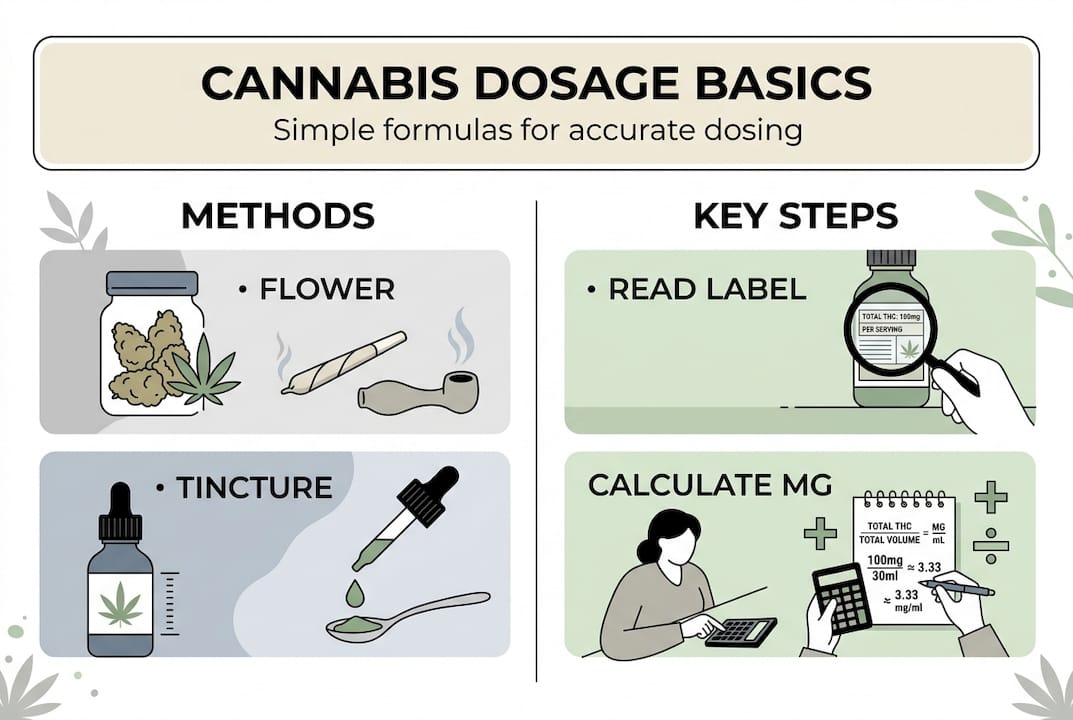
Microdosing delivers wellness benefits without impairment, with doses between 1-5mg THC providing daily support for stress and relaxation.
Pro Tip: When making edibles at home, always account for the 0.877 decarboxylation factor. Skipping this step overestimates your dose by about 12%, which can mean the difference between relaxation and discomfort.
For detailed THC/CBD formulas and advanced calculations, explore our comprehensive dosing resources.
How different consumption methods affect dosage needs
Your consumption method dramatically changes how cannabis affects you. Inhalation delivers effects within minutes but lasts 2-4 hours. Edibles take 30-120 minutes to onset, peak at 2-3 hours, and last 4-8 hours. Tinctures fall between these extremes with moderate onset and duration.
Method timing and absorption:
- Inhalation (smoking/vaping): Effects in 2-10 minutes, peak at 30 minutes, duration 2-4 hours
- Edibles: Onset 30-120 minutes, peak 2-3 hours, duration 4-8 hours
- Tinctures (sublingual): Onset 15-45 minutes, peak 1-2 hours, duration 3-6 hours
- Topicals: Localized effects, minimal systemic absorption, variable duration
An empty stomach accelerates edible onset but also intensifies effects. Your metabolism, tolerance, and recent food intake all influence how quickly and strongly you feel cannabis. These variables make method selection as important as dose calculation.
“Never redose edibles before the full onset window passes. The most common mistake is taking more at 45 minutes when effects haven’t peaked yet. Wait at least 2 hours before considering an adjustment.”
For best practices for consumption and detailed edible dosing charts, these resources provide method-specific guidance.
Personalizing your cannabis dose: Factors and tracking
Finding your perfect dose means accounting for individual factors and keeping detailed records. The “start low, go slow” approach protects you from overconsumption while you dial in your ideal amount. Your metabolism, body weight, tolerance, age, and consumption method all influence how cannabis affects you.
Core personalization variables:
- Metabolism: Faster metabolizers process THC and CBD more quickly
- Body weight: Larger individuals may require slightly higher doses
- Tolerance: Regular users need more for the same effect
- Age: Older adults often experience stronger effects at lower doses
- Method: Inhalation, edibles, and tinctures require different starting points
- Wellness goals: Relaxation, sleep, or focus each have optimal dose ranges
Tracking your effects in a journal for one week reveals patterns that raw numbers can’t show. Note your dose, method, timing, food intake, and effects at 30 minutes, 1 hour, 2 hours, and 4 hours. This data becomes your personalized dosing roadmap.
Pro Tip: Create a simple tracking template with columns for date, product, dose, method, timing, food status, and effects. After 7-10 sessions, patterns emerge that show your optimal dose range and preferred timing.
For guidance on tailoring CBD doses and understanding individual factors, these resources offer personalization strategies.
Microdosing, edge cases, and safety with cannabis
Microdosing with 1-5mg THC supports daily wellness without unwanted side effects or impairment. This approach integrates seamlessly into daily routines, providing subtle relaxation and stress relief throughout the day.
Sensitive users may need even lower starting doses, while those with high tolerance require careful upward titration. Medical needs sometimes demand higher doses than recreational users, making professional guidance valuable.
Overconsumption signs and responses:
- Anxiety or paranoia: Find a quiet space, practice deep breathing
- Dizziness or nausea: Lie down, stay hydrated, eat light snacks
- Rapid heartbeat: Remember it’s temporary, focus on calm breathing
- Extreme drowsiness: Rest safely until effects subside
- Disorientation: Take CBD if available to counteract THC effects
Overconsumption is managed through hydration, CBD, and rest. While uncomfortable, cannabis has no fatal overdose risk.
“Stay within your comfort zone. Cannabis should enhance relaxation and wellness, not create anxiety. If you feel uncomfortable, remember that effects are temporary and will pass safely with time.”
Explore our microdosing overview and beginner CBD microdosing guides for detailed protocols.
When to consult a professional about cannabis dosage
Medical conditions and medications may require individualized cannabis advice beyond self-experimentation. Potential CYP450 enzyme interactions with medications can influence how your body processes THC and CBD, making professional guidance essential for safety and wellness optimization.
Who should seek professional guidance:
- Individuals taking prescription medications, especially blood thinners or sedatives
- People with liver or kidney conditions affecting drug metabolism
- Those with mental health conditions like anxiety or depression
- Anyone experiencing unusual or concerning responses to cannabis
- Medical cannabis patients seeking therapeutic dosing protocols
Clinicians familiar with cannabis can tailor dosage recommendations to your specific health profile and wellness goals. Combining self-experimentation with expert oversight maximizes safety and effectiveness.
Find your perfect dose with California Blendz support
Once you understand the calculation formulas and personalization factors, putting them into practice becomes your next step. California Blendz offers resources, expert articles, and curated California products to support your dosing journey. Whether you’re exploring microdosing for daily wellness or calculating precise edible doses, you’ll find tools designed for California consumers seeking relaxation and wellness optimization.
Our platform connects you with lab-tested products from California’s Emerald Triangle, complete with detailed potency information and Certificates of Analysis. Explore California Blendz resources for product selection guidance, advanced dosage advice for complex calculations, and wellness-focused CBD tips tailored to your relaxation goals. Your perfect dose is within reach with the right information and quality products.
Frequently asked questions
How do I calculate the THC in a homemade edible?
Multiply grams of dried flower by 1000, then by THCA percent, then by 0.877 for decarboxylation adjustment, and divide by number of servings.
What’s a safe starting dose for relaxation with THC edibles?
Start with 1-5mg THC if new to cannabis, then wait at least 2 hours for full effect before increasing your dose.
How can I use CBD with THC to balance effects?
Choose a 1:1 or higher CBD:THC ratio for a smoother, more relaxing experience with fewer side effects.
What should I do if I take too much cannabis?
Hydrate, rest, and take CBD if available; effects generally pass safely with time and supportive care.
When should I consult a professional about cannabis dosing?
If you have medical conditions or take medications with potential CYP450 interactions, consult a healthcare provider familiar with cannabis.


