Cannabis dosage calculation tips for precise THC & CBD
Written by Trevor

Navigating cannabis dosages can feel overwhelming when you’re staring at product labels filled with percentages, milligrams, and unfamiliar abbreviations. Many consumers struggle to translate lab results into safe, effective serving sizes, leading to unpredictable experiences that range from underwhelming to uncomfortably intense. Precise calculation is the foundation of a controlled, beneficial cannabis journey, especially with hemp-derived THC and CBD products where potency varies widely. This guide delivers practical formulas, comparison insights, and selection criteria to help you dose with confidence and achieve your wellness goals every time.
Table of Contents
- Key takeaways
- Criteria for calculating cannabis dosages
- Top tips for calculating THC dosage in homemade edibles
- Comparing THC and CBD dosage calculation methods
- Choosing the right cannabis dosage strategy for your wellness goals
- Explore precise cannabis dosing with California Blendz
- Frequently asked questions
Key Takeaways
| Point | Details |
|---|---|
| Formula based dosing | Accurate cannabis dosing relies on converting label figures into exact milligram amounts using a calculation that accounts for potency and serving size. |
| Know product potency | Understanding the percentage or milligram content helps you determine how much to consume for your desired effects. |
| Consumption method affects dose | Different delivery methods alter onset and bioavailability, so you must adjust calculations for smoking, edibles, or tinctures. |
| Start low and adjust | Begin with small doses and increase gradually while tracking your responses to find a comfortable effect level. |
| Know total mg per package | Identify the total active milligrams in the product and how many servings it provides to plan dosing accurately. |
Criteria for calculating cannabis dosages
Accurate dosage starts with understanding the numbers on your product label. Cannabis dosing basics require you to identify THC and CBD percentages, which represent the concentration of active compounds in the product. For flower, this appears as a percentage by weight, while tinctures and edibles list total milligrams per container and per serving. Knowing these values lets you calculate exactly how much you’re consuming.
Consumption method dramatically changes how you calculate and experience your dose. Smoking or vaping flower delivers cannabinoids almost instantly, but much of the compound burns away, so you absorb only a fraction of the total THC or CBD. Edibles require digestion and liver metabolism, converting THC into a more potent form that lasts longer but takes 60 to 90 minutes to kick in. Tinctures fall somewhere in between, offering faster onset when held under the tongue. Each method demands a different calculation approach and dosage range.
Individual factors also shape your ideal dose. Your tolerance, body weight, metabolism, and experience level all influence how cannabinoids affect you. A 5 mg THC edible might relax a regular user while overwhelming a first-timer. Legal limits and safety guidelines provide guardrails, but personal response varies widely. Track your experiences and adjust incrementally to find the sweet spot that delivers your desired effects without discomfort.
Key criteria to consider when calculating cannabis dosages:
- Know the total milligrams of THC or CBD in the entire product
- Identify the number of servings or doses per package
- Factor in your consumption method and its bioavailability
- Account for your personal tolerance and prior experience
- Follow legal limits and start within recommended beginner ranges
Top tips for calculating THC dosage in homemade edibles
Homemade edibles offer control and customization, but they also demand precise math to avoid unpredictable potency. The gold standard formula converts raw flower into active THC milligrams, accounting for the decarboxylation process that activates THCA. Calculate total THC by multiplying grams of flower by 1000, then by the THCA percentage, then by 0.877 to reflect the conversion during heating. Divide that total by the number of servings you plan to make, and you’ll know the THC content per piece.
Here’s the step-by-step process:
- Weigh your cannabis flower in grams and note the THCA percentage from lab results or packaging.
- Multiply grams by 1000 to convert to milligrams, then multiply by the THCA percentage as a decimal.
- Multiply that result by 0.877 to account for the loss during decarboxylation and get total active THC in milligrams.
- Divide the total THC by the number of servings you’ll create to find the THC per dose.
- Label each serving clearly and store them separately to maintain consistent dosing.
Pro Tip: Always round down your final per-dose calculation to build in a safety margin. If your math says 12.3 mg per brownie, treat it as 12 mg to avoid accidental overconsumption.
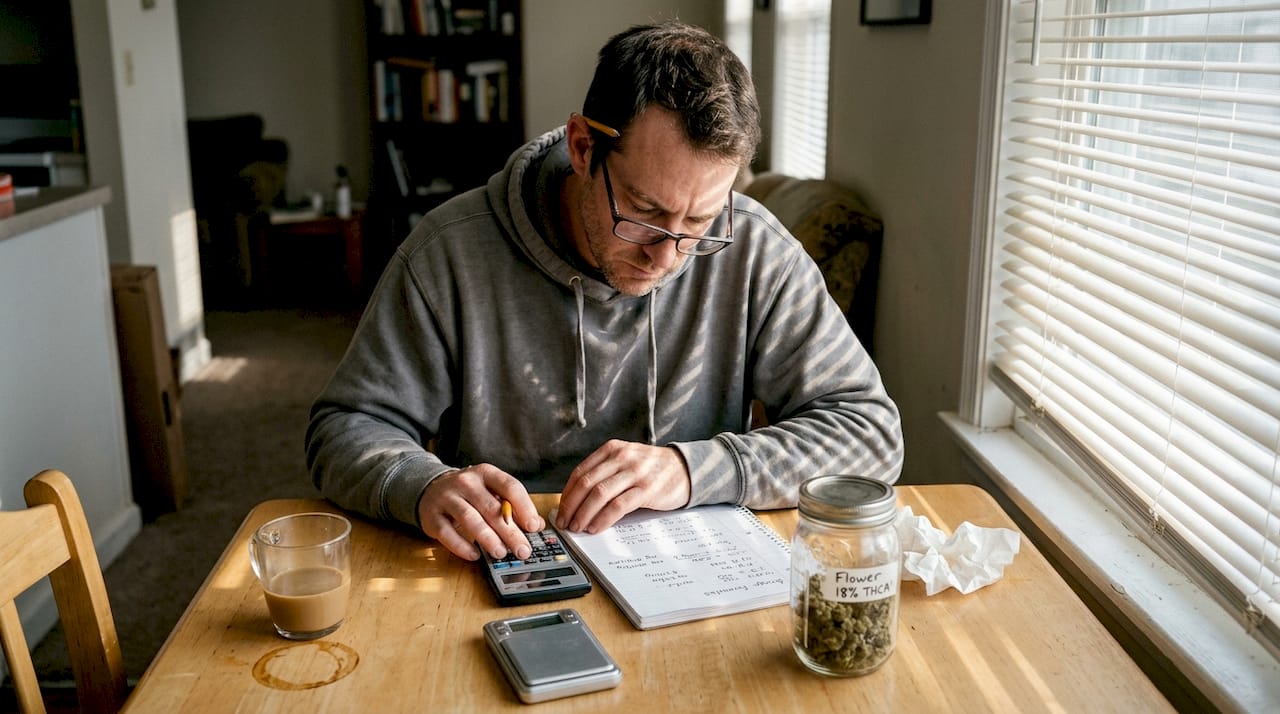
Let’s walk through a real example. You have 3.5 grams of flower testing at 18% THCA. First, 3.5 × 1000 = 3500 mg of plant material. Next, 3500 × 0.18 = 630 mg of THCA. Then, 630 × 0.877 = 552.51 mg of active THC after decarboxylation. If you divide that into 24 cookies, each cookie contains roughly 23 mg of THC. Adjust the number of servings or the amount of flower to hit your target dose, whether that’s a mild 5 mg or a stronger 15 mg per piece.
| Flower amount | THCA % | Total THC (mg) | Servings | THC per serving |
|---|---|---|---|---|
| 3.5 g | 18% | 552 | 24 | 23 mg |
| 7 g | 20% | 1228 | 48 | 25.6 mg |
| 1 g | 15% | 131 | 10 | 13.1 mg |
Accurate measurement tools make all the difference. Use a digital scale that reads to 0.01 grams for flower and a kitchen scale for portioning batter or dough evenly. Uneven mixing or cutting can concentrate THC in some servings and leave others weak, so stir your infused butter or oil thoroughly and divide portions with care. Consistency across servings ensures every dose delivers the same experience.
Comparing THC and CBD dosage calculation methods
THC and CBD dosing differ fundamentally in how products are labeled and how you apply formulas. THC content in flower is usually listed as THCA, the raw acidic form that converts to psychoactive THC when heated. You must account for this conversion using the 0.877 factor, as explained in the edibles section. CBD products, especially tinctures and capsules, typically list CBD content directly in milligrams per serving, so no conversion is needed. This makes CBD dosing more straightforward for beginners.
Product format also changes the calculation approach. Flower requires weight-based math and conversion factors, while tinctures and edibles present cannabinoid content as ready-to-use milligrams. A 30 mL CBD tincture labeled 1000 mg total contains roughly 33 mg per 1 mL dropper if the bottle holds 30 servings. For THC tinctures, check whether the label lists THCA or delta-9 THC, as some brands pre-calculate the active form for you. Always read labels carefully to know which number you’re working with.
Consumption method impacts how you perceive and respond to the dose. Smoking or vaping delivers cannabinoids to your bloodstream in seconds, so you can titrate your dose in real time by taking smaller hits. Edibles and capsules require you to commit to a dose upfront, with effects building slowly over an hour or more. Edibles vs smoking also differ in duration, with edibles lasting four to eight hours compared to one to three hours for inhalation. This means a 10 mg edible feels much stronger and longer-lasting than vaping 10 mg of flower.
| Factor | THC dosing | CBD dosing |
|---|---|---|
| Label format | Often THCA % requiring conversion | Direct mg per serving |
| Calculation | Weight × % × 0.877 for flower | Read mg directly from label |
| Onset time | Varies by method (instant to 90 min) | Varies by method (instant to 90 min) |
| Psychoactive | Yes, dose carefully | No, wider safety margin |
Pro Tip: Keep a dosing journal that notes the product type, cannabinoid content, consumption method, and your response. Over time, patterns emerge that help you predict how different doses and formats will affect you.
Avoid mixing up THC and CBD calculations, especially when making edibles or combining products. Using a THC formula for CBD or vice versa can lead to significant dosing errors. If you’re blending cannabinoids, calculate each separately and add the totals to understand your full intake. This precision prevents unintended effects and helps you fine-tune your wellness routine.
Choosing the right cannabis dosage strategy for your wellness goals
Your wellness objective determines your ideal dose and product type. Relaxation and stress relief often respond well to low doses of THC (2 to 5 mg) or moderate CBD (15 to 30 mg), while pain management may require higher CBD doses (30 to 60 mg) or balanced THC ratios. Focus and creativity can benefit from microdoses of THC (1 to 2.5 mg) that enhance mood without impairing cognition. Define your goal clearly before selecting a product or calculating a dose, as this guides every decision.
Safe cannabis dosing always starts low and goes slow. First-time users should begin with the minimum effective dose, typically 2.5 to 5 mg of THC or 10 to 20 mg of CBD, and wait at least two hours before considering more. This approach minimizes the risk of overconsumption and lets you gauge your individual response. Even experienced users should start conservatively when trying a new product or consumption method, as potency and effects can vary.
Tracking your doses and effects builds a personalized dosing roadmap. Record the product name, cannabinoid content, time of consumption, and how you felt at 30 minutes, one hour, and two hours. Note any negative reactions like anxiety or drowsiness, and highlight the doses that delivered your desired outcome. After a few weeks, you’ll identify patterns that reveal your optimal range and preferred formats.
Product form shapes your dosing strategy in practical ways. Edibles offer long-lasting effects and precise per-serving dosing, making them ideal for sustained relief or sleep support. Tinctures allow flexible dosing by the drop and faster onset, perfect for adjusting throughout the day. Flower and vapes provide immediate feedback, letting you stop once you reach your desired state. Match the product to your lifestyle and wellness timeline for the best results.
Key strategies for personalizing your cannabis dosage:
- Identify your primary wellness goal before selecting a dose
- Start with the lowest recommended dose for your experience level
- Wait at least two hours before taking more, especially with edibles
- Track each dose and your response in a journal or app
- Adjust incrementally by 2.5 to 5 mg until you find your sweet spot
- Consult dosing guides and product labels regularly for safety
Pro Tip: If you accidentally take too much THC, stay calm and hydrate. The effects will pass, but you can ease discomfort by resting in a quiet space, snacking on something with CBD if available, and reminding yourself that no one has ever experienced a fatal cannabis overdose.
Regular reassessment keeps your dosing strategy effective over time. Tolerance can build with frequent use, requiring slight increases to maintain the same effects. Conversely, taking a break for a few days or weeks can reset your sensitivity and let you return to lower, more economical doses. Life changes like weight fluctuations, stress levels, or new medications can also shift your ideal dose, so stay flexible and attentive to your body’s signals.
Explore precise cannabis dosing with California Blendz
Achieving the perfect dose starts with products you can trust. California Blendz offers a curated selection of hemp-derived THC and CBD flower, pre-rolls, and bundles, all lab-tested for potency and purity. Each product page includes detailed cannabinoid profiles and third-party test results, so you know exactly what you’re consuming and can calculate your dose with confidence. Whether you’re microdosing for focus or seeking deeper relaxation, you’ll find transparent, high-quality options grown sustainably in California’s Emerald Triangle.
Beyond products, California Blendz provides expert dosing guides and educational resources tailored to your wellness goals. Explore articles on safe consumption practices, cannabinoid science, and product selection to deepen your understanding and refine your routine. With fast shipping across the U.S. and a commitment to legal compliance and transparency, you can take the next step toward precise dosing and better cannabis experiences. Visit the site today to discover your ideal match and elevate your wellness journey.
Frequently asked questions
How do I calculate the correct dose of THC in homemade edibles?
Multiply grams of flower by 1000, then by the THCA percentage, then by 0.877 to get total active THC in milligrams. Divide that total by the number of servings you plan to make to find the THC per dose. Always use accurate measurements and label each serving clearly to maintain consistency and safety.
What’s the difference between THC and CBD dosing calculations?
THC in flower is often listed as THCA and requires conversion to active THC using a 0.877 factor, while CBD products typically display milligrams per serving directly on the label. THC dosing demands more caution due to psychoactive effects, whereas CBD offers a wider safety margin. Each cannabinoid uses distinct formulas and considerations based on product type and labeling standards.
How can I safely adjust my cannabis dosage over time?
Start with a low dose and observe your response for at least two hours before considering an increase. Raise your dose incrementally by 2.5 to 5 mg of THC or 10 to 15 mg of CBD, tracking each change in a journal. This gradual approach helps you identify your minimum effective dose while avoiding overconsumption and unwanted side effects.


