
How to Read THC Percentages for Accurate Dosing
Written by Trevor

Navigating THC percentages is no small feat for American cannabis consumers, especially in California where hemp-derived products vary widely in potency. Accurate dosing relies on more than just a product label. It demands careful interpretation of laboratory results and trustworthy Certificates of Analysis. Over 60% of users struggle to match THC content to their needs, leaving many unsure about safe dosing. This guide helps you evaluate and compare THC percentages, empowering better wellness choices with greater certainty.
Table of Contents
- Step 1: Prepare by Gathering Product Lab Results
- Step 2: Identify and Interpret THC Percentage Values
- Step 3: Compare THC Levels Across Product Types
- Step 4: Calculate Desired Dosing Based on THC Content
- Step 5: Verify THC Information for Quality Assurance
Quick Summary
| Key Insight | Explanation |
|---|---|
| 1. Obtain Lab Results | Always request the latest Certificate of Analysis from dispensaries to verify THC content and safety. |
| 2. Interpret THC Percentages | Understand that THC percentages represent concentration; higher numbers do not always mean stronger effects. |
| 3. Compare THC Across Products | Different products have varying THC concentrations; know their differences for safer dosing choices. |
| 4. Calculate Your Dose | Identify your product’s THC percentage and personal tolerance to determine an appropriate dose in milligrams. |
| 5. Verify Quality Assurance | Always check the authenticity of lab reports and ensure comprehensive testing for reliable product information. |
Step 1: Prepare by Gathering Product Lab Results
Understanding your cannabis product’s THC percentages begins with obtaining reliable laboratory test results. These scientific documents provide an accurate snapshot of the cannabinoid content, enabling precise dosing and informed consumption. Laboratory testing methods offer critical insights into the chemical composition of your chosen product.
To collect comprehensive lab results, request the most recent Certificate of Analysis directly from the dispensary or manufacturer. This document should detail not just THC percentages, but also breakdown of different THC variants like Delta 9 THC and Delta 8 THC. Look for third party lab reports that clearly show potency testing, contaminant screening, and precise cannabinoid measurements. Digital versions are typically available through product websites or QR codes on packaging, while physical dispensaries can print these documents upon request.
Careful examination of these lab results allows you to understand the exact concentration of active compounds, helping you make informed decisions about dosage and potential effects. Pay special attention to total THC percentages, which combine different THC molecular forms to give you a complete potency profile.
Pro tip: Always verify the lab report date and ensure you are reviewing the most current analysis for your specific product batch.
Step 2: Identify and Interpret THC Percentage Values
Reading THC percentages requires careful attention to detail and understanding how these numbers translate into potential effects. Cannabis potency measurement involves complex calculations that go beyond simple number reading. THC percentages represent the concentration of tetrahydrocannabinol by weight in the product typically expressed as a percentage.
To interpret THC values accurately, start by looking at the total percentage listed on the product label or lab report. A 20% THC concentration means 200 milligrams of THC per gram of cannabis. However understanding these numbers is not just about raw percentages. Consider factors like consumption method personal tolerance and individual body chemistry which all impact how THC affects you. Some products might list total THC percentages which combine different THC molecular variants providing a more comprehensive potency profile.
Remember that while higher THC percentages often suggest more intense effects this is not a universal rule. Individual experiences can vary significantly based on multiple physiological and environmental factors. Pay attention to other cannabinoid percentages like CBD which can modulate THC effects and contribute to your overall experience.
Pro tip: Start with lower THC percentage products and gradually increase to understand your personal tolerance and response.
Step 3: Compare THC Levels Across Product Types
Marijuana potency variations present complex considerations when selecting cannabis products. Understanding THC concentration differences across product types is crucial for making informed dosing decisions. Cannabis products range dramatically in potency from traditional flower to concentrated extracts each with unique THC percentage profiles.
Traditional marijuana flower typically contains 10-30% THC concentration. In contrast concentrates like wax shatter and oils can range from 60-90% THC. Edibles present another variation with THC content measured in milligrams per serving instead of percentage. Vape cartridges often fall between flower and concentrate potencies averaging 50-80% THC. Each product type requires a different approach to dosing due to these significant percentage variations.
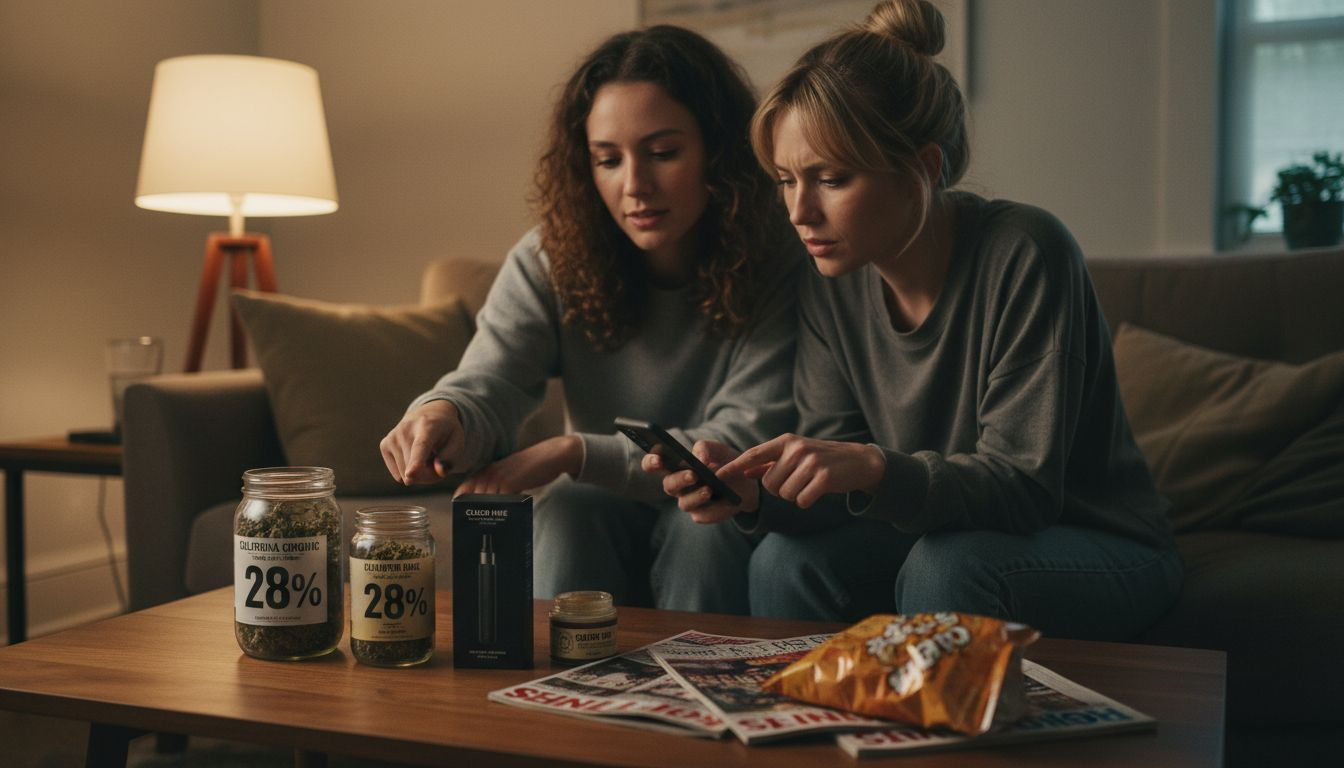
Careful comparison of THC levels helps prevent overconsumption and potential adverse effects. Consider your tolerance experience level and desired outcome when selecting between product types. Newer consumers should start with lower THC percentage products like flower or low dose edibles before exploring more concentrated options. Understanding these percentage differences allows you to make more precise and safe consumption choices.
Here’s a comparison of THC percentages across common cannabis product types to help guide your selection:
| Product Type | Typical THC Percentage | Dosage Measurement | Common Use Scenario |
|---|---|---|---|
| Flower | 10%-30% | By weight (grams) | Smoking, vaporizing |
| Concentrates | 60%-90% | By weight (grams) | Dabbing, vaping |
| Edibles | 5-50 mg per serving | By serving (milligrams) | Oral ingestion |
| Vape Cartridges | 50%-80% | By weight (grams) | Vaping |
Pro tip: Always start with the lowest THC percentage product and incrementally increase to find your ideal personal dosage.
Step 4: Calculate Desired Dosing Based on THC Content
Cannabis dosage calculation requires understanding your product’s THC percentage and your personal tolerance level. Precise dosing involves converting percentage values into actual milligram amounts by considering the total weight of your product and its THC concentration.
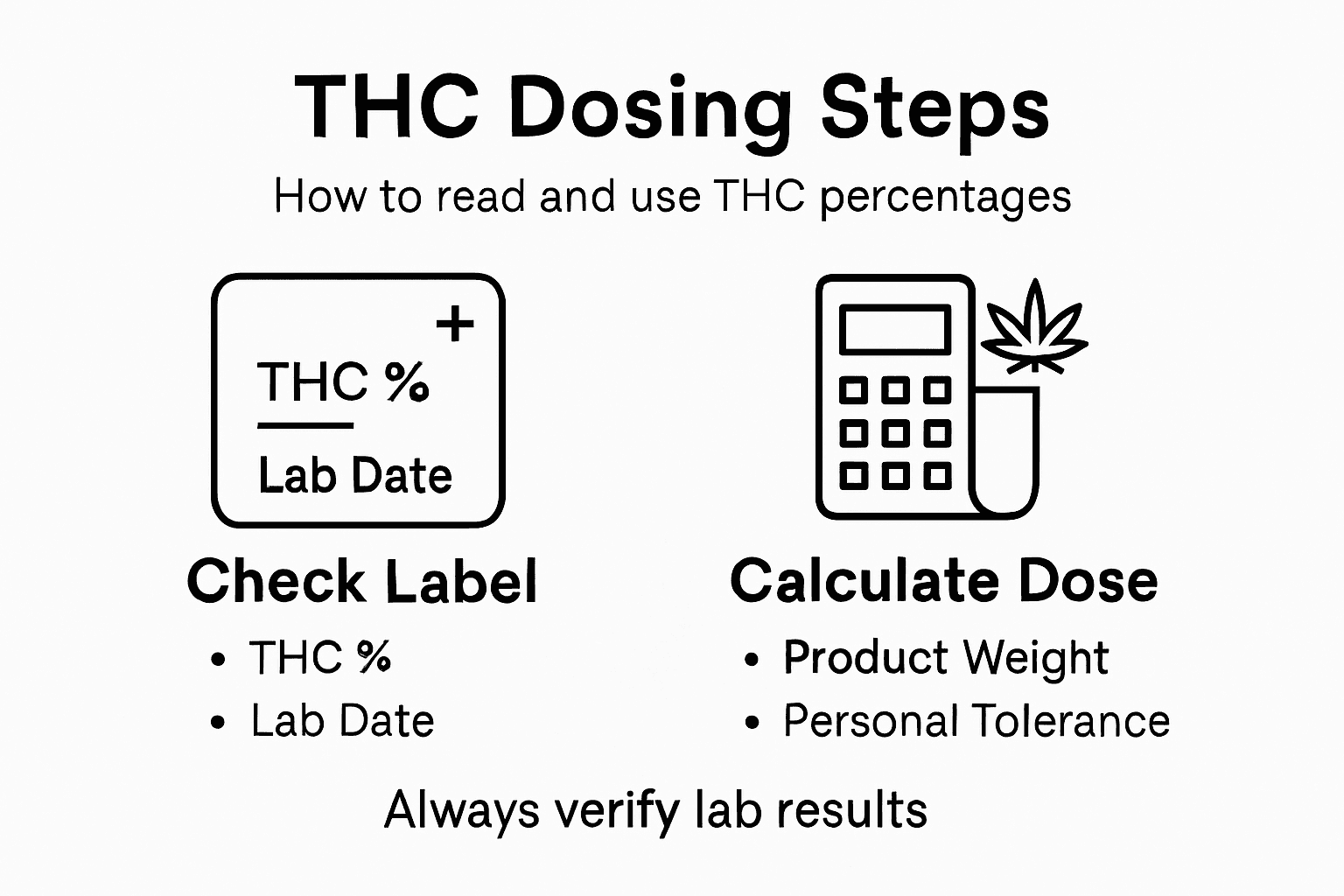
To calculate your desired dose, start by identifying the THC percentage on your product label. For example, a flower with 20% THC means 200 milligrams of THC per gram. Determine your target dose based on your experience level. Beginners typically start with 2.5 to 5 milligrams of THC, while experienced users might consume 10 to 15 milligrams. Multiply the total product weight by the THC percentage to determine total cannabinoid content. For instance, a half gram of 20% THC flower contains approximately 100 milligrams of total THC.
Consider your consumption method as it significantly impacts absorption and effect intensity. Inhalation methods like smoking or vaping provide faster onset but shorter duration, while edibles offer slower absorption with longer lasting effects. Always account for your individual metabolism, body weight, and prior cannabis experience when calculating your ideal dosage.
The table below summarizes key factors affecting effective THC dosage calculations:
| Factor | Description | Dosing Impact |
|---|---|---|
| Consumption Method | Inhalation vs. ingestion | Onset and duration |
| Product Potency | THC percentage per product type | Total THC intake |
| Personal Tolerance | User experience and sensitivity | Safe starting dose |
| Metabolism & Body Weight | Individual physical characteristics | Absorption rate |
Pro tip: Use a digital scale to precisely measure your product weight and a dosage calculator to convert percentages into exact milligram amounts.
Step 5: Verify THC Information for Quality Assurance
Laboratory validation procedures are essential for confirming the accuracy of THC percentages printed on product labels. Quality assurance requires careful examination of third party laboratory Certificates of Analysis (COA) to validate the cannabinoid content and ensure consumer safety.
When reviewing a Certificate of Analysis, focus on key elements that demonstrate scientific rigor. Check for accredited laboratory credentials the testing date and the specific testing methodology used. Legitimate COAs will show total cannabinoid percentages with variance limits typically within 10% of the reported value. Look for comprehensive testing that includes not just THC percentages but also screenings for potential contaminants like pesticides heavy metals and microbial impurities.
Beyond reading the document itself verify the COA authenticity by cross referencing the batch number with the manufacturer and checking for a traceable QR code or verification link. Some advanced COAs provide detailed breakdowns of different THC variants including Delta 8 and Delta 9 THC offering a more nuanced understanding of the products chemical composition. Reputable brands will make these documents easily accessible and transparent.
Pro tip: Always download and save digital copies of product Certificates of Analysis for personal reference and future comparison.
Master Your Dosing with Confidence Using Premium California Blendz Products
Accurate dosing starts with understanding THC percentages and requires trustworthy, lab-tested cannabis you can rely on. If you found value in learning how to read THC values for precise intake, then exploring our curated selection at The THCa Prestige Vault – California Blendz will empower your cannabis experience. Each product offers clear lab results so you know exactly what you are consuming.
Take control of your wellness journey today by choosing organic, sustainably grown flower and blends with verified potency. Visit California Blendz and browse exquisite options like The Founder’s Collection – California Blendz to find your perfect match. Don’t wait to experience relaxation and relief tailored precisely to your needs.
Frequently Asked Questions
How do I read THC percentages on cannabis products?
To read THC percentages, check the product label or the laboratory Certificate of Analysis. Look for the total THC percentage, which indicates the concentration of tetrahydrocannabinol by weight; for instance, 20% THC means there are 200 milligrams of THC per gram of cannabis.
What factors should I consider when interpreting THC percentage values?
Consider your personal tolerance, consumption method, and individual body chemistry. Higher THC percentages can suggest stronger effects, but personal experiences can vary greatly, so start low and adjust accordingly.
How can I calculate my ideal dosing based on THC content?
To calculate your ideal dose, first identify the THC percentage on the product label. For example, if a product has 20% THC, then a half-gram will contain about 100 milligrams. Determine your target dose based on experience level, starting with small amounts like 2.5 to 5 milligrams.
Why is it important to verify THC information for quality assurance?
Verifying THC information ensures you are consuming safe and accurately labeled cannabis products. Always check the third-party laboratory Certificates of Analysis for accreditation and testing methodologies to confirm that the reported THC percentages are reliable.
What types of cannabis products have different THC percentage ranges?
Cannabis products vary greatly in THC concentration. For example, traditional flower typically has 10-30% THC, concentrates can range from 60-90%, and edibles may contain THC measured in milligrams per serving, usually between 5 and 50 milligrams. Always compare these ranges when selecting a product.
How often should I check laboratory results for cannabis products?
You should check laboratory results every time you purchase a new batch of cannabis. The Certificate of Analysis should be recent, ideally from the last few weeks, to ensure you’re using the most accurate and up-to-date THC information.
Recommended
- Understanding the Relationship Between CBD Flavor Profile and CBD Perc – California Blendz
- Understanding THC Content in CBD Flower: What You Need to Know – California Blendz
- How long does the high from inhaling Delta-8 THC typically last? – California Blendz
- Mastering the Art of Keeping THC Levels Low During CBD Flower Harvesti – California Blendz


