
Cannabis and Wellness Routines: Benefits and Safe Use
Written by California Blendz

The search for effective wellness routines is transforming across the American landscape, with more people turning to cannabis as part of their daily health rituals. Over 60 percent of American adults report interest in natural wellness alternatives, highlighting a growing curiosity about how cannabinoids impact both mind and body. If you are curious about integrating cannabis into your own personalized routine, this guide breaks down the essentials you need to make informed and safe choices.
Table of Contents
- Cannabis And Wellness Routines Explained
- Types Of Cannabis: CBD, THCa, And Effects
- Integrating Cannabis Into Daily Wellness
- Legal Compliance And Product Safety Tips
- Risks, Side Effects, And Safe Dosing
Key Takeaways
| Point | Details |
|---|---|
| Personalized Wellness Integration | Incorporating cannabis into wellness routines requires a tailored approach based on individual health goals and biochemistry. |
| Cannabinoid Understanding | Key cannabinoids like CBD and THCa have distinct effects and should be chosen based on the specific wellness objective. |
| Consumption Method Importance | Different administration methods affect the onset and duration of effects, making it crucial to select the right method for desired outcomes. |
| Legal and Safety Compliance | Awareness of local cannabis regulations and product safety measures is essential for responsible consumption and wellness management. |
Cannabis and Wellness Routines Explained
Cannabis has increasingly emerged as a sophisticated wellness tool for individuals seeking natural approaches to health management. Modern wellness routines are moving beyond traditional methods, incorporating cannabinoids as strategic elements for holistic balance. Research analyzing survey responses from chronic pain patients reveals diverse approaches to cannabis integration, highlighting its potential for personalized wellness strategies.
Wellness routines involving cannabis are not one-size-fits-all but rather intricate, individualized practices. Users typically explore different administration routes, cannabinoid profiles, and timing to achieve specific health objectives. Some individuals might incorporate cannabis flower for evening relaxation, while others use specific cannabinoid extracts to target pain management or sleep enhancement. Cannabis and Natural Wellness: Pathways to Relief provides deeper insights into these nuanced approaches.
Successful cannabis wellness integration requires understanding personal biochemistry, desired outcomes, and responsible consumption principles. Key considerations include selecting appropriate cannabinoid ratios, understanding individual tolerance levels, and maintaining consistency in dosing. Factors like metabolism, existing health conditions, and personal wellness goals significantly influence how cannabis can be effectively incorporated into daily routines.
Pro Tip - Wellness Approach: Start with low doses, track your body’s response meticulously, and gradually adjust your cannabis wellness routine based on careful personal observation and professional guidance.
Types of Cannabis: CBD, THCa, and Effects
Cannabis contains a complex array of compounds that offer unique wellness potential, with CBD and THCa emerging as particularly intriguing cannabinoids. Research indicates that cannabinoids like CBDA and THCA exhibit significant anti-inflammatory and neuroprotective effects, suggesting profound therapeutic possibilities for various health conditions.
The primary cannabinoids differ substantially in their chemical structures and potential impacts. CBD (cannabidiol) is non-psychoactive and often used for relaxation and stress management, while THCa (tetrahydrocannabinolic acid) is a precursor to THC that offers unique properties before decarboxylation. Understanding THCa’s unique characteristics reveals its potential for wellness applications without producing intoxicating effects.
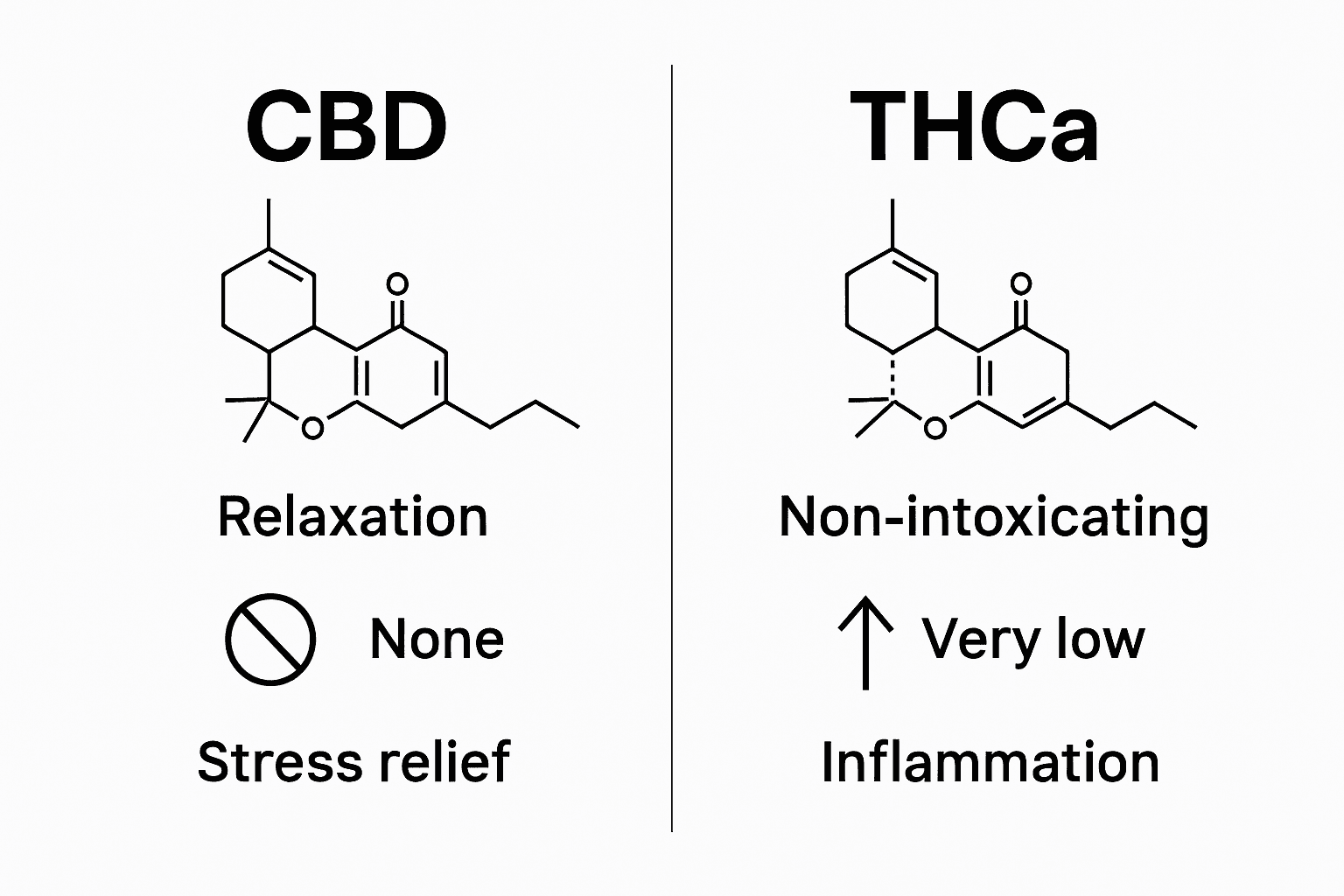
According to national academic research on cannabis chemotypes, cannabis plants demonstrate remarkable variation in cannabinoid concentrations. These variations directly influence potential therapeutic applications, with some strains offering higher CBD content for anxiety management, while others provide more balanced cannabinoid profiles suitable for different wellness objectives.
Here is a comparison of major cannabinoids and their wellness roles:
| Cannabinoid | Effects | Typical Uses |
|---|---|---|
| CBD | Non-psychoactive relaxation | Stress, anxiety, general wellness |
| THCa | Non-intoxicating, precursor to THC | Anti-inflammatory, neuroprotection |
| THC | Psychoactive | Pain relief, appetite stimulation |
| CBG | Mildly stimulating | Mood balance, focus |
| CBN | Mildly sedative | Sleep support, relaxation |
Pro Tip - Cannabinoid Selection: Consult with healthcare professionals and start with low-dosage, lab-tested products to understand how different cannabinoid profiles interact with your individual biochemistry.
Integrating Cannabis into Daily Wellness
Integrating cannabis into daily wellness requires a thoughtful, personalized approach that considers individual health objectives and lifestyle factors. Research analyzing survey responses from chronic pain patients reveals the intricate ways individuals incorporate cannabis into their wellness practices, demonstrating the importance of tailored consumption strategies.

Successful cannabis integration involves understanding different administration routes, timing, and cannabinoid content. Some individuals might incorporate cannabis flower during evening relaxation routines, while others might use specific extracts for targeted relief during daytime activities. Cannabis and Mindfulness techniques can further enhance the overall wellness experience, providing holistic approaches to stress management and personal well-being.
Wellness routines with cannabis are not uniform but require careful consideration of personal biochemistry, tolerance levels, and specific health goals. Factors like metabolism, existing health conditions, and individual wellness objectives play crucial roles in determining the most effective cannabis integration strategy. Consistent tracking, gradual dosage adjustments, and professional guidance can help individuals develop a sustainable and beneficial cannabis wellness routine.
Key factors to consider when integrating cannabis into a wellness routine:
| Factor | Why It Matters | Example Adjustment |
|---|---|---|
| Metabolism | Influences how quickly effects are felt | Slow metabolism may require lower doses |
| Existing Conditions | Certain health issues affect tolerance | Heart issues may limit THC use |
| Consumption Method | Impacts onset and duration | Edibles last longer than inhalation |
| Cannabinoid Profile | Different ratios target different goals | Higher CBD for anxiety, balanced for pain |
Pro Tip - Wellness Integration: Start with low doses, maintain a detailed journal documenting your body’s response, and consult healthcare professionals to develop a personalized cannabis wellness approach that aligns with your unique health requirements.
Legal Compliance and Product Safety Tips
National Academies research on cannabis health effects highlights the critical importance of understanding legal frameworks and product safety when incorporating cannabis into wellness routines. Navigating the complex landscape of cannabis regulations requires careful attention to both federal and state guidelines, ensuring responsible and compliant consumption.
Product safety begins with thorough research and purchasing from reputable sources that provide comprehensive product labeling. Key safety considerations include verifying third-party lab testing, understanding cannabinoid concentrations, and checking for potential contaminants. Consumers should prioritize products with transparent sourcing, clear potency information, and comprehensive chemical composition reports.
The legal landscape for cannabis remains intricate, with significant variations across different jurisdictions. Users must stay informed about local regulations, age restrictions, possession limits, and permissible consumption methods. Survey research analyzing cannabis use patterns demonstrates that responsible consumers carefully navigate these complex legal environments while maintaining a commitment to personal wellness and regulatory compliance.
Pro Tip - Legal Awareness: Always verify current local cannabis regulations, maintain documentation of legal purchases, and consult local legal resources to ensure full compliance with current statutes and guidelines.
Risks, Side Effects, and Safe Dosing
Comprehensive research from the National Academies provides critical insights into cannabis consumption risks and safe dosing practices. Understanding potential side effects and implementing responsible consumption strategies are essential for maintaining wellness and minimizing potential health complications.
Cannabis can produce various side effects that vary based on individual biochemistry, dosage, and consumption method. Common side effects include temporary cognitive changes, altered perception, potential anxiety, and mild cardiovascular responses. Understanding potential medication interactions is crucial for individuals managing existing health conditions or taking prescription medications.
Safe dosing requires a methodical approach that prioritizes individual tolerance and gradual introduction. Survey research analyzing cannabis use patterns suggests starting with minimal doses and incrementally adjusting based on personal response. Factors like body weight, metabolism, previous cannabis experience, and specific wellness objectives significantly influence appropriate dosage recommendations. Consumers should always consult healthcare professionals and monitor their body’s reactions carefully.
Pro Tip - Dosage Management: Begin with the lowest possible dose, wait sufficient time to assess your body’s response, and increase incrementally only after understanding your individual tolerance levels and potential side effects.
Elevate Your Wellness Routine with Trusted Cannabis Solutions
Struggling to find a personalized cannabis wellness routine that fits your unique needs can feel overwhelming. Whether you seek relaxation, targeted relief, or a way to integrate cannabinoids like THCa and CBD responsibly, understanding the right product and dosage is key. At California Blendz, we offer carefully curated collections such as The THCa Prestige Vault and The Founder’s Collection featuring organic, lab-tested products designed to support your wellness goals with transparency and quality.
Discover how simple it is to start your cannabis wellness journey with products that match your biochemistry and health objectives. Visit California Blendz now for fast shipping, detailed lab results, and expert guidance. Take control of your daily wellness and experience the benefits of premium hemp-derived cannabis today.
Frequently Asked Questions
What are the benefits of using cannabis in wellness routines?
Cannabis can offer various benefits when integrated into wellness routines, including relaxation, stress management, pain relief, and improved sleep quality. Cannabinoids like CBD and THCa have been linked to anti-inflammatory and neuroprotective effects, enhancing overall well-being.
How can I safely integrate cannabis into my daily wellness routine?
To safely integrate cannabis, start with low doses and carefully track your body’s response. Understanding your individual biochemistry, existing health conditions, and wellness goals is crucial. Consider different consumption methods and cannabinoid profiles to find what works best for you.
What are the key considerations when selecting cannabis products for wellness?
Key considerations include identifying the cannabinoid ratios that suit your needs, understanding your tolerance levels, and ensuring products have been lab-tested for safety and potency. Always opt for reputable sources that provide transparent labeling and detailed product information.
What are the potential side effects of cannabis use?
Common side effects of cannabis include temporary cognitive changes, altered perception, potential anxiety, and mild cardiovascular responses. It’s important to monitor how your body reacts and consult with healthcare professionals, especially if you are managing other health conditions or taking medications.
Recommended
- Cannabis Wellness Without the High: Navigating the Safe & Sober Path – California Blendz
- 7 Ways Cannabis and Mindfulness Enhance Daily Wellness – California Blendz
- Cannabis and Natural Wellness: Pathways to Relief – California Blendz
- Cannabis and Daily Wellness: Complete Guide 2024 – California Blendz


