
Decoding Cannabis Labels: Master Product Insights Easily
Written by California Blendz

Over 60 percent of American adults say they feel confused by cannabis labels at least once when shopping for products. Deciphering the information packed into every package makes a real difference in safety and satisfaction, especially with so many options and ever-changing rules. This guide uncovers the proven steps to confidently read, interpret, and use cannabis labels so you can make smarter, safer decisions every time you shop.
Table of Contents
- Step 1: Gather Critical Cannabis Product Labels
- Step 2: Identify Key Label Sections And Terms
- Step 3: Interpret Cannabinoid And Terpene Content
- Step 4: Verify Lab Test Results And Compliance
- Step 5: Match Label Information To Desired Effects
Quick Summary
| Essential Insight | Detailed Explanation |
|---|---|
| 1. Examine Product Labels Carefully | Thoroughly inspect labels for symbols, warnings, cannabinoid content, and production details to understand product quality and safety. |
| 2. Learn Key Label Sections and Terms | Familiarize yourself with common labels like brand name, THC/CBD percentages, and ingredients to make informed decisions. |
| 3. Understand Cannabinoids and Terpenes | Identify total cannabinoid percentages and specific terpenes to predict effects and choose suitable products for your needs. |
| 4. Verify Lab Test Results | Check Certificates of Analysis for contaminants and testing scores to ensure the safety and reliability of products. |
| 5. Match Products to Desired Effects | Align cannabinoid and terpene profiles with your personal goals, whether for relaxation, focus, or pain relief, to enhance your experience. |
Step 1: Gather Critical Cannabis Product Labels
Navigating the world of cannabis products begins with understanding their labels. Your ability to decode product information directly impacts your purchasing decisions and overall cannabis experience. The key is learning how to systematically gather and interpret critical label details through comprehensive cannabis product transparency.
Start by examining the entire product packaging carefully. Look for standardized cannabis symbols and health warnings mandated by regulatory agencies. California’s cannabis labeling requirements emphasize that each label must display essential information including cannabinoid content percentages, specifically THC and CBD levels. Manufacturers are required to provide clear laboratory testing results showing potency, which helps you understand exactly what you are consuming.
Pro tip: Always check the production date and batch number on the label. These details can reveal crucial information about product freshness and potential recalls. Pay special attention to the total cannabinoid percentage and any terpene profile listings. These specifics help you predict potential effects and understand the product’s unique characteristics. When in doubt, do not hesitate to ask the dispensary staff for help interpreting the label details.
By mastering these label reading skills, you will become a more informed consumer capable of making confident cannabis product selections.
Step 2: Identify Key Label Sections and Terms
Decoding a cannabis product label requires understanding the critical sections and terminology that reveal essential product information. Your goal is to become fluent in reading these labels like a professional, ensuring you make informed purchasing decisions. Understanding how to read cannabis product labels is similar to learning a new language specific to cannabis products.
Start by identifying core label sections including brand name, product type, cannabinoid content, and health warnings. Look for precise THC and CBD percentage listings that indicate potency levels. Reviewing the Certificate of Analysis becomes crucial for understanding detailed product composition. Key terms you will encounter include cannabinoid profiles, terpene information, batch numbers, and production dates. Pay special attention to total cannabinoid percentages and any laboratory testing information that validates product quality and safety.

Pro tip: Create a quick reference guide for yourself listing common cannabis label terms and their meanings. This personal cheat sheet will help you rapidly interpret product information at a glance. Remember that each label section provides critical insights into product strength, potential effects, and overall quality. By developing label reading skills, you transform from a casual consumer into an educated cannabis product navigator.
Step 3: Interpret Cannabinoid and Terpene Content
Unlocking the secrets of cannabis product labels requires understanding the complex world of cannabinoids and terpenes. Your goal is to become a savvy consumer who can decode the chemical composition that determines a product’s unique effects and characteristics. Research on cannabinoid serving labeling reveals the intricate science behind product potency and consumer understanding.
Start by focusing on the total cannabinoid percentage, which typically includes THC and CBD levels. These numbers tell you the potential strength and potential effects of the product. Exploring cannabis terpene profiles becomes crucial for understanding the nuanced aromatic and therapeutic characteristics. Look for specific terpene listings like myrcene, limonene, or pinene, which contribute to the product’s flavor, aroma, and potential wellness benefits. Pay attention to the ratio between different cannabinoids and the terpene composition, as this interaction creates what cannabis experts call the entourage effect.
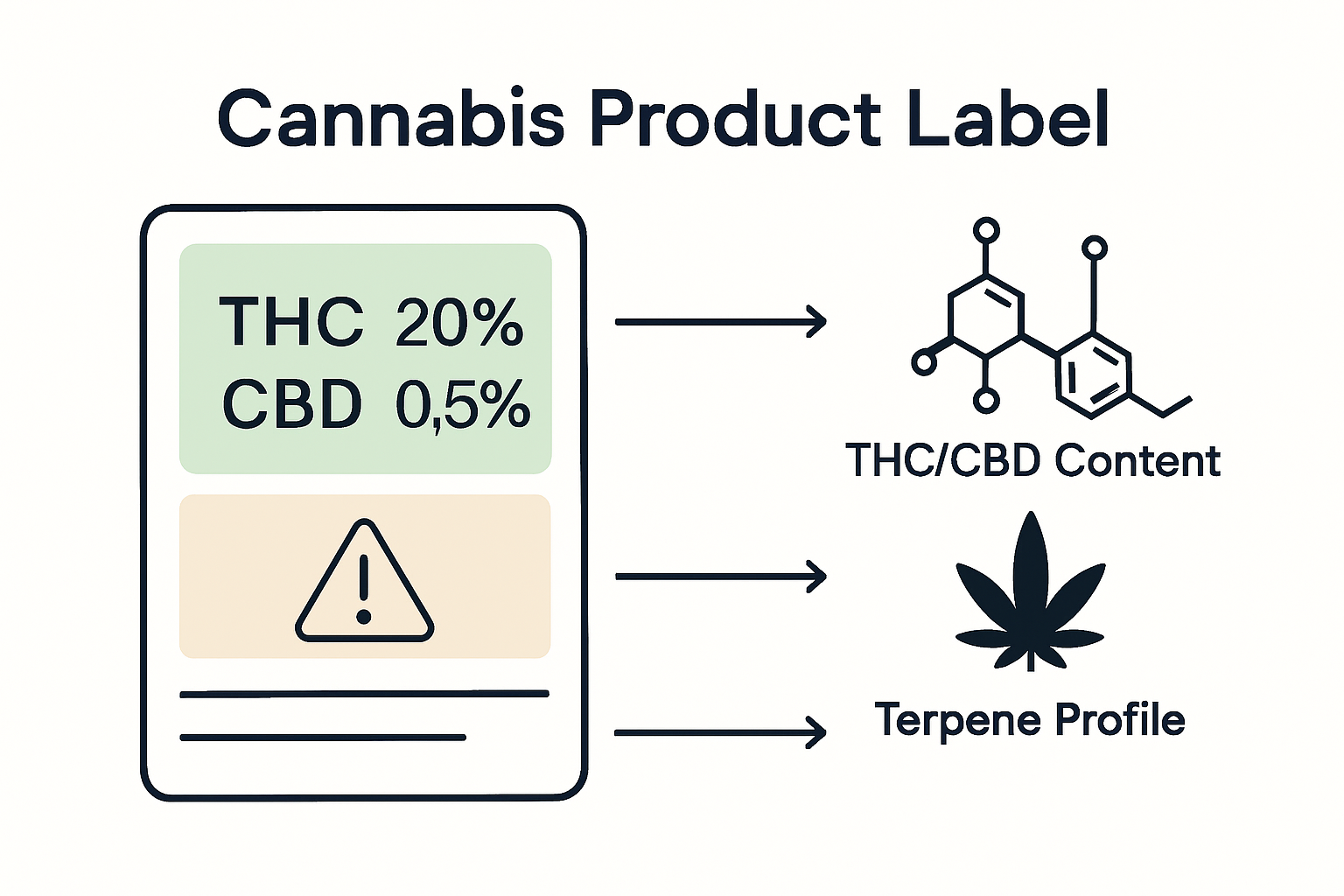
Pro tip: Create a personal reference chart of common terpenes and their associated effects. This will help you quickly interpret label information and make more informed choices about which products might suit your specific needs. Understanding cannabinoid and terpene content transforms you from a casual consumer into a knowledgeable cannabis enthusiast who can select products with precision and confidence.
Step 4: Verify Lab Test Results and Compliance
Ensuring the safety and quality of your cannabis products requires a strategic approach to understanding laboratory testing results. Your mission is to become a discerning consumer who can confidently evaluate product quality through comprehensive lab testing verification. California’s cannabis testing requirements provide a critical framework for understanding what makes a product truly safe and compliant.
Carefully examine the Certificate of Analysis (CoA) for detailed information about potential contaminants, cannabinoid profiles, and testing standards. Look for third party laboratory credentials, testing dates, and specific measurements of pesticides, heavy metals, microbial contaminants, and residual solvents. Investigating testing inconsistencies reveals the complexity of ensuring product reliability across different jurisdictions. Pay close attention to the laboratory performing the tests and verify their accreditation and reputation within the cannabis testing industry.
Pro tip: Create a checklist of key verification points when reviewing lab test results. This should include confirming the batch number matches the product, checking the testing laboratory’s credentials, and understanding the specific contaminant tests performed. By developing a systematic approach to verifying lab results, you transform from a passive consumer into an informed advocate for your own health and safety.
Step 5: Match Label Information to Desired Effects
Navigating cannabis products requires understanding how specific chemical compositions translate into unique experiences. Your goal is to become a strategic consumer who can match product labels to your specific wellness or recreational objectives. Research on THC labeling impacts reveals the critical connection between label information and expected product effects.
Begin by identifying your primary desired outcome relaxation, energy, pain relief, or creative focus. Examine the cannabinoid ratios and terpene profiles to understand potential physiological responses. Look for specific indicators like THC percentages, CBD content, and dominant terpenes that align with your intended experience. For instance, high myrcene content might suggest relaxation, while limonene could indicate an uplifting mood. Pay attention to the total cannabinoid percentage and the balance between different compounds to predict the potential intensity and character of the product’s effects.
Pro tip: Create a personal reference guide mapping specific cannabinoid and terpene combinations to their typical experiential outcomes. By developing this personalized framework, you transform from a passive consumer into an informed navigator of cannabis products who can strategically select experiences that match your precise needs and preferences.
Master Cannabis Label Insights with California Blendz
Decoding cannabis labels can feel overwhelming with all the specific terms like cannabinoids, terpenes, and lab test results. You want to shop confidently knowing exactly what effects to expect and which products meet rigorous safety and quality standards. California Blendz understands this challenge and offers an expertly curated collection that makes selecting your ideal cannabis product simple, transparent, and reliable.
Explore premium selections such as The THCa Prestige Vault – California Blendz and The Founder’s Collection – California Blendz, each accompanied by detailed lab results and clear labeling to ensure you get exactly what you need. Visit California Blendz now for a seamless, informed shopping experience built around your wellness goals and cannabis curiosity.
Frequently Asked Questions
How can I easily read and understand cannabis product labels?
To read and understand cannabis product labels, start by examining key sections such as cannabinoid content, health warnings, and production date. Make a habit of looking for THC and CBD percentages to gauge the product’s potency and ask dispensary staff for help if needed.
What should I look for in the Certificate of Analysis (CoA) for cannabis products?
In the Certificate of Analysis, check for detailed information on cannabinoid profiles, potential contaminants, and accreditation of the testing laboratory. Always ensure the CoA matches the batch number on the product label to ensure safety and compliance.
How do cannabinoids and terpenes affect my experience with cannabis products?
Cannabinoids and terpenes influence the effects of cannabis products by determining potency and flavor. Focus on the total cannabinoid percentage and specific terpenes to match products with your desired effects, such as relaxation or energy.
What steps can I take to verify the quality of cannabis products before purchasing?
To verify product quality, examine the lab test results for contaminants and check the laboratory’s credentials. Keep a checklist of key points, such as matching the batch number and confirming the lab’s reputation, to ensure safe purchasing decisions.
How can I match cannabis labels to my personal wellness goals?
To align cannabis labels with your wellness goals, identify your desired effects and study the cannabinoid ratios and terpene profiles listed on the label. Create a personal guide that connects specific ratios and terpenes to outcomes like relaxation or pain relief, which will help you make informed choices.
Recommended
- Understanding Cannabis Labeling Requirements Explained – California Blendz
- Complete Guide to Cannabis Product Labeling – California Blendz
- Understanding Cannabis Product Transparency: A Comprehensive Guide – California Blendz
- Understanding Cannabis Quality Indicators for Better Choices – California Blendz
- The Anatomy of a Masterpiece: Understanding the Craft of Fine Fragranc


