
Legal Requirements for CBD – What California Shoppers Need
Written by Trevor

Finding safe and compliant hemp-derived CBD products in California can feel confusing, especially with shifting laws and strict labeling standards. Many health-conscious shoppers want the benefits of CBD but worry about hidden risks or misleading claims. This guide helps you recognize the most important legal requirements and quality signals so you can buy confidently and avoid common misconceptions around hemp, THC limits, and state versus federal regulation.
Table of Contents
- Defining CBD and Common Legal Misconceptions
- Federal and California CBD Laws Compared
- THC Limits, Sourcing, and Testing Standards
- CBD Labeling, Marketing, and Age Restrictions
- Consumer Rights, Liabilities, and Compliance Tips
Key Takeaways
| Point | Details |
|---|---|
| Understanding CBD Legality | CBD derived from hemp is federally legal if it contains less than 0.3% THC, but state regulations, especially in California, can differ significantly. |
| Product Testing and Quality | Consumers should always request third-party lab test results to ensure the safety and quality of CBD products. |
| Labeling and Marketing Regulations | California mandates comprehensive labeling on CBD products, and marketing must avoid unsubstantiated health claims. |
| Consumer Rights and Compliance | Consumers have the right to detailed product information and must ensure compliance with age restrictions and quality assurance measures. |
Defining CBD and Common Legal Misconceptions
Cannabidiol (CBD) remains a complex and often misunderstood compound in the cannabis landscape. Derived from hemp plants, CBD represents a non-intoxicating cannabinoid that has gained significant attention for potential wellness applications.
Understanding CBD requires breaking down several key characteristics:
- Non-psychoactive: Unlike THC, CBD does not produce a “high”
- Hemp-derived: Legal CBD must come from hemp containing less than 0.3% THC
- Federally regulated: Subject to specific legal restrictions and guidelines
California shoppers should recognize that while hemp-derived CBD is federally legal, state regulations can vary dramatically. The 2018 Farm Bill created a framework allowing hemp-derived CBD products, but the FDA maintains strict guidelines about product claims and manufacturing.
Common Legal Misconceptions about CBD include:
- Believing all CBD products are automatically legal
- Assuming no prescription or documentation is required
- Thinking CBD can be added to food or dietary supplements without restrictions
The FDA continues to regulate cannabis products carefully, emphasizing that most CBD products remain technically illegal unless specifically approved as pharmaceutical drugs.
Pro tip: Always verify the specific legal status of CBD products in California and consult local regulations before purchasing or consuming any hemp-derived cannabinoid products.
Federal and California CBD Laws Compared
The legal landscape of CBD in the United States represents a complex interplay between federal and state regulations, with California emerging as a particularly nuanced jurisdiction. Federal law clearly differentiates hemp from marijuana, establishing critical distinctions that impact CBD product availability and legality.
Key differences between federal and California CBD regulations include:
- Federal Classification: Hemp-derived CBD with less than 0.3% THC is federally legal
- California State Law: Permits sale of hemp-derived CBD in various products
- Regulatory Oversight: FDA maintains strict federal guidelines
- Product Limitations: Restrictions exist on food and supplement additions
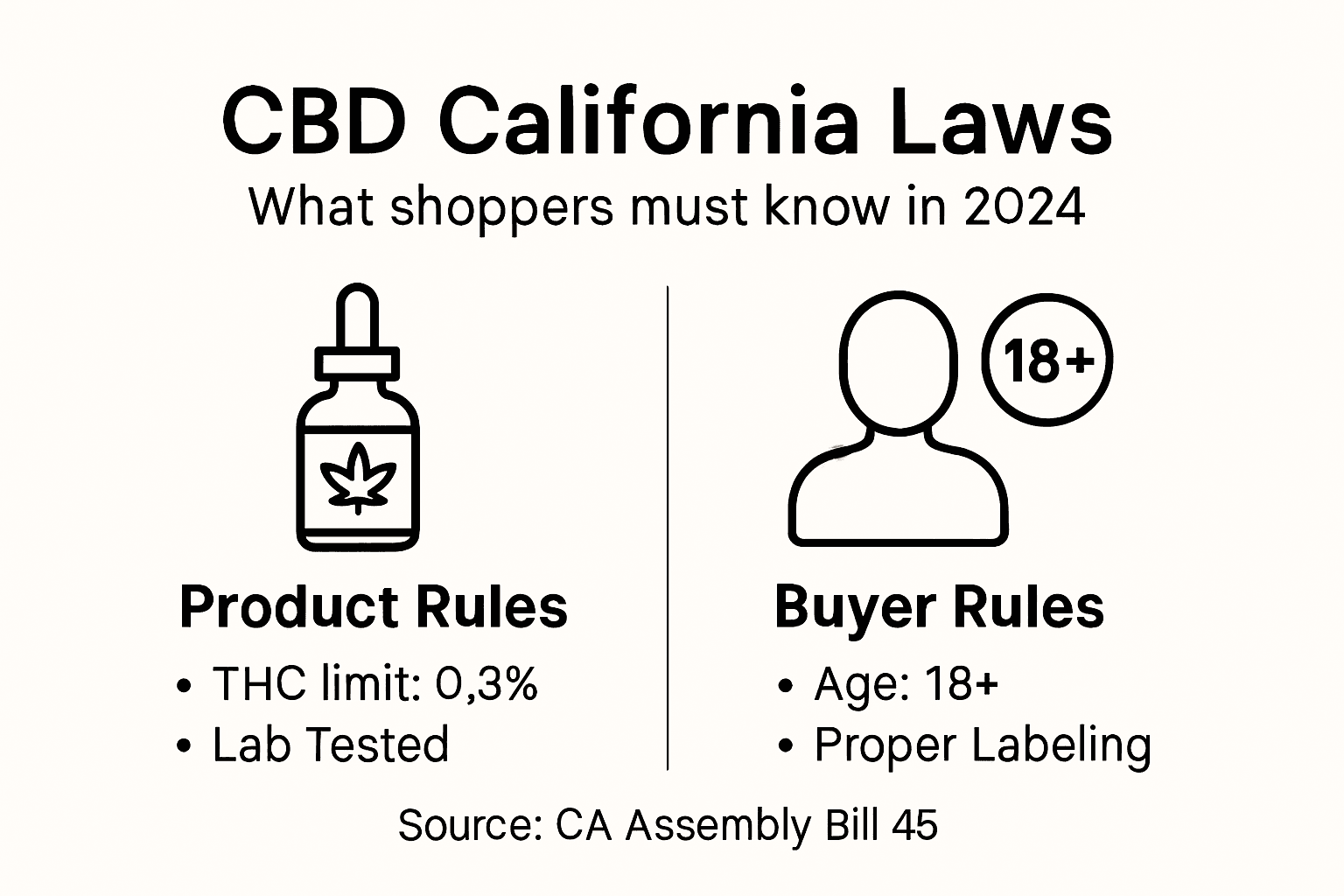
California has taken a progressive stance by implementing Assembly Bill 45, which allows the sale of hemp-derived CBD products. However, this state legislation exists in a complicated relationship with federal regulations, creating a legal gray area for consumers and businesses.
Here’s a side-by-side look at how federal and California CBD laws differ:
| Regulation Area | Federal Law | California Law |
|---|---|---|
| Source of Legality | 2018 Farm Bill | Assembly Bill 45 |
| Allowed Uses | Limited to approved drugs | Broad: supplements, topicals |
| Food/Supplements | Prohibited | Allowed with restrictions |
| Oversight Agency | Food and Drug Administration | California Department of Public Health |
| THC Limit | Less than 0.3% THC | Less than 0.3% THC |
The most significant legal distinctions involve product types and regulatory compliance:
- Medical marijuana is legal in California
- Recreational marijuana is permitted under state law
- Hemp-derived CBD products have specific regulatory requirements
- Federal restrictions remain more stringent than state guidelines
Pro tip: Always verify the most current CBD regulations and consult local legal experts, as cannabis laws continue to evolve rapidly in both state and federal jurisdictions.
THC Limits, Sourcing, and Testing Standards
Navigating the complex world of CBD requires a deep understanding of THC limits, product sourcing, and rigorous testing standards. Understanding THC content in CBD flower is crucial for consumers seeking legal and safe products.
Key considerations for CBD product quality include:
- THC Threshold: Federal law mandates less than 0.3% THC content
- Sourcing Requirements: Hemp must be grown in compliance with state regulations
- Third-Party Testing: Mandatory lab verification of cannabinoid profiles
- Contaminant Screening: Comprehensive tests for pesticides, heavy metals, and microbiological impurities
Quality CBD products undergo multiple layers of testing and verification. Reputable manufacturers implement comprehensive screening processes that go beyond basic THC percentage measurements, ensuring consumer safety and product integrity.
The testing process typically involves several critical steps:
- Genetic verification of hemp strain
- Cultivation site inspection
- Cannabinoid profile analysis
- Comprehensive contaminant screening
- Final product verification
Pro tip: Always request and review third-party lab test results before purchasing any CBD product to ensure maximum transparency and quality assurance.
CBD Labeling, Marketing, and Age Restrictions
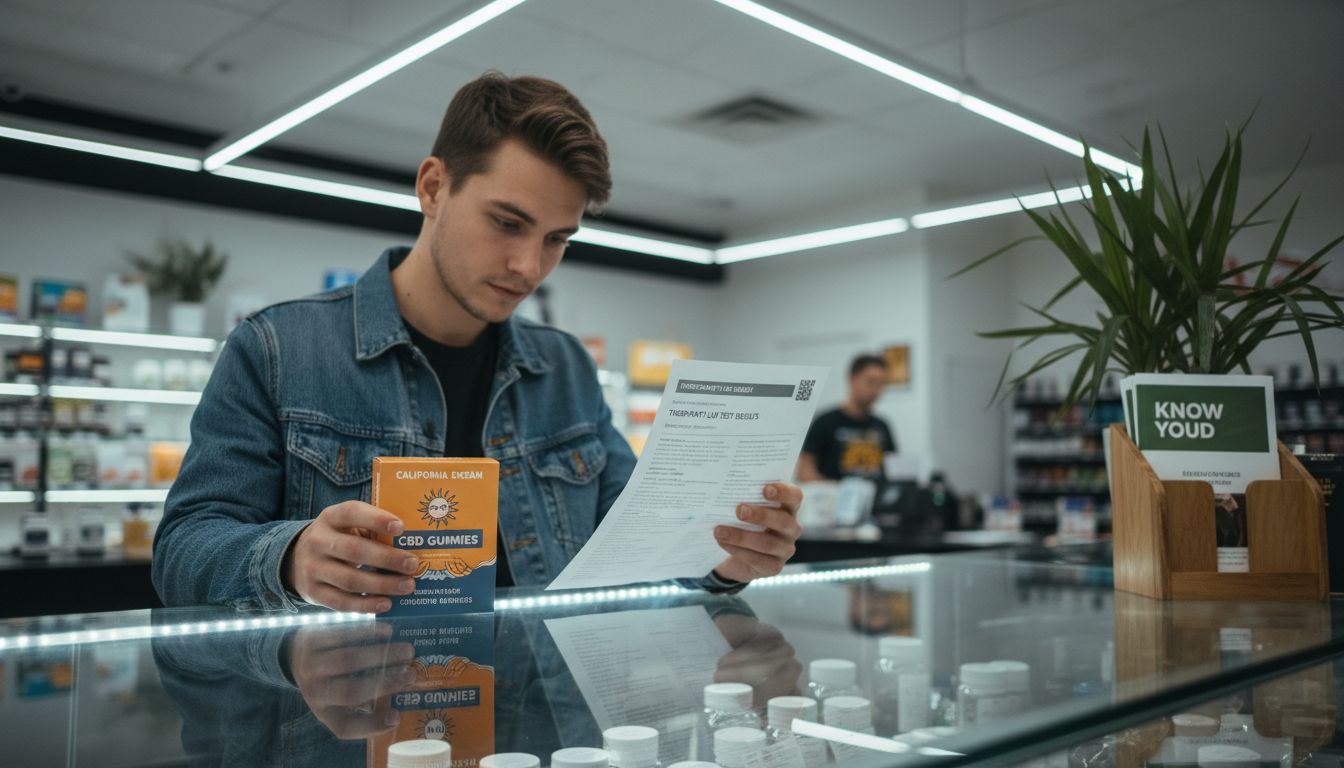
CBD product regulations in California have become increasingly sophisticated, with comprehensive labeling requirements designed to protect consumer safety and ensure transparent product information.
Key labeling requirements for CBD products include:
- Product Identity: Clear description of contents
- Cannabis Universal Symbol: Mandatory state-approved graphic
- Net Weight/Volume: Precise measurement specifications
- Manufacturer Information: Complete contact details
- Batch Tracking: Unique identification numbers
Marketing of CBD products faces strict limitations, particularly regarding health claims. California regulations prohibit manufacturers from making unsubstantiated statements about product benefits or therapeutic effects. Businesses must carefully craft marketing materials to avoid potential legal challenges.
Age restrictions represent another critical aspect of CBD product regulations:
- Minimum age requirement is 21 years old
- Prohibited sales in alcohol-licensed venues
- Limited to five servings per package
- Strict enforcement of age verification
Pro tip: Always request complete product documentation, including third-party lab tests and detailed labeling, to ensure you’re purchasing a legally compliant CBD product.
Consumer Rights, Liabilities, and Compliance Tips
Navigating the complex legal landscape of CBD requires a comprehensive understanding of consumer rights and potential liabilities. Legal requirements for CBD sales in California involve multiple layers of regulatory compliance.
Key consumer rights and protections include:
- Product Transparency: Right to detailed product information
- Quality Assurance: Protection against misrepresented products
- Age Verification: Legal safeguards for responsible sales
- Health Information: Access to accurate product details
- Legal Recourse: Options for addressing product-related issues
Businesses selling CBD products must adhere to strict regulatory standards, including proper licensing, accurate labeling, and avoiding unsubstantiated health claims. Consumers should be aware that noncompliance can result in significant legal consequences, including product seizures and potential fines.
Comprehensive compliance strategies for CBD consumers involve:
For quick reference, here’s how consumers can ensure CBD product compliance:
| Compliance Step | Why It Matters | What to Look For |
|---|---|---|
| Lab Test Verification | Confirms product safety | Recent, third-party results |
| Packaging Review | Ensures proper labeling | Identity, symbol, batch code |
| Source Authentication | Avoids unregulated products | Reputable, licensed producer |
| Serving Size Check | Meets California regulations | Maximum five servings per package |
- Verifying product source and manufacturing credentials
- Checking for third-party lab testing results
- Understanding possession limits
- Confirming age and identification requirements
- Reviewing product labels for complete information
Pro tip: Always maintain copies of product purchases, lab test results, and packaging to protect yourself in case of any future regulatory questions or disputes.
Navigate California CBD Laws with Confidence and Quality Products
Understanding the complex legal requirements for CBD in California can feel overwhelming. From THC limits to strict labeling and age restrictions, staying compliant is essential to enjoy safe and reliable hemp-derived products. At California Blendz, we recognize your need for transparency and legality when purchasing CBD, which is why our organic and lab-tested selection ensures every product meets rigorous state and federal standards.
Explore our expertly curated CBD Edibles and The Founder’s Collection – California Blendz featuring responsibly sourced hemp products from California’s Emerald Triangle.
Ready to shop with peace of mind and experience premium quality backed by full lab results and clear labeling? Visit California Blendz now to browse products crafted with your legal safety and wellness goals in mind. Act today to secure hemp-derived CBD that respects California laws and supports your natural wellness journey.
Frequently Asked Questions
What are the legal requirements for CBD products in California?
California allows the sale of hemp-derived CBD products under Assembly Bill 45, as long as they meet state regulations, including being derived from hemp with less than 0.3% THC.
Do I need a prescription to buy CBD products?
Generally, a prescription is not required for hemp-derived CBD products; however, it is important to consult state regulations as they can vary.
What should I look for when purchasing CBD products?
When purchasing CBD products, always check for third-party lab test results for safety and potency, clear labeling that complies with regulations, and ensure the product is sourced from a reputable manufacturer.
Are there any age restrictions for purchasing CBD products?
Yes, you must be at least 21 years old to purchase CBD products in California, and sellers are required to verify age during the transaction.


