
Growing Organic Hemp in California 2026: Boost CBD Yield 25%
Written by Trevor

Many new hemp growers in California lose up to 40% of their potential yield due to simple nutrient and soil mistakes. This guide provides clear, step-by-step organic hemp cultivation methods tailored specifically for California’s unique climate and regulations. You’ll learn how to prepare soil properly, select certified organic seeds, manage pests without chemicals, and harvest for maximum CBD quality and potency.
Table of Contents
- Prerequisites And Preparations Before Growing Organic Hemp
- Soil Preparation And Pre-Cultivation Requirements
- Seed Selection And Organic Propagation Techniques
- Organic Pest And Disease Management Strategies
- Irrigation And Nutrient Management For Optimal Growth
- Harvesting And Curing Practices For Quality Preservation
- Common Mistakes And Troubleshooting In Organic Hemp Cultivation
- Expected Timelines, Yields, And Outcomes For Organic Hemp
- Discover More About Hemp Legality And Wellness With California Blendz
Key Takeaways
| Point | Details |
|---|---|
| Certified organic seeds matter | Seeds adapted to California’s climate and bred for low THC ensure legal compliance and superior CBD yields. |
| Soil health drives success | Testing soil pH (6.0-7.5) and adding organic amendments like compost boosts microbial activity by 35%. |
| Organic pest control works | Integrated methods using neem oil and beneficial insects reduce pest damage up to 70% without chemicals. |
| Water efficiency prevents disease | Drip irrigation with moisture sensors increases water efficiency 30% and prevents root rot in overwatered plants. |
| Harvest timing maximizes CBD | Harvesting at 70-80% flower maturity and proper organic curing preserves peak CBD and terpene content. |
Prerequisites and Preparations Before Growing Organic Hemp
Before planting your first organic hemp seed, you need the right foundation. California’s hemp industry demands both legal compliance and biological preparedness to succeed.
Start by sourcing certified organic hemp seeds or clones specifically bred for California’s Mediterranean climate. These genetics should be verified for low THC content and high CBD potential. Certified organic seeds and soil adjustments are critical for compliance and yield, ensuring you meet both USDA organic standards and California hemp regulations from day one.
Test your soil before anything goes in the ground. You need a baseline reading of pH levels, nutrient content, and organic matter percentages. California soils often require amendments to reach the ideal pH range of 6.0 to 7.5 for hemp cultivation.
Understand the legal landscape thoroughly. California requires specific permits for hemp cultivation, and maintaining organic certification requirements adds another layer of documentation and approved input lists. Keep detailed records from the start.
Set up your irrigation infrastructure early. Drip irrigation systems paired with soil moisture sensors will save water and prevent common cultivation problems later. California’s drought conditions make water efficiency both practical and legally important.
Gather these essential materials before planting:
- Certified organic compost and worm castings for soil amendments
- USDA-approved organic fertilizers tailored to hemp nutrition needs
- Drip irrigation tubing, emitters, and moisture monitoring sensors
- Organic pest control supplies including neem oil and beneficial insect habitats
- pH testing kits and organic soil amendment materials
- Documentation systems for organic compliance record keeping
Soil Preparation and Pre-Cultivation Requirements
Your soil determines everything that follows. Hemp plants are heavy feeders that demand rich, living soil with active microbial communities to thrive organically.
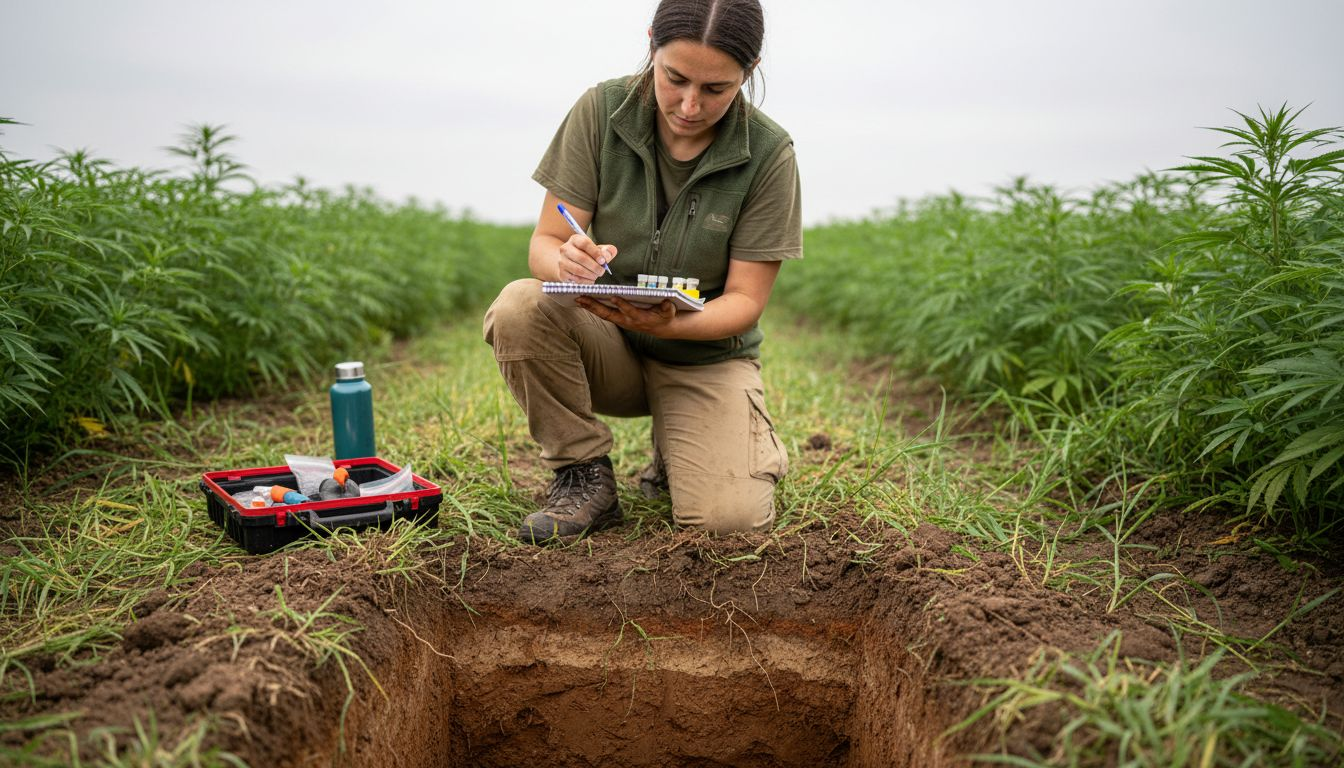
Apply generous amounts of organic compost and worm castings to your growing area. Organic compost enhances soil microbial biodiversity by 35%, creating the biological foundation hemp roots need to access nutrients efficiently. These microbial partners break down organic matter into plant-available forms without synthetic fertilizers.
Practice crop rotation and cover cropping between hemp seasons. Rotating with nitrogen-fixing legumes replenishes soil naturally, while cover crops reduce soil erosion by 50% and suppress weeds organically. This approach builds long-term soil health rather than depleting it.
Ensure proper drainage throughout your growing area. Hemp roots rot quickly in waterlogged conditions, so California’s clay soils often need organic amendments like aged compost to improve structure. Well-drained soil paired with the right pH allows roots to explore deeply and access water during dry periods.
Avoid all synthetic fertilizers, pesticides, and soil amendments. These inputs immediately disqualify you from organic certification and can harm the beneficial soil biology you’re working to build. Stick to approved soil organic amendments listed by OMRI or similar certifying bodies.
Conduct soil tests every season and between crops. Regular testing helps you track pH changes, nutrient depletion, and organic matter levels over time. Adjust your amendment strategy based on actual data rather than guesswork.
Pro Tip: Create a soil amendment calendar based on your test results. Apply compost and minerals in fall, letting winter rains integrate them naturally before spring planting. This timing gives soil microbes months to process amendments into plant-available forms.
| Soil Parameter | Ideal Range | Adjustment Method |
|---|---|---|
| pH Level | 6.0-7.5 | Lime raises pH; sulfur lowers it organically |
| Organic Matter | 5-8% | Add compost and cover crop residues |
| Nitrogen | Medium-High | Apply compost tea or approved organic fertilizer |
| Drainage Rate | 1-3 inches/hour | Mix in compost to improve clay soil structure |
Seed Selection and Organic Propagation Techniques
Choosing the right genetics makes the difference between a compliant, profitable harvest and a crop you can’t legally sell. California’s regulations and climate demand specific seed characteristics.
Select seeds or clones that are both certified organic and adapted to California’s growing conditions. Certified organic seeds bred for low THC and high CBD ensure compliance and product quality, protecting your investment from regulatory problems. Verify that THC levels stay reliably below 0.3% throughout the entire flowering period.
Source your genetics from reputable suppliers who provide documentation of organic certification and genetic stability. Ask for test results showing cannabinoid profiles across multiple grows. Unstable genetics can produce THC spikes that destroy entire harvests legally.
Time your propagation to match California’s outdoor growing seasons. Most growers start seeds indoors in early spring, transplanting after the last frost risk passes. This timing allows plants to establish before summer heat while maximizing the long growing season.
For cloning, use sterile tools and organic rooting hormones approved for organic production. Clean propagation prevents disease from spreading through your entire crop. Young plants are especially vulnerable to pathogens that healthy soil biology normally suppresses.
Understand the importance of photoperiod in hemp cultivation. Some varieties require specific day length to flower properly, while others are auto-flowering. Choose genetics that match your intended harvest timeline and California’s seasonal light patterns.
Pro Tip: Start with purchased certified organic hemp seeds for your first season. Once you understand how varieties perform in your specific microclimate, you can experiment with different genetics while maintaining a reliable baseline crop.
- Purchase only from suppliers providing organic certification documentation and genetic verification
- Match flowering time to your local frost dates and seasonal rainfall patterns
- Start more plants than needed to select the strongest for transplanting
- Harden off indoor starts gradually before moving to full outdoor conditions
- Keep detailed records of which genetics perform best in your specific location
Organic Pest and Disease Management Strategies
Protecting your crop without synthetic pesticides requires vigilance, prevention, and understanding of natural pest control mechanisms. Organic methods work when applied consistently and early.
Apply neem oil and approved microbial biopesticides at the first sign of pest pressure. Neem oil and microbial biopesticides reduce pest damage by up to 70% without synthetic chemicals, preserving your organic status while protecting yields. These products work best as preventatives rather than reactive treatments.
Use companion planting strategically throughout your hemp field. Marigolds, basil, and other aromatic plants naturally deter common hemp pests like aphids and spider mites. These companion plants also attract beneficial insects that prey on hemp pests, creating a balanced ecosystem.
Scout your plants regularly for early pest detection. Walk through your crop at least twice weekly, checking undersides of leaves and new growth where pests typically appear first. Early intervention with organic pest management methods prevents minor problems from becoming crop-threatening infestations.
Avoid all chemical pesticides, even those marketed as natural if they’re not approved for organic production. Synthetic pesticides destroy beneficial soil microbes and insects while voiding your organic certification. The short-term convenience isn’t worth the long-term damage.
Rotate your hemp crops with other plant families between seasons. This practice breaks pest life cycles naturally, as most hemp-specific pests can’t survive on rotation crops. Rotation also helps prevent soil-borne diseases from building up in your growing area.
- Encourage beneficial insects by planting diverse flowering plants around field edges
- Apply Bacillus thuringiensis (Bt) for caterpillar control when needed
- Use insecticidal soaps for soft-bodied pests like aphids and whiteflies
- Install physical barriers like row covers during vulnerable seedling stages
- Remove and destroy infected plants immediately to prevent disease spread
- Maintain proper plant spacing for air circulation that reduces fungal diseases
Irrigation and Nutrient Management for Optimal Growth
Water and nutrients work together to fuel hemp growth. Managing both efficiently prevents disease while maximizing CBD production organically.
Implement drip irrigation paired with soil moisture sensors for precise water delivery. Drip irrigation with moisture monitoring increases water efficiency by 30% and prevents root rot, which affects about 25% of growers who water by guesswork rather than data. Sensors tell you exactly when plants need water, eliminating the overwatering that kills more hemp than any pest.
Apply organic compost teas and USDA-approved organic fertilizers based on regular soil tests. Your soil test results show exactly which nutrients need supplementing, preventing the waste and imbalances that come from generic feeding schedules. Hemp needs different nutrient ratios during vegetative growth versus flowering.
Avoid overwatering at all costs. Root rot develops quickly in saturated soil, especially in California’s warmer regions. Water-efficient drip irrigation delivers moisture directly to root zones without wetting foliage, reducing disease pressure while conserving water.
Monitor nutrient levels throughout the growing season with periodic soil and tissue tests. Plants show nutrient deficiencies before they become yield-limiting if you know what to look for. Yellow leaves, purple stems, and stunted growth all signal specific nutrient problems you can correct organically.
Adjust your irrigation schedule seasonally to match California’s climate patterns. Spring requires less frequent watering as soil moisture is higher. Summer demands daily irrigation during heat waves. Fall watering tapers as plants finish flowering and seasonal rains return.
Pro Tip: Install a rain gauge and track natural rainfall carefully. Many California growers waste water by irrigating after sufficient rain. Let nature do the work when possible, supplementing only when soil moisture sensors indicate actual need.
| Growth Stage | Water Needs | Key Nutrients | Application Method |
|---|---|---|---|
| Seedling | Light, frequent | Balanced N-P-K | Compost tea weekly |
| Vegetative | Moderate, consistent | Higher nitrogen | Organic fertilizer bi-weekly |
| Early Flower | Moderate, steady | Balanced with P-K boost | Compost tea plus bloom formula |
| Late Flower | Reduced gradually | Lower nitrogen, maintain P-K | Reduce fertilizer, plain water finish |
Harvesting and Curing Practices for Quality Preservation
All your cultivation work culminates in harvest timing and curing technique. These final steps determine whether you produce premium CBD flower or mediocre product.
Harvesting at 70-80% flower maturity and organic curing preserves maximum CBD and terpene content, the compounds that determine product quality and market value. Check trichomes with a magnifying loupe, looking for mostly cloudy with some amber trichomes as your harvest signal.
Follow these steps for optimal harvest and cure:
-
Monitor trichome color daily as harvest window approaches, usually 100-120 days from planting. Clear trichomes mean wait, mostly cloudy with 10-20% amber means cut.
-
Harvest in early morning after dew dries but before heat builds. This timing preserves terpenes that volatilize in high temperatures.
-
Dry hemp slowly in a controlled environment using organic hemp curing techniques that maintain 60% humidity and 65-70°F temperature. Fast drying degrades CBD and terpenes significantly.
-
Cure trimmed flowers in sealed containers, opening daily to release moisture and prevent mold. This process typically takes 2-4 weeks for optimal harvest timing for CBD preservation.
-
Avoid all synthetic drying agents or additives during curing. These inputs violate organic certification and can introduce contaminants that health-conscious consumers specifically avoid.
-
Store properly cured hemp in airtight, light-proof containers in cool conditions. Proper storage extends shelf life while maintaining potency for months.
Quality curing makes the difference between harsh, low-potency product and smooth, potent flower that commands premium prices. CBD preservation during curing requires patience and attention to environmental conditions throughout the process.
Common Mistakes and Troubleshooting in Organic Hemp Cultivation
Even experienced growers make mistakes that cost yields and certification status. Learning from common errors helps you avoid expensive problems.
Neglecting soil monitoring causes up to 40% yield loss, while overwatering leads to root rot in 25% of cases where growers skip moisture sensors. These two mistakes alone account for most crop failures in California hemp cultivation.
Failing to test and adjust soil pH and nutrients regularly starves plants of essential elements. Even with organic amendments, you can’t know what your soil provides without testing. Guessing leads to deficiencies that stunt growth and reduce CBD concentrations significantly.
Overwatering without proper monitoring triggers root rot and fungal diseases that destroy entire crops. California growers often overcompensate for dry climate by watering too frequently. Use drip irrigation with moisture sensors to deliver exactly what plants need, nothing more.
Using uncertified seeds risks THC non-compliance that makes your entire harvest legally unsellable. One high-THC test result can force destruction of thousands of dollars in crop. Always verify genetics through reputable suppliers with documentation.
Applying prohibited synthetic inputs voids organic certification and betrays consumer trust. Even one application of conventional pesticide or fertilizer disqualifies your crop from organic labeling. Know which products are approved before you buy anything.
Stay compliant with organic standards through meticulous record-keeping and testing. Document every input applied, when, where, and how much. Track seed sources, amendments, pest control measures, and harvest dates. This documentation proves your organic status during inspections.
Pro Tip: Create a cultivation log template and fill it out daily. Consistent documentation feels tedious but saves your certification when inspectors audit your operation. Digital apps make tracking easier than paper logs while providing searchable records.
- Set calendar reminders for soil testing every 60 days during growing season
- Install multiple moisture sensors across your growing area to catch irrigation problems
- Source all inputs from certified organic suppliers before purchase
- Join California hemp grower associations for updates on common organic hemp mistakes
- Build relationships with organic inspectors and certifiers early
- Budget for unexpected compliance costs and crop insurance
Expected Timelines, Yields, and Outcomes for Organic Hemp
Setting realistic expectations helps you plan resources, timeline, and budget accurately. California’s climate offers advantages, but organic cultivation still requires patience.
Plan for a 100-120 day growth cycle from planting to harvest for most hemp varieties suited to California. This timeline includes 30-40 days of vegetative growth followed by 60-80 days of flowering. Your specific cultivar and local microclimate may shift these numbers slightly.
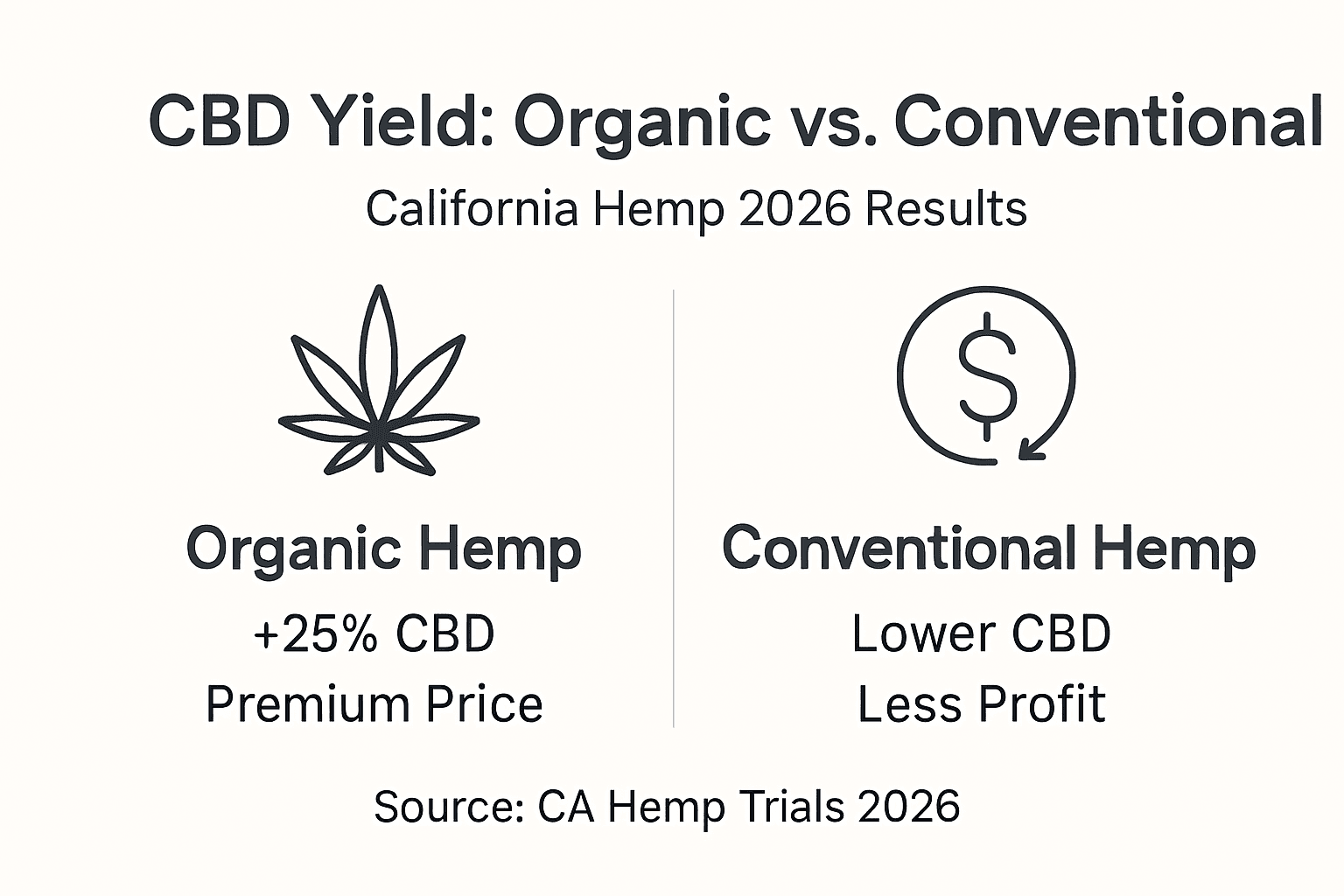
Organic hemp can produce 15-25% higher CBD concentrations compared to conventionally grown hemp, while reliably maintaining THC below 0.3% throughout flowering. This quality advantage translates to higher market prices that justify organic certification costs and lower conventional yields.
Water efficiency improvements of 30% are achievable with drip irrigation and moisture monitoring compared to traditional irrigation methods. This efficiency matters enormously in California, where water costs and availability increasingly limit agriculture.
Realistic yield expectations help prevent disappointment and financial problems. First-year organic growers typically see lower yields as soil biology builds. By year three, properly managed organic hemp often outproduces conventional crops in both quantity and quality.
Understand that maintaining legal THC levels requires variety selection and testing vigilance. Hot weather can spike THC in some genetics, so choose stable varieties and test regularly as harvest approaches. One failed test can destroy months of work.
| Outcome Metric | Conventional Hemp | Organic Hemp | Improvement |
|---|---|---|---|
| CBD Concentration | 12-15% typical | 15-20% typical | 15-25% higher |
| THC Compliance | Variable | Consistently <0.3% | More reliable |
| Water Use | 100% baseline | 70% of baseline | 30% reduction |
| Market Price | Standard | 20-40% premium | Higher revenue |
| Certification Cost | None | $1,500-3,000/year | Added expense |
Plan your budget to account for organic certification fees, approved inputs that cost more than synthetic alternatives, and potentially more labor for organic pest management. These costs are offset by organic hemp yield and quality expectations that command premium pricing from health-conscious consumers.
Discover More About Hemp Legality and Wellness with California Blendz
Mastering organic cultivation opens doors to premium hemp markets, but staying current on regulations and wellness trends keeps you competitive.
Explore the latest California hemp legality updates affecting how you grow, test, and sell hemp products in 2026. Regulatory changes happen frequently, and compliance requires ongoing education beyond basic cultivation knowledge.
Learn about securing and maintaining organic certification insights that ensure your products meet consumer expectations for purity and sustainability. California Blendz provides detailed guides on documentation requirements, approved inputs, and inspector expectations that help you avoid certification problems.
Access expert resources on CBD wellness trends, product development strategies, and market positioning that help you turn quality organic hemp into profitable products. Understanding the entire value chain from seed to sale maximizes returns on your cultivation investment.
FAQ
What soil pH is ideal for growing organic hemp in California?
The ideal soil pH for hemp ranges from 6.0 to 7.5, with 6.5 being optimal for nutrient availability. Test your soil before planting and adjust using organic lime to raise pH or sulfur to lower it. Monitor pH every 60 days during the growing season, as California’s alkaline soils often drift upward.
How can I prevent root rot in organic hemp farming?
Prevent root rot by installing drip irrigation paired with soil moisture sensors that tell you exactly when plants need water. Overwatering causes about 25% of crop failures, so water based on sensor data rather than schedules. Ensure proper soil drainage by amending clay soils with compost to improve structure.
What certification do organic hemp growers in California need?
California organic hemp growers need USDA organic certification plus compliance with state hemp cultivation permits and testing requirements. The organic certification process requires using certified organic seeds, approved inputs, and maintaining detailed records of all cultivation activities. Budget $1,500-3,000 annually for certification costs.
When should I harvest hemp for maximum CBD content?
Harvest hemp when 70-80% of flowers show mature trichomes, typically appearing mostly cloudy with some amber coloration under magnification. This timing usually occurs 100-120 days after planting for most California-adapted varieties. Check trichomes daily as harvest window approaches, since waiting too long can degrade CBD while increasing THC beyond legal limits.
Can organic methods really match conventional hemp yields?
Organic hemp typically yields 15-25% higher CBD concentrations than conventional crops once soil biology is established, usually by the third growing season. While initial harvests may be smaller, improved soil health and premium pricing for organic certification often result in higher profits than conventional production. Water efficiency also improves by 30% with organic practices and proper irrigation management.
Recommended
- Hemp Legality in 2025 – What Changes for Californians – California Blendz
- Organic Certification in Cannabis – Why Purity Matters – California Blendz
- Legal Updates for Hemp 2025 – CBD and THCa Regulation Impact – California Blendz
- California Cannabis Culture: Wellness, Laws, and Trends – California Blendz


