
Organic Certification in Cannabis – Why Purity Matters
Written by Trevor

Choosing truly organic cannabis in California can be confusing when federal rules create so much uncertainty. Health-conscious consumers want products that deliver purity and transparency without compromise. Understanding the real meaning behind organic certification in cannabis helps you separate responsible cultivators from those just using green marketing. This guide explains how certification works, why it matters for your wellness, and what to look for when seeking high-quality, lab-tested cannabis products.
Table of Contents
- Defining Organic Certification In Cannabis
- Types Of Organic Certifications And Distinctions
- California’s Regulatory Framework For Cannabis Organics
- Steps To Obtain And Maintain Certification
- Risks, Costs, And Common Pitfalls For Growers
Key Takeaways
| Point | Details |
|---|---|
| Importance of Organic Certification | Organic certification ensures high-quality, environmentally responsible cannabis cultivation. It signifies a commitment beyond mere marketing. |
| State vs. Federal Regulations | Cannabis remains in a regulatory grey area, complicating federal organic certification; however, state-level programs are emerging to enhance transparency. |
| Types of Certifications | Various certification programs, like Clean Green Certified and Regenerative Agriculture Certification, provide consumers with sustainable options tailored for cannabis. |
| Challenges of Certification | Producers face significant costs and compliance challenges, requiring robust documentation and proactive strategies to maintain certifications. |
Defining Organic Certification in Cannabis
Organic certification in cannabis represents a critical standard of agricultural quality and environmental responsibility. Unlike traditional agricultural products, cannabis faces unique regulatory challenges in achieving organic verification due to complex legal landscapes and federal restrictions.
The National Organic Program (NOP) provides fundamental guidelines for organic certification, though cannabis currently exists in a regulatory grey zone. Organic certification standards traditionally involve comprehensive verification processes that ensure farming practices meet strict environmental and quality criteria.
Key aspects of organic certification for cannabis include:
- Prohibition of synthetic chemical pesticides
- Sustainable soil management practices
- Environmentally conscious cultivation techniques
- Comprehensive documentation of growing methods
- Third-party verification of agricultural processes
While federal regulations currently complicate organic certification for cannabis, state-level programs are emerging to provide consumers with transparency. These certifications help demonstrate a cultivator’s commitment to environmental stewardship and product purity.
Organic certification goes beyond marketing—it represents a fundamental commitment to sustainable, responsible agricultural practices.
Pro tip: Always request third-party lab testing results to verify the organic status and purity of your cannabis products, even when official certification might be challenging.
Types of Organic Certifications and Distinctions
The cannabis industry faces complex challenges in organic certification due to unique legal and regulatory constraints. Third-party certification programs have emerged to fill the regulatory gap, providing consumers with assurance of sustainable and responsible cultivation practices.
Multiple certification types exist for cannabis producers seeking to demonstrate environmental stewardship and product quality:
- Clean Green Certified: A comprehensive program closely aligned with organic agricultural standards
- Best Practices Certification: Allows limited synthetic inputs while maintaining ecological standards
- Regenerative Agriculture Certification: Focuses on holistic ecosystem management
- Vegan Certification: Ensures no animal-derived products are used in cultivation
Unlike traditional agricultural products, cannabis currently cannot receive official USDA organic certification due to federal legal restrictions. This limitation has prompted innovative approaches from specialized certification organizations that develop rigorous standards tailored specifically to cannabis cultivation.
Certification represents more than a label—it’s a commitment to sustainable, transparent agricultural practices.
State-level programs continue to evolve, recognizing the unique challenges and opportunities in cannabis production. These certifications provide critical transparency for consumers seeking high-quality, environmentally responsible cannabis products.
Here’s how major cannabis certification programs differ:
| Certification Type | Focus Area | Eligibility Requirements | Consumer Value |
|---|---|---|---|
| Clean Green Certified | Organic-aligned farming | Strict inputs, regular audits | Closest to USDA Organic standards |
| Best Practices Certification | Ecological practices | Allows some synthetic materials | Emphasizes responsible pest management |
| Regenerative Agriculture | Ecosystem restoration | Soil health, biodiversity focus | Highlights sustainability and resilience |
| Vegan Certification | No animal products used | Plant-based inputs only | Appeals to vegan-conscious consumers |
Pro tip: Request detailed documentation about a product’s certification to understand the specific standards and verification processes used in its cultivation.
California’s Regulatory Framework for Cannabis Organics
California has pioneered a groundbreaking approach to cannabis regulation, developing innovative frameworks that address the complex challenges of organic certification. OCal labeling standards represent a critical milestone in providing consumers with transparent, reliable information about cannabis cultivation practices.
Key components of California’s cannabis organic regulatory framework include:
- State-Level Certification: Establishing standards comparable to USDA organic requirements
- Traceability Protocols: Ensuring comprehensive tracking of cultivation methods
- Sustainable Cultivation Guidelines: Promoting environmentally responsible growing practices
- Third-Party Verification: Implementing rigorous independent assessment mechanisms
Unlike federal regulations, California’s approach recognizes the unique challenges of cannabis cultivation while maintaining strict environmental and quality standards. The state has created a nuanced system that bridges the gap between federal limitations and consumer expectations for transparent, sustainable cannabis production.
California’s regulatory framework demonstrates a commitment to balancing consumer safety, environmental stewardship, and agricultural innovation.
These innovative approaches provide a model for other states navigating the complex landscape of cannabis regulation and organic certification. By developing robust, detailed standards, California continues to lead the way in responsible cannabis cultivation practices.

Pro tip: Always verify a product’s specific certification details, as standards can vary between different third-party verification programs.
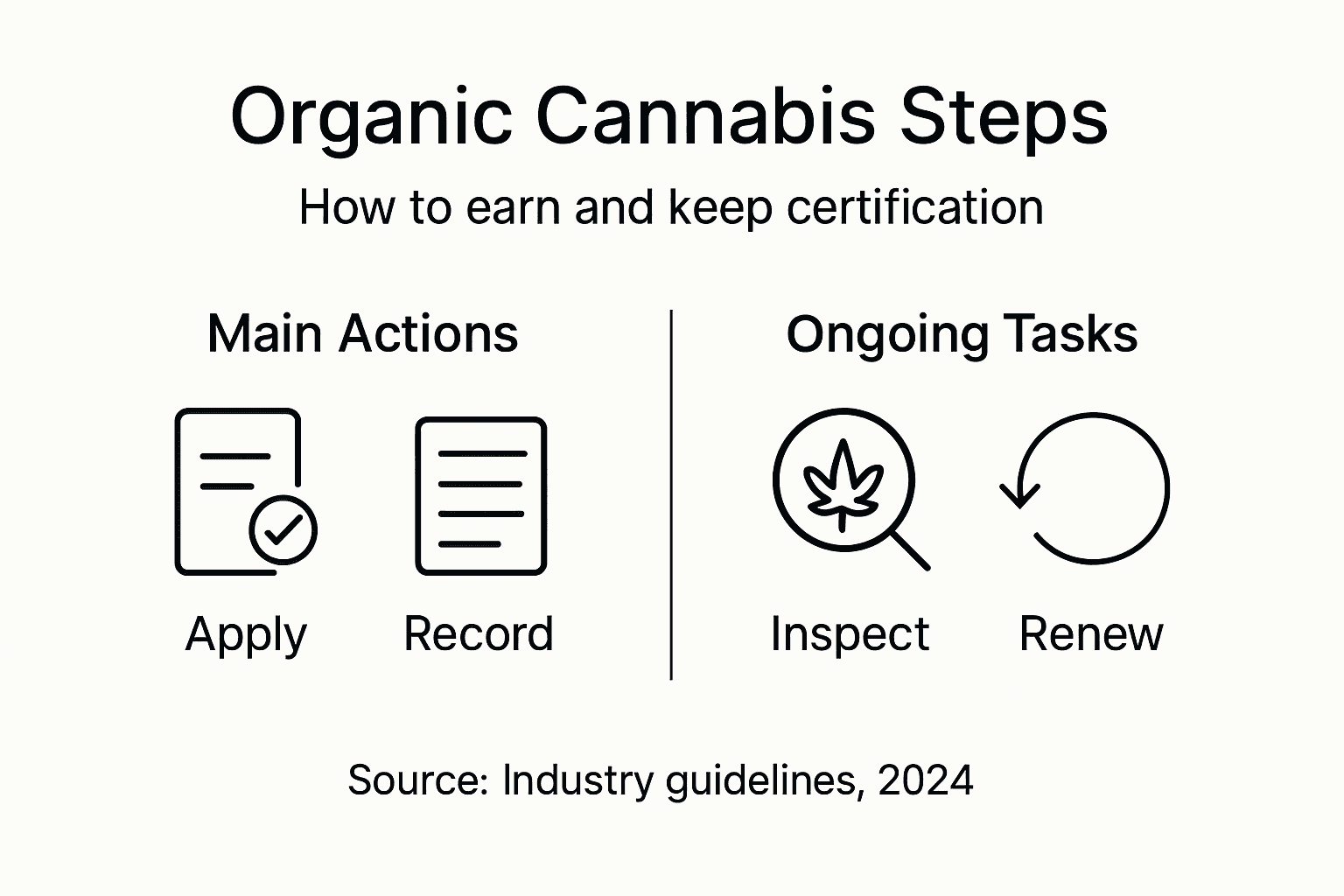
Steps to Obtain and Maintain Certification
Obtaining organic certification for cannabis requires a comprehensive and meticulous approach that goes beyond traditional agricultural standards. Organic certification processes demand rigorous documentation, systematic verification, and continuous compliance with stringent environmental and quality standards.
The key steps for cannabis producers seeking certification include:
-
Develop an Organic System Plan
- Document all cultivation practices
- Detail input materials and sources
- Outline pest management strategies
- Demonstrate environmental sustainability
-
Comprehensive Documentation
- Maintain detailed cultivation records
- Track all agricultural inputs
- Create transparent supply chain documentation
- Prepare for potential audits
-
Third-Party Verification
- Schedule on-site inspections
- Allow comprehensive facility reviews
- Demonstrate compliance with organic standards
- Submit to annual renewal assessments
Maintaining certification requires continuous commitment to sustainable practices and ongoing documentation. Producers must consistently demonstrate adherence to organic principles, avoiding prohibited substances and implementing environmentally responsible cultivation techniques.
Certification is not a one-time achievement, but an ongoing commitment to agricultural excellence and environmental stewardship.
Successful certification involves more than paperwork—it represents a holistic approach to cannabis cultivation that prioritizes ecological responsibility, product quality, and transparent agricultural practices.
Pro tip: Invest in comprehensive record-keeping systems and develop a proactive approach to documentation to streamline your certification and renewal processes.
Risks, Costs, and Common Pitfalls for Growers
Navigating the landscape of organic cannabis certification presents numerous challenges for cultivators seeking to maintain rigorous quality standards. Organic certification risks encompass complex legal, financial, and operational considerations that can significantly impact a producer’s bottom line and compliance strategy.
Key financial and operational challenges include:
-
Certification Application Costs
- Initial application fees
- Annual renewal expenses
- Professional consultation charges
-
Compliance Documentation Expenses
- Increased labor for record-keeping
- Investment in tracking systems
- Professional documentation support
-
Production Limitations
- Restricted pest control methods
- Potential yield reductions
- Higher input costs for organic materials
The most significant risks for cannabis producers revolve around maintaining consistent compliance with evolving regulatory standards. Growers must meticulously document every aspect of cultivation, from input sourcing to pest management, while navigating the complex intersection of state and federal regulations.
Organic certification is not just a label—it’s a comprehensive commitment to sustainable, transparent agricultural practices.
Successful certification requires a proactive approach, anticipating potential challenges and developing robust systems that can withstand rigorous third-party inspections and evolving regulatory landscapes.
Below is a summary of the main challenges and solutions for organic cannabis growers:
| Challenge Area | Common Issue | Strategic Solution |
|---|---|---|
| Regulatory Compliance | Changing state and federal rules | Establish a compliance monitoring team |
| Documentation | High record-keeping workload | Adopt digital management systems |
| Production Costs | More expensive inputs and fees | Optimize sourcing and negotiate contracts |
| Inspection Readiness | Stress of annual audits | Schedule mock inspections |
Pro tip: Develop a dedicated compliance team or consultant relationship to stay ahead of regulatory changes and minimize certification risks.
Choose Purity and Trust with Organic Cannabis from California Blendz
The article highlights the challenges and importance of organic certification in cannabis focusing on purity, transparency, and sustainable cultivation. If you seek cannabis products grown under strict, environmentally responsible standards supported by third-party lab testing, California Blendz provides an expertly curated selection. We understand your need for organic verification and clear documentation ensuring every product meets the highest quality and environmental standards.
Explore premium options like The Founder’s Collection – California Blendz or discover value and variety with our THCa Bundle – California Blendz. Visit California Blendz now to experience cannabis purity you can trust backed by rigorous testing and a transparent approach. Act today and enjoy responsibly sourced cannabis that supports your well-being and commitment to sustainability.
Frequently Asked Questions
What is organic certification in cannabis?
Organic certification in cannabis signifies adherence to strict agricultural quality and environmental standards. It ensures that growers avoid synthetic chemicals and follow sustainable practices.
Why is purity important in cannabis products?
Purity is essential in cannabis products to ensure consumer safety and environmental responsibility. Organic certification helps guarantee that cannabis is free from harmful pesticides and grown using environmentally conscious methods.
How can I verify if a cannabis product is organically certified?
You can verify organic certification by checking for third-party lab testing results and looking for recognized certification labels, such as Clean Green Certified or Best Practices Certification, on the product packaging.
What are the key steps for cannabis growers to obtain organic certification?
To obtain organic certification, cannabis growers must develop an Organic System Plan, maintain comprehensive documentation of cultivation practices, and undergo third-party verification, including on-site inspections and annual assessments.


