
Your complete guide to cannabis microdosing for wellness
Written by Trevor

TL;DR:
- Microdosing cannabis involves taking sub-perceptual amounts to improve wellness without intoxication.
- Benefits include stress reduction, improved focus, and pain modulation, with effects varying individually.
- California laws require licensed products, and safe microdosing needs careful titration and awareness of legal risks.
Cannabis doesn’t have to mean getting high. For a growing number of California adults, microdosing has become a quiet daily ritual: a small, precise amount of cannabinoids that takes the edge off stress, sharpens focus, or eases discomfort without any noticeable intoxication. It’s wellness, not recreation. This guide walks you through everything you need to know, from the science of sub-perceptual dosing to California’s legal landscape, practical protocols, and expert strategies for getting the most out of every milligram.
Table of Contents
- What is cannabis microdosing and how does it work?
- The science and documented benefits of microdosing
- How to microdose cannabis safely: Methods and protocols
- California laws, safety tips, and common pitfalls
- Expert tips and advanced microdosing strategies
- Why most people misunderstand cannabis microdosing
- Find high-quality microdosing products in California
- Frequently asked questions
Key Takeaways
| Point | Details |
|---|---|
| Precise low doses matter | Starting with 1-2.5mg THC or CBD allows you to safely explore wellness benefits without intoxication. |
| Track and adjust | Journaling your experience and titrating your dose slowly helps optimize your outcomes and minimize risks. |
| Quality and safety first | Lab-tested California dispensary products provide reliable dosing and minimize product inconsistency. |
| Laws and context count | Microdosing is legal for adults 21+ in California, but never drive impaired and know who should avoid it. |
What is cannabis microdosing and how does it work?
Microdosing cannabis means taking a very small, controlled amount of cannabinoids, typically below the threshold that produces a noticeable psychoactive effect. The goal isn’t a buzz. It’s a subtle shift: less tension in your shoulders, a steadier mood, or a gentle lift in focus. Think of it like adjusting the volume on a speaker rather than blasting it.
According to cannabis dosing fundamentals, 1-5mg THC is the standard microdose range for sub-perceptual effects that support relaxation and stress relief. That’s a fraction of what most recreational products deliver. Many edibles, for example, come in 10mg servings, which means a single square of a chocolate bar could be two to five microdoses.
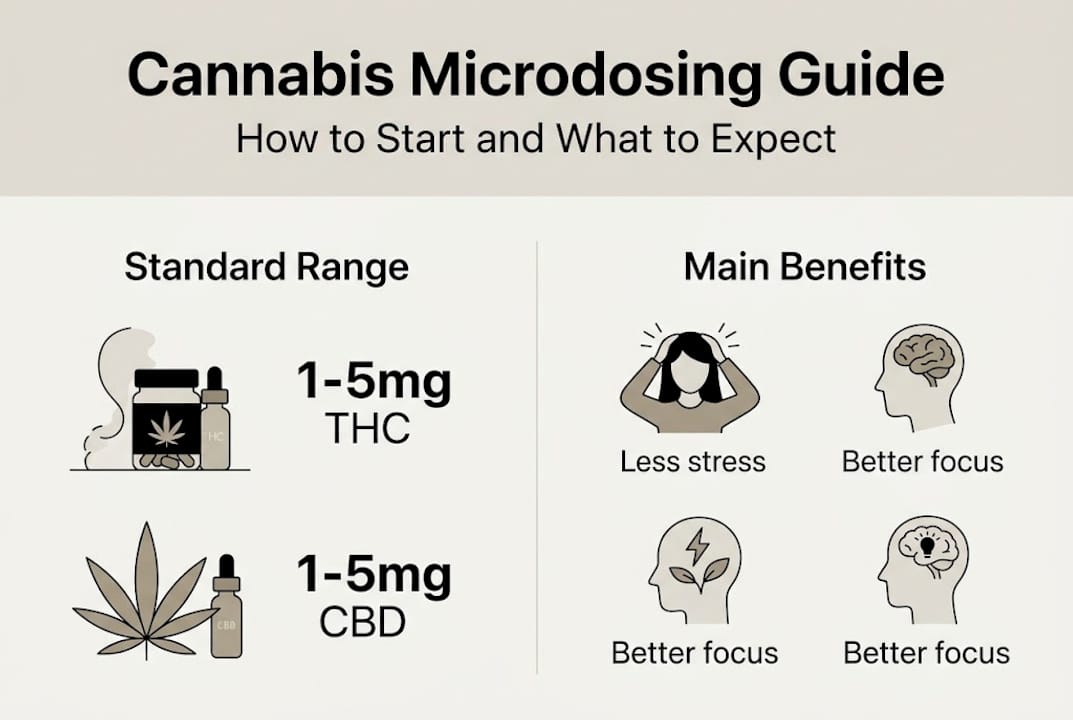
The two main cannabinoids used for microdosing are THC and CBD. THC produces the psychoactive effect at higher doses, but at low levels it can calm the nervous system without triggering intoxication. CBD is non-psychoactive at any dose and pairs well with THC for a more balanced experience. You can explore microdosing cannabis flower and microdosing cannabinoids to understand how different forms compare.
Here’s a quick reference for dose ranges and what to expect:
| Dose range | Typical effect | Onset (inhaled) | Onset (edible) |
|---|---|---|---|
| 1-2.5mg THC | Very subtle calm, minimal effect | 5-10 min | 45-90 min |
| 2.5-5mg THC | Mild relaxation, mood lift | 5-10 min | 45-90 min |
| 5-10mg THC | Noticeable effect, possible impairment | 5-15 min | 60-120 min |
| 10mg+ THC | Standard recreational dose | 5-15 min | 60-120 min |
Common microdosing basics include flower, tinctures, low-dose edibles, and capsules. Each has different onset times and precision levels. Tinctures and capsules offer the most control. Flower is fast-acting but harder to measure exactly.
“The goal of microdosing is not to feel the cannabis. It’s to feel better.”
Not everyone responds the same way. Body weight, metabolism, tolerance, and even the time of day all affect how a microdose lands. That’s why the process matters as much as the dose itself.
The science and documented benefits of microdosing
Now that you know what microdosing is, let’s look at the real evidence behind its potential and limitations.
The most exciting aspect of cannabis microdosing is the biphasic response. This means the same cannabinoid produces opposite effects at different doses. At low doses, THC tends to reduce anxiety and promote calm. At higher doses, it can amplify anxiety and impair cognition. This isn’t just anecdotal. It’s one of the most consistently observed patterns in cannabis research.
The reported benefits of low-dose cannabinoid use include reduced anxiety and stress, subtle pain modulation, improved mood, and better focus, with a slower tolerance buildup compared to regular use. These aren’t minor effects for people managing chronic stress or mild discomfort.
On the empirical side, 7.5mg THC reduced stress in a University of Chicago 2017 study, while approximately 7mg edibles caused measurable verbal recall decrements in a 2025 Psychopharmacology study. Low doses also enhanced offset analgesia in fibromyalgia patients according to a 2025 Journal of Cannabis Research study. That last finding is significant: even sub-perceptual doses can modulate how the body processes pain signals.
Here’s how dose ranges compare across wellness goals:
| Goal | Suggested dose | Notes |
|---|---|---|
| Stress relief | 1-3mg THC | Biphasic: stay low |
| Focus/creativity | 1-2.5mg THC | Higher doses may backfire |
| Mild pain relief | 2-5mg THC + CBD | Combine for balance |
| Sleep support | 2.5-5mg THC | Time with bedtime |
| General calm | 5-10mg CBD | Non-psychoactive |
You can explore the full breakdown of microdosing benefits or use a tool to calculate your ideal microdose based on your goals.
Pro Tip: Keep a simple daily log of dose, timing, and how you feel two hours later. After two weeks, patterns emerge that are nearly impossible to spot otherwise.
Tolerance is real, even at low doses. Daily microdosing can gradually reduce sensitivity, which is why planned breaks are part of any smart protocol.
How to microdose cannabis safely: Methods and protocols
Armed with the science, let’s walk through the safest and most effective ways to put microdosing into practice.
The single most important rule in cannabis microdosing is deceptively simple:
“Start low and go slow. Your goal is to find the minimum effective dose, not the maximum tolerable one.”
Here’s a step-by-step protocol based on core microdosing methodology:
- Start at 1-2.5mg THC (or equivalent CBD). This is your baseline. Many people find this is all they need.
- Wait the full onset window. For flower or vaping, wait at least 30 minutes. For edibles or tinctures, wait 2 hours before deciding the dose was insufficient.
- Track your response in a journal. Note mood, energy, pain level, and any side effects.
- Hold the dose for 3-4 days before considering an increase. Rushing this step is the most common mistake.
- Titrate up by 0.5-1mg if you feel no benefit. Repeat the tracking process.
- Stop increasing once you notice the desired effect. That’s your minimum effective dose.
Product form matters a lot here. Tinctures let you measure in fractions of a milliliter. Capsules come in fixed doses. Flower requires a bit more math, but lab-tested products with clear potency labels make it manageable. Review cannabis dosing fundamentals and safe cannabis dosing for California-specific guidance.
Pro Tip: California-licensed products are required to display potency on the label. Always buy from a licensed source so you know exactly what you’re working with. Unlicensed products can vary wildly in actual cannabinoid content.
For additional THC microdosing tips and practical guidance, external resources can supplement your protocol as you dial in your routine.
California laws, safety tips, and common pitfalls
With your foundation for safe use, it’s essential to understand the legal and safety landscape unique to California.
California allows adults 21+ to legally purchase cannabis from licensed dispensaries. That’s the starting point. But legal purchase doesn’t mean unrestricted use. Here’s what every California microdosing adult needs to know:
- Do not drive after any cannabis dose. Impaired driving is illegal regardless of dose size, and law enforcement does not distinguish between microdosing and recreational use.
- Drug tests don’t care about your intent. Even small, regular doses of THC can accumulate and trigger a positive result. If your job involves testing, microdosing carries real professional risk.
- Buy only from licensed dispensaries. This protects you legally and ensures product accuracy.
- Avoid microdosing in public spaces where cannabis consumption is prohibited.
Certain individuals should avoid microdosing entirely: those with a personal or family history of psychosis, active substance use disorder, pregnancy, or high sensitivity to cannabinoids. The biphasic effect means that even a small dose can trigger anxiety in sensitive individuals.
Common pitfalls include using unlabeled or inconsistently dosed products, which makes it nearly impossible to titrate accurately. Edibles from unlicensed sources are especially risky. Another mistake is skipping the waiting period and redosing too early, which leads to unintended intoxication.
Pro Tip: Schedule a tolerance break every 4-6 weeks. Even two or three days off resets sensitivity meaningfully and keeps your minimum effective dose low.
For microdosing for balance and more on California-specific compliance, check the linked resource for the latest guidance.
Expert tips and advanced microdosing strategies
Once you understand the basics and safety, you’re ready to apply expert strategies that maximize microdosing’s benefit for your unique needs.
The difference between a mediocre microdosing experience and a genuinely useful one often comes down to product quality and intentional integration. Here’s what separates experienced microdosers from beginners:
- Prioritize lab-tested products. California dispensary products must carry third-party lab results confirming potency and purity. Use them.
- Pair low-dose THC with CBD. CBD microdosing at 5-10mg complements THC’s effects and reduces the risk of anxiety, especially for new users. This combination is one of the most practical tools for non-psychoactive calm.
- Integrate dosing into your routine. A morning microdose for focus works differently than an evening dose for unwinding. Timing your dose around a specific goal, like a creative work session or a wind-down ritual, improves consistency and outcome tracking.
- Monitor for impairment honestly. Even sub-perceptual doses can subtly affect reaction time or judgment. Be honest with yourself, especially in professional settings.
- Schedule regular breaks. Tolerance builds quietly. A few days off every month keeps your effective dose low and your results consistent.
Pro Tip: Combine microdosing with mindfulness practices like breathwork or meditation. The combination amplifies the calming effect without requiring a higher dose.
For a detailed CBD microdosing guide specific to flower, the step-by-step breakdown is worth bookmarking as you build your personal protocol.
Why most people misunderstand cannabis microdosing
While the strategies above help maximize success, it’s crucial to step back and question the assumptions most guides make about microdosing.
The most common piece of advice you’ll find is: “just take less.” It sounds obvious. But it completely ignores two things that actually determine your outcome: individual biology and the biphasic response.
Your neighbor’s perfect 2mg dose might do nothing for you or send you into a spiral of overthinking. That’s not a product failure. That’s human variability. Metabolism, endocannabinoid system tone, stress levels, and even what you ate that morning all shift the equation.
There’s also a tendency to treat microdosing as a risk-free shortcut to wellness. It isn’t. Cognitive risks exist even at low doses, and long-term data on daily microdosing is still limited. Dispensaries have strong incentive to promote microdosing as universally beneficial, but the research paints a more nuanced picture.
Proper microdosing is a personal calibration process. It takes patience, honest self-observation, and a willingness to adjust. If you’re looking for cannabis and anxiety relief, microdosing can be a genuinely powerful tool, but only when approached with realistic expectations and careful titration.
Find high-quality microdosing products in California
Ready to give cannabis microdosing a try? Finding the right products is the first real step toward a consistent, effective wellness routine.
At California Blendz, we source organic, lab-tested hemp-derived CBD and THCa flower directly from California’s Emerald Triangle. Every product comes with third-party lab results so you know exactly what you’re dosing. Whether you’re starting with a low-dose CBD flower or exploring THCa pre-rolls for precise microdosing, our catalog is built around transparency and quality. Browse by effect, read the lab reports, and find the product that fits your wellness goals. Precise dosing starts with trustworthy products.
Frequently asked questions
What is considered a microdose of cannabis?
A typical microdose is 1-5mg THC or an equivalent amount of cannabinoids, enough for sub-perceptual effects without a noticeable high.
Can I drive after microdosing cannabis in California?
No. Driving while impaired is illegal in California regardless of dose size, and regular use may still result in a positive drug test.
Who should not microdose cannabis?
Avoid microdosing if you have a history of psychosis or substance use disorder, are pregnant, or have known sensitivity to cannabinoids.
Does microdosing cannabis build tolerance?
Tolerance can develop with daily microdosing, which is why scheduling occasional breaks every few weeks is a smart part of any long-term protocol.
Recommended
- Microdosing Cannabis Benefits: Complete Guide 2024 – California Blendz
- Microdosing Cannabinoids: Everything You Need to Know – California Blendz
- Cannabis dosing fundamentals: A clear guide for California users 2026 – California Blendz
- Master Microdosing Cannabis Flower for Enhanced Wellness – California Blendz


