
Legal status of THCA in 2026: What U.S. consumers need to know
Written by Trevor

As hemp-derived cannabinoid products flood the U.S. market, many consumers remain confused about THCA’s legal standing. Recent federal legislation has redefined hemp to include total THC content, fundamentally shifting the regulatory landscape for THCA products. Understanding these changes is critical for consumers who want to enjoy THCA’s potential benefits while staying compliant with evolving laws. This guide clarifies the current federal framework, explains how THCA’s unique chemistry affects its legal treatment, and provides practical takeaways for navigating the 2026 legal environment confidently.
Table of Contents
- How Current Federal Laws Define THCA And Hemp
- Understanding THCA: Chemical Nature, Effects, And Legal Nuances
- Comparing Hemp-Derived Cannabinoids: THCA, Delta-8, And CBD Legalities
- The Therapeutic Promise And Uses Of THCA Products
- What The 2026 Legal Landscape Means For THCA Consumers And Products
- Explore High-Quality Hemp-Derived THCA Products With California Blendz
- Frequently Asked Questions
Key takeaways
| Point | Details |
|---|---|
| THCA is non-intoxicating in raw form | THCA only converts to psychoactive THC when heated through decarboxylation. |
| Federal law now defines hemp by total THC | 2026 legislation includes THCA and all THC isomers, imposing strict container limits. |
| New regulations target intoxicating hemp cannabinoids | Products like THCA flower and Delta-8 THC face tighter scrutiny under updated definitions. |
| THCA shows promising therapeutic potential | Early research suggests anti-inflammatory and neuroprotective effects without intoxication. |
| Compliance depends on product use and THC content | Consumers must verify total THC levels and understand how heating affects legality. |
How current federal laws define THCA and hemp
The 2018 Farm Bill revolutionized hemp regulation by defining hemp as cannabis with less than 0.3% Delta-9 THC, creating a loophole that allowed other THC isomers like THCA to flourish in the marketplace. This narrow definition focused solely on Delta-9 THC concentration, leaving THCA and similar cannabinoids largely unregulated despite their potential to convert into psychoactive compounds.
In 2026, federal lawmakers closed this loophole by redefining hemp to include total THC, capturing all THC isomers including THCA. The new legislation imposes strict limits of 0.4 mg total THC per container, dramatically tightening the legal boundaries for hemp-derived products. This shift fundamentally changes how manufacturers formulate products and how consumers evaluate their purchases.
The updated framework also addresses synthetic cannabinoids. Products containing cannabinoids synthesized outside the plant, such as many Delta-8 THC offerings, now face exclusion from hemp protections. This distinction matters because it separates naturally occurring THCA in hemp flower from chemically converted or synthesized compounds.
| Legal Framework | Delta-9 THC Limit | Total THC Definition | THCA Status |
|---|---|---|---|
| 2018 Farm Bill | 0.3% by dry weight | Delta-9 only | Unregulated loophole |
| 2026 Legislation | 0.3% by dry weight | All THC isomers | Included in total THC |
| Container Limit (2026) | N/A | 0.4 mg total THC | Strictly limited |
Pro Tip: Always check product labels for total THC content, not just Delta-9 levels, to ensure compliance with current federal standards.
Understanding these definitions helps you navigate the complex regulatory environment. The shift from Delta-9-only measurement to total THC calculation means that THCA flower products previously considered legal may now exceed federal limits. Consumers must verify that products meet the new total THC thresholds to avoid legal complications.
For deeper insight into how these changes affect product availability, explore THCA’s federal legality in 2026. The regulatory landscape continues evolving, making ongoing education essential for informed purchasing decisions.
Understanding THCA: chemical nature, effects, and legal nuances
THCA exists naturally in raw cannabis and hemp plants as a non-intoxicating precursor to THC. Unlike its psychoactive counterpart, THCA does not produce intoxicating effects when consumed in its raw state. This fundamental difference shapes both its appeal and its legal treatment.
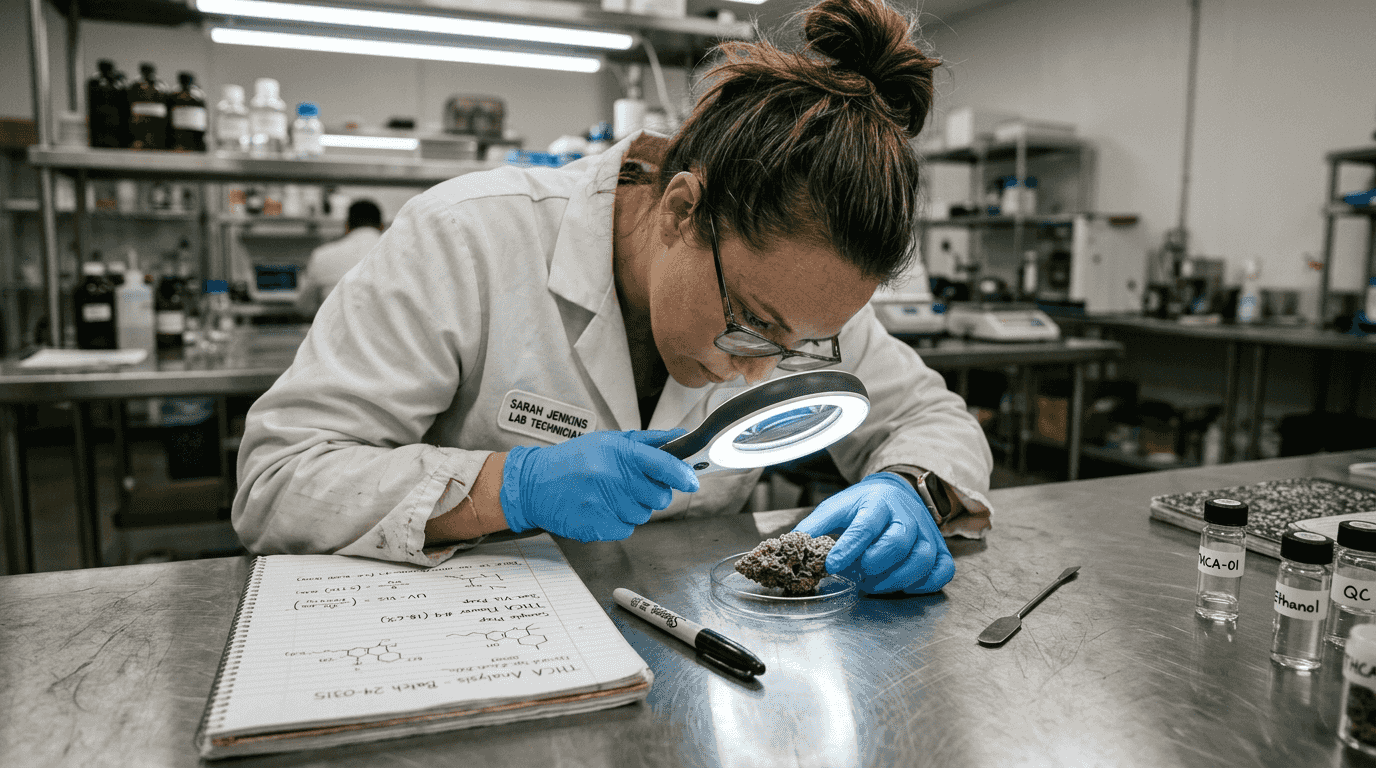
The transformation occurs through decarboxylation, a chemical process triggered by heat. When you smoke, vape, or cook THCA flower, the compound converts to psychoactive THC, fundamentally altering its effects and legal classification. This conversion happens at specific temperatures and follows predictable patterns.
Here’s how decarboxylation works:
- Raw THCA molecules contain a carboxyl group that prevents psychoactivity
- Heating to approximately 220-250°F initiates the decarboxylation reaction
- The carboxyl group releases as carbon dioxide
- The remaining molecule becomes Delta-9 THC, which binds to brain receptors
- Higher temperatures or longer heating times increase conversion rates
This chemical reality creates legal complexity. Raw THCA products occupy a different regulatory space than those intended for heating. A jar of THCA flower stored at room temperature contains minimal psychoactive THC. The same flower, once smoked or vaped, delivers intoxicating effects comparable to traditional cannabis.
Pro Tip: Store THCA flower in cool, dark conditions to preserve its non-intoxicating properties and prevent premature decarboxylation.
The legal implications extend beyond chemistry. Federal regulators now account for THCA’s potential to convert when establishing hemp definitions and THC limits. This means products marketed for heating face stricter scrutiny than those intended for raw consumption, such as juicing or tinctures.
Consumers seeking THCA’s biochemical benefits without intoxication must understand consumption methods. Raw consumption preserves THCA’s non-psychoactive nature, while any heating method triggers conversion. This distinction matters for both legal compliance and desired effects.
For practical guidance on using THCA products effectively, review exploring THCA flower benefits and uses. Understanding the science behind THCA helps you make informed choices aligned with your wellness goals and legal obligations.
Comparing hemp-derived cannabinoids: THCA, Delta-8, and CBD legalities
The hemp-derived cannabinoid market includes multiple compounds with distinct legal standings. THCA, Delta-8 THC, and CBD each face different regulatory treatments despite their common hemp origins. Understanding these differences helps you navigate product selection and compliance.
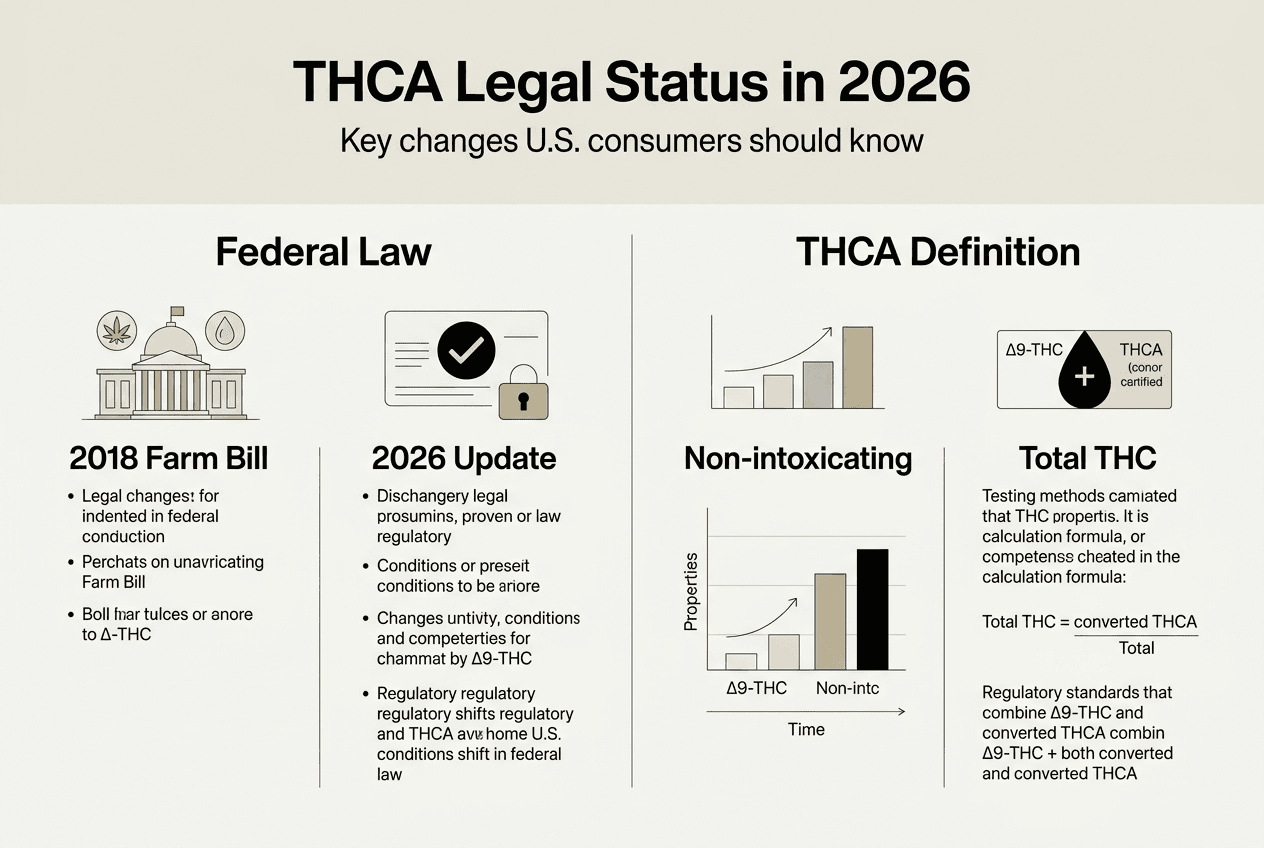
Delta-8 THC products face particularly strict scrutiny because most are synthesized outside the plant, typically through chemical conversion of CBD. The 2026 legislation explicitly excludes synthetically derived cannabinoids from hemp protections, targeting the Delta-8 market that exploded under the 2018 Farm Bill’s loopholes.
CBD maintains federal legality under hemp laws but faces FDA restrictions on use in foods and supplements due to drug preclusion provisions. This creates a paradox where CBD is legal to produce and sell as a hemp derivative but restricted in many consumer product categories.
| Cannabinoid | Psychoactive | Federal Legal Status | Key Restrictions |
|---|---|---|---|
| THCA (raw) | No | Legal if total THC compliant | Must stay below 0.4 mg total THC per container |
| THCA (heated) | Yes (converts to THC) | Controlled substance | Treated as Delta-9 THC when decarboxylated |
| Delta-8 THC | Yes (mild) | Restricted/Excluded | Synthetic derivation excluded from hemp definition |
| CBD | No | Legal (hemp-derived) | FDA restricts food/supplement marketing |
Key regulatory distinctions include:
- THCA legality depends on total THC content and intended use method
- Delta-8 products face exclusion if synthetically derived from CBD
- CBD cannot be marketed in foods or dietary supplements despite hemp legality
- All hemp cannabinoids must come from plants meeting federal THC thresholds
- State laws may impose additional restrictions beyond federal requirements
Pro Tip: Always verify cannabinoid sourcing and confirm whether products are intended for heating to ensure you’re purchasing compliant items.
The distinctions between naturally occurring and synthetic cannabinoids matter significantly. THCA that occurs naturally in hemp flower occupies different legal territory than Delta-8 produced through chemical processes. This difference reflects regulatory intent to preserve traditional hemp uses while restricting novel intoxicating products.
For context on how these cannabinoids differ in effects and applications, compare Delta-8 THC versus Delta-9 THC. Understanding cannabinoid variety helps you select products matching your needs while staying within legal boundaries.
State regulations add another layer of complexity. Some states have banned or restricted THCA and other hemp-derived cannabinoids beyond federal requirements. Check hemp legality updates for California and your specific state to understand local rules that may be more stringent than federal law.
The therapeutic promise and uses of THCA products
THCA’s non-intoxicating nature makes it particularly attractive for consumers seeking therapeutic benefits without psychoactivity. Research indicates THCA interacts with multiple molecular targets, including serotonin receptors, COX-2 enzyme, TRP channels, and PPARγ receptor, suggesting diverse potential applications.
Emerging evidence points to anti-inflammatory, neuroprotective, and anti-proliferative effects through these various pathways. While clinical research remains preliminary, early findings suggest THCA may support wellness in ways distinct from THC or CBD. The compound’s favorable safety profile in initial studies adds to its appeal.
Potential therapeutic effects include:
- Reducing inflammation through COX-2 enzyme inhibition
- Supporting neurological health via neuroprotective mechanisms
- Modulating immune system responses
- Providing antioxidant benefits
- Potentially supporting metabolic health through PPARγ interaction
The non-intoxicating nature of THCA makes it suitable for patient populations who cannot tolerate psychoactive effects or need to maintain mental clarity. This includes individuals managing chronic conditions during work hours or those sensitive to THC’s cognitive impacts.
Consumers use THCA products in several ways. Raw consumption through juicing fresh cannabis leaves, tinctures, or capsules preserves THCA’s non-psychoactive properties. These methods deliver potential therapeutic benefits without triggering decarboxylation. Alternatively, heating THCA flower provides both THCA’s therapeutic compounds and THC’s effects simultaneously.
Pro Tip: Choose high-quality, lab-tested hemp-derived THCA products to maximize potential benefits while ensuring purity and legal compliance.
For consumers interested in THCA’s unique properties, explore cannabis with elevated THCA content. Understanding how THCA concentration affects product characteristics helps you select options aligned with your wellness objectives.
It’s important to separate evidence from speculation. While THCA shows promise, much research remains preclinical or based on cell studies. Clinical trials establishing definitive efficacy for specific conditions are still needed. Consumers should maintain realistic expectations while appreciating THCA’s potential.
Common misconceptions about THCA can lead to confusion. Learn more by reviewing debunking common THCA flower myths. Accurate information helps you make decisions based on facts rather than marketing hype or misunderstandings.
What the 2026 legal landscape means for THCA consumers and products
Navigating the updated legal framework requires practical awareness of how regulations affect purchasing and usage. The 2026 total THC definition fundamentally changes what consumers should verify before buying THCA products.
Best practices for legally purchasing THCA products:
- Verify total THC content on product labels and lab reports, not just Delta-9 levels
- Confirm the product meets the 0.4 mg total THC per container federal limit
- Check that THCA is naturally occurring in hemp, not synthetically derived
- Research the vendor’s compliance record and third-party testing practices
- Understand your intended use method and how it affects legal classification
- Stay informed about your state’s specific hemp and cannabis regulations
Key consumer caution points:
- Avoid heating products that would exceed legal THC limits after decarboxylation
- Recognize that state laws may be more restrictive than federal regulations
- Understand that FDA enforcement priorities continue evolving for hemp products
- Be aware that product claims about therapeutic benefits may not be FDA-approved
- Keep documentation of lab results and purchase receipts for compliance verification
Pro Tip: Consult detailed product lab reports and prefer transparent vendors for hemp-derived THCA to ensure legal compliance and product quality.
The FDA and DEA continue refining their enforcement approaches to hemp-derived THC products. While total THC limits per container provide clear federal standards, regulatory interpretation and enforcement may vary. Staying educated about agency guidance helps you anticipate potential changes.
State-level regulations add complexity. Some states have implemented their own hemp programs with requirements differing from federal standards. Others have banned specific cannabinoids or imposed additional testing requirements. Understanding hemp legality in California and your home state ensures you remain compliant with all applicable laws.
For comprehensive understanding of current federal standards, review THCA’s federal legal status in 2026. The regulatory environment continues evolving, making ongoing education essential for consumers who want to enjoy THCA benefits while avoiding legal risks.
Staying informed protects you legally and helps you make better purchasing decisions. The shift from Delta-9-only to total THC measurement represents a fundamental change in how hemp products are regulated. Consumers who understand these changes can navigate the market confidently and select products that meet their needs within legal boundaries.
Explore high-quality hemp-derived THCA products with California Blendz
Navigating the complex legal landscape becomes easier when you partner with vendors committed to compliance and quality. California Blendz offers a curated selection of premium hemp-derived THCA products designed to meet 2026 federal standards while delivering the benefits consumers seek.
Every product undergoes rigorous third-party testing to verify total THC content, ensuring compliance with current federal limits. Lab reports provide transparency about cannabinoid profiles, allowing you to make informed decisions based on accurate data rather than marketing claims.
California Blendz’s selection includes:
- Lab-tested THCA flower sourced from California’s Emerald Triangle
- Compliant products meeting total THC container limits
- Detailed cannabinoid and terpene profiles for each offering
- Responsive customer support to answer compliance questions
- Educational resources to help you understand product use and legality
Pro Tip: Regularly check California Blendz informational blogs to stay current on legal updates and product information.
Explore the full range of compliant hemp products at California Blendz, where quality meets transparency. Whether you’re new to THCA or an experienced consumer, you’ll find products backed by testing and expertise to support your wellness journey within legal boundaries.
Frequently asked questions
Is THCA legal to buy and sell in the U.S.?
THCA in raw, non-decarboxylated form derived from hemp with total THC below federal limits is generally legal federally in 2026. Products must meet the 0.4 mg total THC per container limit and contain THCA naturally occurring in hemp plants. State laws vary significantly, with some states imposing stricter controls on THCA and hemp-derived cannabinoids beyond federal requirements. Consumers should verify product THC content through lab reports and research their state’s specific regulations before purchase. For detailed guidance, review THCA’s federal legal status.
Does heating THCA make it illegal?
Heating THCA causes decarboxylation into psychoactive THC, which is a controlled substance under federal law when exceeding legal thresholds. Products intended for heating may be subject to stricter regulation than raw THCA items. The legal classification shifts from non-intoxicating hemp derivative to controlled THC once decarboxylation occurs. This means smoking or vaping THCA flower converts it into a form regulated like traditional cannabis. Consumers must consider both the product’s pre-heating THC content and its post-decarboxylation levels to ensure compliance.
What are the potential health benefits of THCA?
THCA is non-intoxicating and shows anti-inflammatory, neuroprotective, and anti-proliferative effects in preliminary research. The compound may reduce inflammation, support neurological health, and provide antioxidant benefits without causing psychoactivity. However, most evidence comes from preclinical studies and cell research rather than large-scale clinical trials. Further research is needed to fully establish efficacy for specific health conditions and determine optimal dosing. Consumers interested in THCA’s therapeutic potential should maintain realistic expectations while appreciating its promise as a non-intoxicating cannabinoid option.
How do FDA regulations impact THCA and hemp products?
The FDA restricts cannabinoid use in foods and supplements, including hemp-derived THCA products, due to drug preclusion provisions. This creates legal complexity where THCA may be federally legal as a hemp derivative but restricted in certain product formats. The FDA has not approved THCA for use in dietary supplements or conventional foods, limiting how manufacturers can market these products. Consumers should stay informed on FDA guidance updates to avoid purchasing unregulated products that may face future enforcement actions. Understanding these restrictions helps you select compliant products from reputable vendors.
Recommended
- Is THCa Legal Federally? 2026 Law Changes Explained – California Blendz
- Exploring the Benefits and Uses of THCA Flower: What You Need to Know – California Blendz
- Hemp Legality in 2025 – What Changes for Californians – California Blendz
- The Truth About THCA and Drug Testing: What You Need to Know – California Blendz
- CBD vs THC: KEY DIFFERENCES YOU NEED TO KNOW IN 2025 – SMOKO CBD


