
Cannabis flower aromas: 5 scent families for calm
Written by Trevor

TL;DR:
- Smelling cannabis flower reveals its terpene richness, freshness, and potential effects before use.
- There are five main aroma families: Gas/Diesel/Earth, Citrus/Tropical, Dessert/Sweet, Earth/Herb/Pine, and Floral/Tea.
- Using scent to select quality flower enhances the wellness experience and matches specific relaxation goals.
Most cannabis consumers in California know to check the cannabinoid percentage on a label, but far fewer pause to smell the flower before buying. That’s a missed opportunity. The aroma of a CBD or THCa hemp flower is one of the clearest signals of its terpene richness, freshness, and likely effect on your body and mind. Scent is not just packaging. It’s chemistry you can actually sense before you ever light up. This guide walks you through the science of cannabis aromas, the five major scent families, and how to use your nose to find the flower that fits your relaxation goals.
Table of Contents
- What gives cannabis flower its aroma?
- Major aroma families in CBD and THCa flower
- How to identify quality through aroma
- Choosing the right aroma for your relaxation goals
- Our take on aroma: It’s the missing link for intentional wellness
- Enhance your journey with quality hemp flower
- Frequently asked questions
Key Takeaways
| Point | Details |
|---|---|
| Aroma shapes effects | Each cannabis flower aroma profile contributes to unique relaxation and wellness responses. |
| Quality is nuanced | Strong scents don’t always mean better flower; diversity and complexity matter more. |
| Match aroma to goal | Choose aroma families that align with your desired effect, from uplift to deep calm. |
| Storage preserves aroma | Properly storing your flower maximizes aroma and associated benefits. |
What gives cannabis flower its aroma?
When you crack open a jar of fresh hemp flower and that wave of scent hits you, you’re experiencing a complex chemical orchestra. Most people credit THC or CBD for everything, but the aroma comes from an entirely different group of compounds.
Cannabis aroma is shaped by terpenes, volatile sulfur compounds (VSCs), and esters working together. Terpenes are aromatic oils produced in the same glands that make cannabinoids. VSCs are responsible for the gassy, diesel-like punch in certain strains. Esters contribute fruity and sweet notes. You can learn more about terpene basics to see how each compound fits into the bigger picture.
Here’s what makes this interesting: the scent you detect is rarely just one compound. It’s a blend of dozens of molecules interacting. Some amplify each other. Some cancel each other out. That’s why two flowers with similar terpene percentages can smell completely different.
The most important concept here is the entourage effect. This is the idea that cannabinoids, terpenes, and other plant compounds work together to shape your experience. Aroma is not decorative. It’s functional. The terpenes you smell are likely the same ones influencing how relaxed, focused, or calm you feel.
Key facts about cannabis aroma chemistry:
- Myrcene, limonene, caryophyllene, and linalool are among the most common terpenes in hemp flower
- VSCs like dimethyl sulfide create the sharp, fuel-like notes in gas and diesel strains
- Esters such as geranyl acetate add soft, floral or fruity layers
- Terpene clusters exist but do not always predict sensory strength due to other compounds
- CBD and THCa flowers often have distinct aroma profiles, with CBD aroma nuances leaning citrus and fruity
A flower’s aroma is not just pleasant. It’s a window into its chemical makeup. The more complex and layered the scent, the richer the terpene profile is likely to be.
Not all strong-smelling flowers are high quality. Intensity matters, but so does diversity. A flower that smells one-dimensional, even if potent, may offer a narrower experience than one with multiple scent layers. Understanding aroma profiles helps you move past guessing and start making informed choices.
Major aroma families in CBD and THCa flower
With an understanding of the chemistry, you’ll want to know which aromas to look for in practice. Cannabis researchers and labs have worked to organize the hundreds of possible scents into manageable categories.
Five primary aroma families exist: Gas/Diesel/Earth, Citrus/Tropical, Dessert/Sweet, Earth/Herb/Pine, and Floral/Tea. PhytoFacts and SC Labs classification details these distinct aroma categories in modern flower, giving consumers and cultivators a shared language for scent.
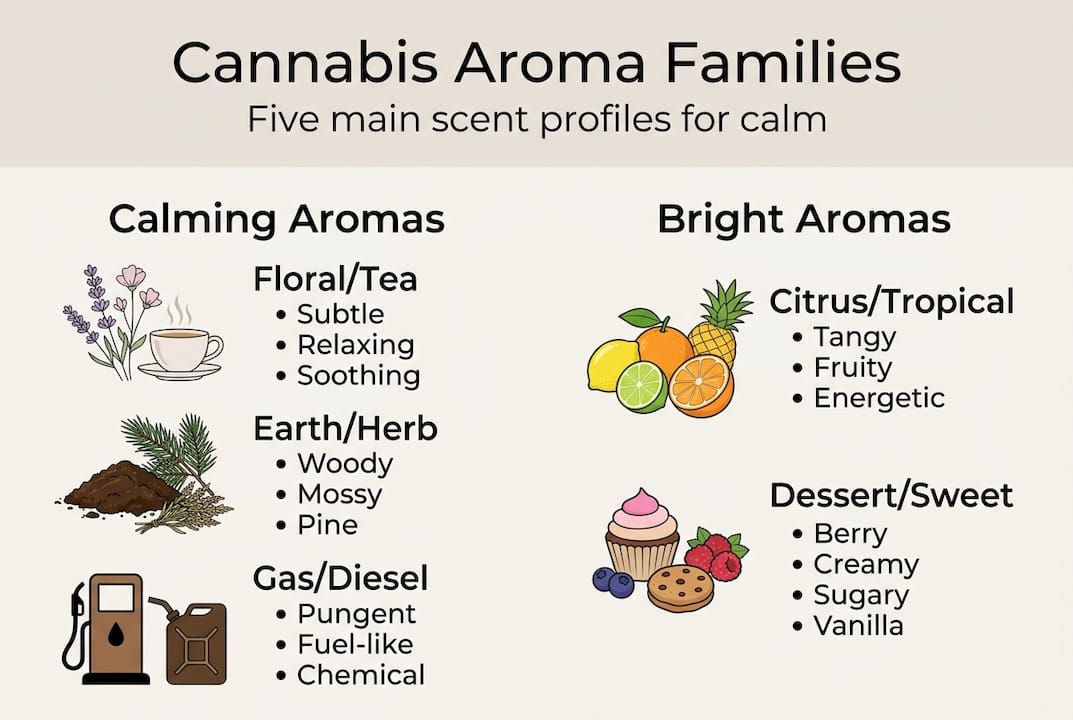
Here’s a breakdown of each family and what to expect:
| Aroma family | Key terpenes | Typical notes | Common in |
|---|---|---|---|
| Gas/Diesel/Earth | VSCs, myrcene | Fuel, skunk, sharp earth | THCa strains |
| Citrus/Tropical | Limonene, terpinolene | Lemon, orange, mango | CBD-rich hemp |
| Dessert/Sweet | Linalool, geraniol | Vanilla, candy, berry | Hybrid strains |
| Earth/Herb/Pine | Pinene, humulene | Forest, sage, cedar | Both CBD and THCa |
| Floral/Tea | Linalool, bisabolol | Rose, lavender, chamomile | CBD-dominant strains |
CBD-rich hemp tends to lean toward citrus, tropical, and floral profiles. THCa flower often skews earthier or gassier. This is not a hard rule, but it’s a useful starting point when you’re browsing options.
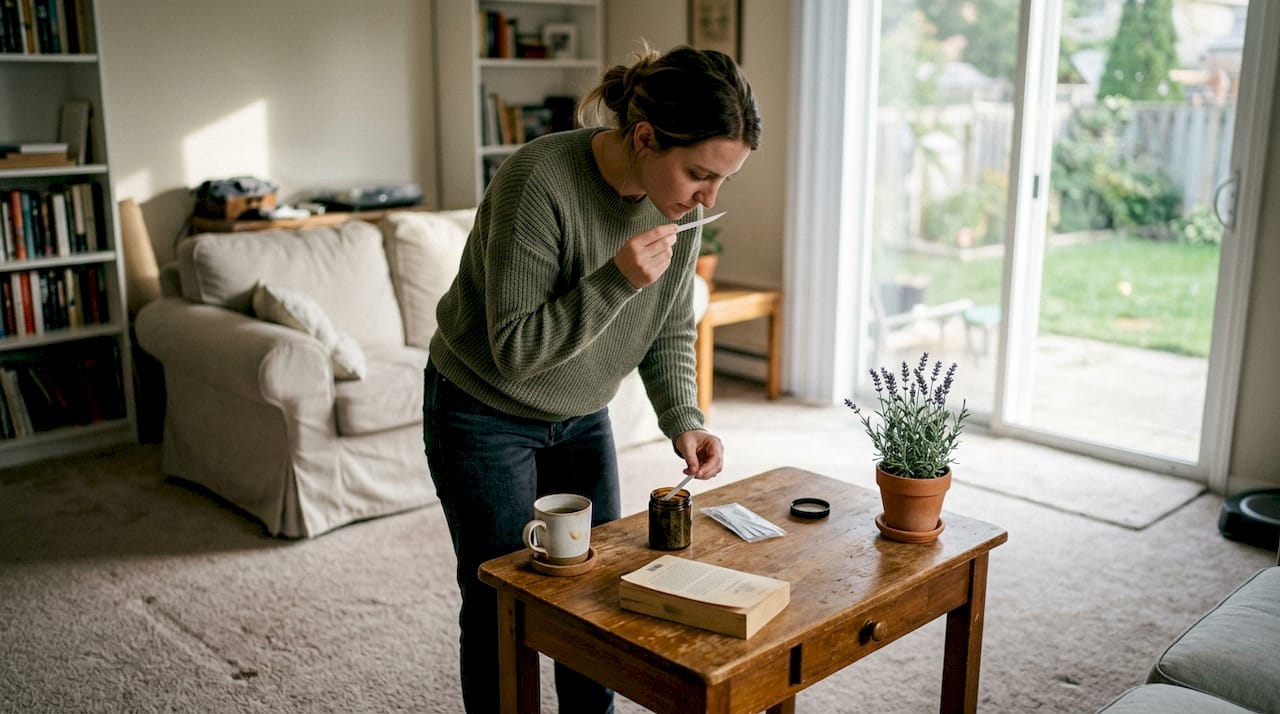
Some aromas are associated with more sedating effects. Myrcene-heavy earth and diesel flowers are often reported to feel heavier and more physically relaxing. Limonene-forward citrus strains tend to feel brighter and more uplifting. Linalool, found in floral profiles, is the same compound in lavender that’s been studied for its calming properties.
Pro Tip: When shopping for hemp flower aroma families, don’t just read the strain name. Look at the terpene lab results. If limonene is the dominant terpene, expect citrus. If myrcene tops the list, expect earth and musk.
Knowing the terpene aroma types gives you a real advantage. Instead of relying on marketing language like “relaxing” or “uplifting,” you can trace those claims back to actual compounds and decide for yourself.
How to identify quality through aroma
With the major aroma families in mind, next comes applying this knowledge to pick quality flower. Your senses are genuinely useful tools here, and science backs that up.
Start with a simple sniff test. Fresh, quality flower should hit you with a clear, recognizable scent. If it smells like hay, grass, or nothing at all, the terpenes have likely degraded. That’s a sign of poor curing, old stock, or improper storage. Visual cues help too. Look for dense, well-trimmed buds with visible trichomes. Touch should feel slightly sticky, not dry and crumbly.
A layered aroma is a strong quality signal. If you can detect multiple scent notes, like citrus on top, then pine, then a hint of earth underneath, that complexity points to a rich terpene profile. One-note flowers are not always bad, but they rarely offer the same depth of experience.
Here’s how to evaluate flower quality step by step:
- Open the jar and take a slow, deliberate sniff before touching the flower
- Note the first scent (top note), then breathe deeper for secondary and base notes
- Break a small piece apart and smell again. Fresh terpenes release on contact
- Check the lab report for total terpene percentage
- Cross-reference the dominant terpenes with the aroma families above
Total terpene concentration between 0.8 and 3.0% is a quality indicator, and above 2% signals loud aromas. That said, total terpenes don’t always dictate aroma intensity, because VSCs and minor compounds can punch above their weight.
Pro Tip: Store your flower in airtight glass jars away from heat and light. Terpenes are volatile. Heat, air, and UV exposure degrade them quickly. A well-stored flower from three months ago can smell better than a fresh but poorly stored one.
Understanding terpene health benefits can also help you connect what you smell to what you might feel. And if you’re curious about how scent relates to potency, the connection between flavor and CBD strength is worth exploring before your next purchase. Proper aroma preservation tips can make a real difference in how long your flower stays fresh and effective.
Choosing the right aroma for your relaxation goals
Now that you can recognize quality, it’s time to match aromas to what you want to feel. This is where the real personalization happens.
CBD-rich strains often feature citrus and fruity aromas, which many find uplifting, while earth and gas profiles skew toward heavier relaxation. The entourage effect means aroma and cannabinoid profile together shape your experience, not one or the other alone.
Here’s a practical guide to matching aromas with your goals:
- Citrus and tropical profiles: Great for daytime use, gentle mental uplift, or social settings. Think limonene-forward strains with lemon and mango notes.
- Diesel and earth profiles: Better suited for evening wind-down, physical tension relief, or deep couch relaxation. Myrcene and VSC-heavy strains fall here.
- Floral and pine profiles: Lighter and mood-brightening. Linalool and pinene strains are good for low-key social relaxation or creative evenings.
- Sweet and dessert profiles: Versatile and approachable. Often a good entry point for newer consumers who find earthy or gassy aromas overwhelming.
- Herb and cedar profiles: Grounding and calm. Humulene-dominant flowers in this range are popular for meditation or unwinding after work.
Time of day matters more than most people realize. A citrus-forward CBD flower in the morning can feel energizing without any jitteriness. A myrcene-heavy THCa flower in the evening can ease physical tension and support sleep. Matching the aroma family to the moment is a simple but powerful habit.
If you want to go deeper, look into terpinolene, a terpene found in some floral and herbal strains that behaves differently from most. It’s associated with uplifting, almost piney freshness and shows up in strains that defy easy categorization.
Pro Tip: Keep a simple aroma journal. After each session, write down the dominant scent, the strain, and how you felt. After a few weeks, patterns emerge. You’ll start to know which aromas reliably bring you the calm or clarity you’re after.
Our take on aroma: It’s the missing link for intentional wellness
Here’s something we’ve noticed after years of working with hemp flower: most consumers still shop by cannabinoid percentage first and aroma last. That’s backwards. The percentage tells you how much of a compound is present. The aroma tells you which compounds are active and how they’re likely to work together.
We’ve seen people chase high-CBD numbers and end up disappointed, while someone else picks a mid-range flower by smell alone and reports exactly the calm they were looking for. Aroma is not a soft, subjective add-on. It’s a direct read on the terpene profile, and terpenes are where the nuance lives.
Our honest advice: slow down at the point of selection. Smell before you buy. Swap strains regularly and note what each aroma does for you. The cannabis flower fundamentals matter, but your nose is a surprisingly accurate guide once you learn to trust it. Let scent lead your wellness practice, not just the numbers on a label.
Enhance your journey with quality hemp flower
You’ve learned the chemistry, the five aroma families, and how to match scent to your goals. Now it’s time to put that knowledge to work with flower you can actually trust.
At California Blendz, every CBD and THCa flower in our catalog is sourced from California’s Emerald Triangle, lab-tested for terpene content, and selected with aroma diversity in mind. We believe you deserve to know exactly what you’re smelling and why it matters. Explore our hemp flower and filter by effect or experience to find the aroma profile that fits your relaxation goals. For a deeper look at how scent shapes your session, our hemp flower insights blog is a great next step.
Frequently asked questions
Which aroma families are best for relaxation with CBD flower?
Earth, gas, and floral aromas are often linked to deeper relaxation, but the right scent depends on your personal preference and what effects you’re seeking.
Do stronger-smelling flowers guarantee more potent effects?
A stronger aroma does not always mean stronger effects. Aroma intensity doesn’t always predict effect strength, and subtle, nuanced flowers can offer unique benefits in their own right.
How should I store CBD hemp flower to preserve aroma?
Store flower in airtight glass jars in a cool, dark place. This protects terpenes from heat and UV exposure, which helps preserve terpenes and maintain freshness over time.
Are certain aromas unique to CBD or THCa flower strains?
CBD flower leans citrus and fruity in aroma, while THCa varieties more often feature earthy or gassy profiles, though there is real overlap between the two.


