
Understanding and overcoming stigma around CBD use in 2026
Written by Trevor

Despite CBD’s growing acceptance and proven wellness benefits, many users still face judgment and misconceptions rooted in decades of cannabis prohibition. Stigma around CBD use persists in workplaces, healthcare settings, and social circles, forcing people to hide a legitimate health choice. This stigma stems from outdated stereotypes, political agendas, and confusion between CBD and psychoactive cannabis. Understanding where these biases come from and how they manifest helps you navigate judgment confidently. This guide explores the historical roots of CBD stigma, its real-world impacts on users, and practical strategies to overcome barriers to your wellness journey.
Table of Contents
- The Historical Roots Of Stigma Around CBD Use
- How Stigma Manifests For Medical Cannabis And CBD Users
- The Role Of Stigma In Pain Management And Alternative Therapies
- Strategies To Overcome Stigma And Support CBD Use For Wellness
- Explore Trusted CBD Products And Resources At California Blendz
Key takeaways
| Point | Details |
|---|---|
| Historical prohibition created lasting stigma | Early 20th century political campaigns demonized cannabis, establishing negative stereotypes that still affect CBD perceptions today. |
| Medical cannabis users face discrimination | Patients experience judgment in workplaces, healthcare settings, and social situations despite legitimate medical use. |
| Stigma involves four key components | Labeling, stereotyping, social separation, and power imbalances combine to marginalize CBD users unfairly. |
| Pain management choices are stigma-driven | Many seek CBD as an alternative to opioids, navigating overlapping stigmas around both treatment options. |
| Education and openness reduce barriers | Sharing accurate information, supporting others, and advocating for acceptance help normalize CBD wellness use. |
The historical roots of stigma around CBD use
The negative perception surrounding CBD didn’t emerge from scientific evidence. Instead, cannabis was demonized in the 20th century due to political and social agendas, leading to outdated stereotypes and misconceptions that persist today. Early prohibition campaigns painted cannabis as a dangerous substance that threatened social order, creating fear-based narratives that had nothing to do with actual health risks.
These campaigns succeeded in establishing long-lasting stigma through several mechanisms. Political leaders used racially charged rhetoric to associate cannabis with marginalized communities, creating artificial links between the plant and social deviance. Media amplified these messages through sensationalized stories that portrayed cannabis users as criminals or moral failures. Legal frameworks reinforced these attitudes by classifying cannabis alongside truly dangerous substances, lending official credibility to unfounded fears.
The history of CBD flower reveals a stark contrast between ancient medicinal use and modern prohibition. For thousands of years, cultures worldwide used cannabis therapeutically without the stigma we see today. The shift happened rapidly in the early 1900s, driven more by political convenience than medical evidence. This historical context matters because it reveals stigma as a social construction rather than a reflection of CBD’s actual properties or risks.
Today’s CBD users inherit this legacy of misinformation. Many people conflate CBD with psychoactive THC, assuming all cannabis products produce intoxication. This confusion persists even though CBD lacks the psychoactive properties that drive recreational cannabis use. Understanding this distinction helps you recognize when stigma stems from ignorance rather than legitimate concern.
Pro Tip: When facing stigma, remember that negative attitudes toward CBD reflect outdated political agendas, not current scientific understanding. This knowledge helps you respond to judgment with confidence rather than defensiveness.
Key factors perpetuating historical stigma include:
- Prohibition-era propaganda that painted cannabis as a gateway to harder drugs
- Lack of public education about differences between CBD, THC, and other cannabinoids
- Institutional policies that treat all cannabis products as equivalent threats
- Media representations that reinforce stereotypes about cannabis users
- Generational attitudes passed down from the prohibition era
How stigma manifests for medical cannabis and CBD users
Medical cannabis patients often face judgment, disapproval, and discrimination in various settings, creating real barriers to wellness. These experiences range from subtle social discomfort to overt discrimination that affects employment, healthcare access, and personal relationships. The impact extends beyond momentary awkwardness, shaping how patients make treatment decisions and whether they disclose their CBD use to others.

Workplace discrimination represents one of the most significant challenges. Employees using CBD for legitimate health reasons may face suspicion from managers or colleagues who view any cannabis product as recreational drug use. Some employers maintain zero-tolerance policies that don’t distinguish between psychoactive and non-psychoactive cannabinoids. This forces workers to choose between effective symptom management and job security, even when their CBD use poses no performance or safety risk.
Healthcare settings should offer support, but many medical cannabis patient experiences include dismissive or judgmental responses from providers. Doctors may discourage CBD use without exploring the evidence, or nurses might make assumptions about patients who mention cannabis-based treatments. This medical stigma creates reluctance to disclose CBD use, potentially leading to dangerous drug interactions or missed opportunities for integrated care.
Family and social circles present another stigma battleground. Parents using CBD for chronic pain may face criticism from relatives who view it as irresponsible or dangerous around children. Friends might make jokes or express concern that reflects broader societal biases rather than genuine understanding. These social pressures create isolation, pushing CBD users to hide their wellness choices from the people closest to them.
“Patients describe feeling forced to justify their treatment choices constantly, facing whispers and side-eye from people who should offer support. This chronic judgment takes a psychological toll, sometimes leading users to question their own legitimate health decisions.”
Internalized stigma compounds these external pressures. After repeatedly facing negative reactions, some CBD users begin to doubt their own choices or feel shame about a perfectly reasonable wellness strategy. This self-stigma can be more damaging than external judgment because it undermines confidence and prevents people from advocating effectively for their needs.
Common manifestations of CBD stigma include:
- Colleagues making assumptions about work performance or reliability
- Healthcare providers dismissing CBD as unproven or risky without evidence
- Family members expressing concern based on outdated stereotypes
- Social isolation from communities that view cannabis negatively
- Forced secrecy about treatment choices to avoid judgment
- Internalized shame that undermines confidence in wellness decisions
The role of stigma in pain management and alternative therapies
Pain management decisions increasingly involve navigating complex stigma around both opioids and cannabis. An estimated 40% of cancer survivors report cannabis use and face opioid stigma intertwined with their decision-making, creating a double bind where both conventional and alternative treatments carry social risks. This stigma intersection particularly affects people with chronic conditions who need long-term symptom management strategies.
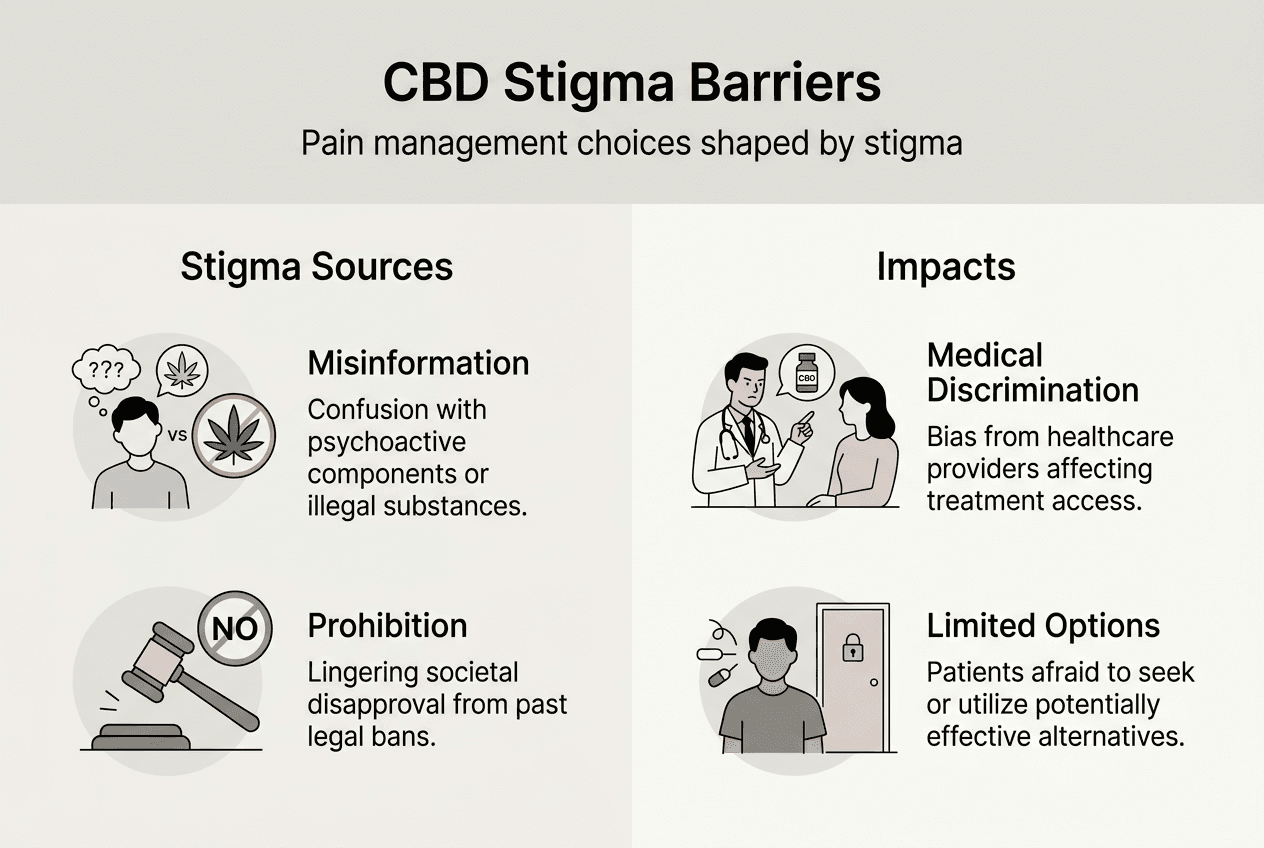
Opioid stigma has intensified during the addiction crisis, making patients fear judgment when accepting legitimate pain prescriptions. Doctors face pressure to reduce opioid prescribing, sometimes leaving patients undertreated. This creates space for cannabis alternatives, but those options carry their own stigma baggage. Patients find themselves choosing between treatments based partly on which form of judgment feels more manageable rather than purely on medical effectiveness.
Cancer survivors exemplify this dilemma. They often experience severe pain that significantly impacts quality of life, yet both opioid and cannabis treatments expose them to potential stigma. Some report that overcoming cannabis stigma strategies helped them access relief they’d avoided due to social pressure. Others continue suffering rather than risk either form of judgment from family, employers, or healthcare providers.
Factors influencing pain management and stigma decisions:
- Previous experiences with opioid side effects or dependency concerns
- Availability of supportive healthcare providers who respect patient autonomy
- State-level legal protections for medical cannabis users
- Social support networks that normalize or condemn different treatment options
- Personal values around natural versus pharmaceutical interventions
- Workplace policies regarding drug testing and cannabis use
| Patient Group | Cannabis Use Rate | Primary Stigma Concern | Treatment Decision Impact |
|---|---|---|---|
| Cancer survivors | 40% | Both opioid and cannabis stigma | Delayed treatment, undertreated pain |
| Chronic pain patients | 35-45% | Cannabis stigma, workplace testing | Hidden use, inconsistent dosing |
| Older adults | 15-20% | Generational attitudes | Reluctance to try despite benefits |
| Working professionals | 25-30% | Employment discrimination | Evening-only use, suboptimal relief |
Pro Tip: When discussing pain management with your healthcare provider, frame CBD as part of a comprehensive wellness strategy rather than an either-or choice against conventional treatments. This collaborative approach often reduces stigma and improves care quality.
The intersection of opioid and cannabis stigma reveals how social attitudes shape medical decisions in ways that may not serve patient wellbeing. People deserve access to effective pain relief without judgment, yet stigma forces many to choose treatments based on social acceptability rather than clinical appropriateness. Recognizing this dynamic helps you make more informed, autonomous decisions about your own care.
Strategies to overcome stigma and support CBD use for wellness
Stigma involves labeling, stereotypes, separation, and power asymmetry but can be challenged by education and social acceptance. Understanding these four components helps you identify stigma when it occurs and respond effectively. Labeling happens when people categorize CBD users as a distinct group. Stereotyping assigns negative characteristics to that group. Separation creates social distance between users and non-users. Power dynamics allow dominant groups to enforce these distinctions through discrimination.
Breaking down stigma requires addressing each component systematically. When someone labels you as a CBD user with negative intent, you can reframe that identity positively by emphasizing wellness and self-care. When facing stereotypes, you counter them with accurate information and personal examples that contradict assumptions. When experiencing social separation, you build connections with supportive communities while educating those willing to learn. When confronting power imbalances, you advocate for policy changes and legal protections.
Education serves as the foundation for all anti-stigma efforts. The destigmatization of cannabis movement demonstrates how increased knowledge shifts public attitudes over time. As more people learn about CBD’s distinct properties, safety profile, and therapeutic applications, fear-based reactions give way to acceptance. You contribute to this shift every time you share accurate information with someone who holds misconceptions.
Actionable steps to navigate and reduce CBD stigma:
- Educate yourself thoroughly about CBD science, legality, and safety so you can respond to questions confidently
- Share your positive experiences selectively with people likely to be receptive and supportive
- Connect with online and local communities of CBD users for mutual support and solidarity
- Advocate for workplace policies that distinguish between psychoactive and non-psychoactive cannabis products
- Support organizations working to reform cannabis laws and reduce discrimination
- Challenge cannabis myths when you encounter them in conversation
- Practice self-compassion and reject internalized stigma about your wellness choices
| Stigma Behavior | Acceptance Behavior | Outcome Difference |
|---|---|---|
| Hiding CBD use from everyone | Selective disclosure to supportive people | Reduced isolation, better support |
| Accepting negative labels passively | Reframing as wellness-focused choice | Improved self-image, confidence |
| Avoiding CBD despite benefits | Using CBD based on medical needs | Better symptom management |
| Staying silent about discrimination | Reporting violations, seeking advocacy | Legal protection, policy change |
| Believing stereotypes about users | Recognizing diversity among CBD users | Community building, solidarity |
Openness about CBD use carries risks but also creates opportunities for change. When you’re transparent with trusted people, you give them a chance to update their assumptions based on real experience rather than stereotypes. Many people hold negative views simply because they don’t knowingly interact with CBD users. Your openness provides that missing data point, potentially shifting their entire perspective.
Pro Tip: Start conversations about CBD in contexts where you already have credibility and trust. When colleagues or family members respect you in other areas, they’re more likely to reconsider their cannabis biases based on your example. Small, personal conversations often accomplish more than broad advocacy efforts.
Support networks make navigating stigma far more manageable. Whether through online forums, local meetups, or advocacy organizations, connecting with others who share your experience provides validation and practical advice. These communities help you distinguish between legitimate concerns worth addressing and baseless stigma you can safely ignore. They also offer strategies others have used successfully in similar situations.
Explore trusted CBD products and resources at California Blendz
Navigating stigma becomes easier when you have access to high-quality products and reliable information that support your wellness journey. California Blendz offers carefully curated CBD and hemp-derived products sourced from California’s Emerald Triangle, emphasizing organic cultivation, sustainable practices, and rigorous lab testing. Every product comes with third-party lab results, giving you the transparency and confidence to make informed choices about your wellness.
Beyond premium CBD flower, pre-rolls, and bundles, California Blendz provides educational resources that help you understand cannabinoids, terpenes, and product selection. Whether you’re new to CBD or an experienced user seeking specific effects, the site’s filtering tools and detailed product descriptions make finding the right option straightforward. Fast shipping and clear legal compliance information ensure a trustworthy shopping experience that respects both your wellness needs and peace of mind.
Pro Tip: Choose CBD suppliers who prioritize lab testing and transparency. Access to detailed cannabinoid profiles and purity results not only ensures product quality but also gives you concrete data to share when discussing your CBD use with skeptical healthcare providers or family members.
What is the main cause of stigma around CBD use?
What is the main cause of stigma around CBD use?
Stigma mainly stems from historical cannabis prohibition and persistent misinformation that conflates CBD with psychoactive substances. Early 20th century political campaigns demonized all cannabis products, creating fear-based narratives that ignored distinctions between different cannabinoids. These outdated attitudes persist despite growing scientific evidence supporting CBD’s safety and therapeutic benefits.
How can patients handle judgment from family or coworkers about using CBD?
Encourage open communication and education when you feel comfortable sharing your reasons for CBD use. Many people hold negative views simply due to lack of accurate information rather than malicious intent. Seek support groups and rely on factual information from reputable sources to reduce misconceptions. Know your rights regarding medical cannabis use at work, as legal protections vary by state and situation. Sometimes selective disclosure to trusted individuals proves more effective than broad transparency with everyone.
Why do some cancer survivors choose cannabis over opioids for pain management?
Many cancer survivors choose cannabis due to opioid stigma and concerns about addiction and side effects that can significantly impact quality of life. Opioids carry risks of dependency, constipation, cognitive impairment, and other complications that some patients find unacceptable. Cannabis offers perceived safer pain relief with fewer dependency risks, though it also carries its own stigma. The choice often involves weighing which treatment provides better symptom control with more manageable social and medical trade-offs.
How can education help reduce stigma around CBD and cannabis?
Education challenges stereotypes and misinformation by replacing fear-based assumptions with evidence about CBD’s actual properties, uses, and safety profile. Increased knowledge promotes empathy and normalizes CBD use as a legitimate wellness choice rather than deviant behavior. When people learn that common cannabis myths lack scientific support, they become more open to reconsidering their biases. Education works at both individual and societal levels, gradually shifting cultural attitudes as accurate information becomes more widely available and accepted.
Recommended
- Overcoming Cannabis Stigma: Building Social Acceptance – California Blendz
- Green Revolution: The Destigmatization of Cannabis Revolt – California Blendz
- CBD legal states 2025: Complete U.S. consumer guide – California Blendz
- Understanding CBD and Drug Testing: What You Need to Know – California Blendz


