
Top 10 misconceptions about CBD: what U.S. consumers should know
Written by Trevor

CBD products flood store shelves and online marketplaces, yet confusion surrounds what they actually contain and how they work. Many consumers struggle to separate marketing claims from scientific reality, leading to purchases based on incomplete or incorrect information. This guide debunks the ten most common misconceptions about CBD, helping you make informed decisions backed by current research and regulatory guidance. Understanding these myths protects your health and ensures you get genuine value from CBD products.
Table of Contents
- How CBD Product Types And Labels Cause Consumer Confusion
- Misconceptions About CBD’s Medical Effects And Receptor Interactions
- Why CBD’s Legality And Safety Are Often Misunderstood By Consumers
- Summary Comparison: Common Misconceptions And The Facts About CBD
- Explore Safe, Quality CBD Products At California Blendz
Key takeaways
| Point | Details |
|---|---|
| Product labels confuse buyers | Terms like full spectrum and isolate mean different things for CBD content and effects |
| Medical claims often mislead | CBD research is ongoing and benefits remain under scientific investigation |
| Legal status varies widely | Federal hemp laws differ from state regulations affecting CBD availability |
| Medication interactions exist | CBD can affect how your body processes common prescription drugs |
| Quality varies dramatically | Lab testing and transparency separate trustworthy products from questionable ones |
How CBD product types and labels cause consumer confusion
Walking into a CBD store or browsing online reveals dozens of products with confusing terminology. Consumer confusion exists regarding product names used to describe hemp-based oils, particularly CBD oils. Understanding these distinctions helps you choose products that match your needs and expectations.
Full spectrum CBD contains all naturally occurring compounds from the hemp plant, including trace amounts of THC below 0.3%. Broad spectrum removes THC entirely while preserving other cannabinoids and terpenes. CBD isolate consists of pure cannabidiol with no other plant compounds. Each type offers different experiences and potential benefits.
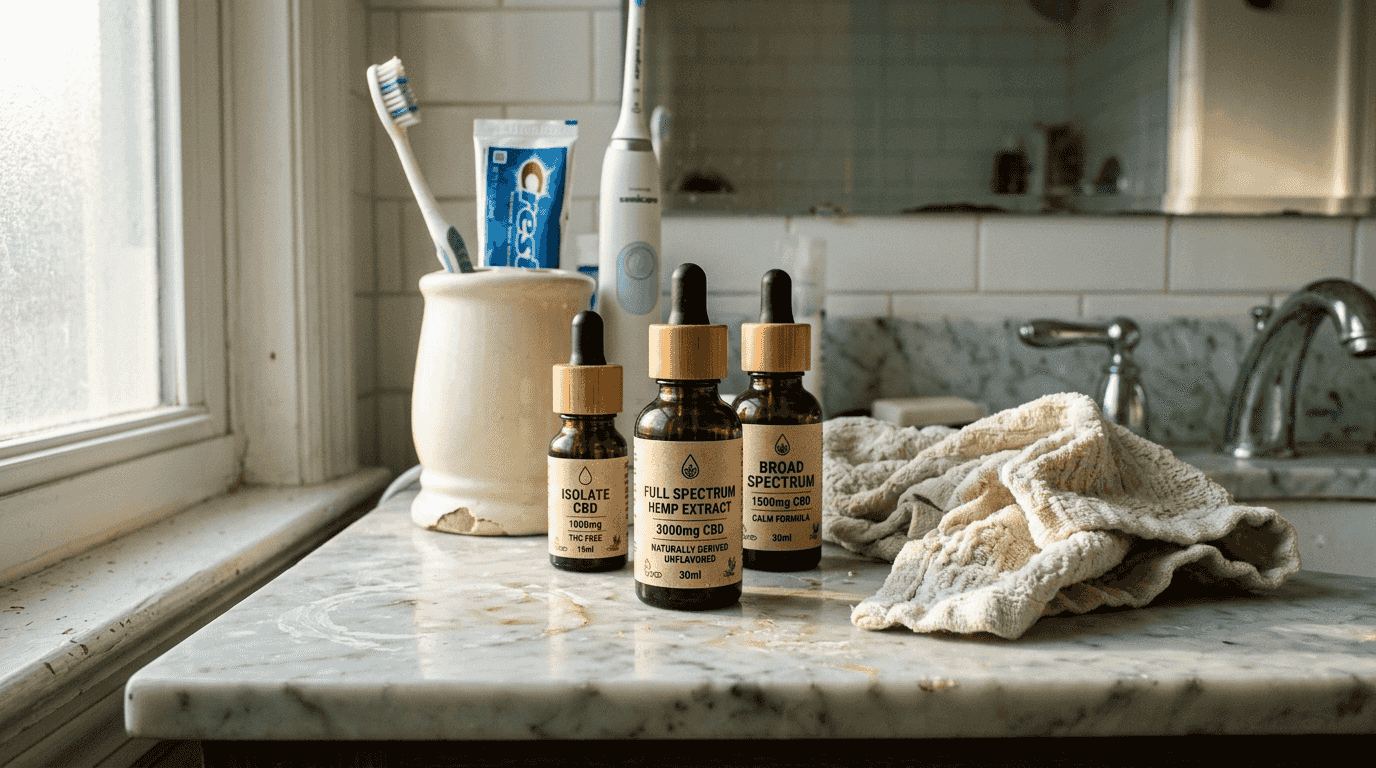
Many consumers mistakenly believe higher CBD percentages always mean better products. Product purity depends on extraction methods, source material quality, and manufacturing standards. A 500mg isolate product might deliver more predictable effects than a poorly made 1000mg full spectrum option.
| Product Type | THC Content | Other Cannabinoids | Best For |
|---|---|---|---|
| Full Spectrum | Up to 0.3% | Yes, multiple | Entourage effect seekers |
| Broad Spectrum | 0% | Yes, multiple | THC-sensitive users |
| CBD Isolate | 0% | No | Pure CBD preference |
Reading labels carefully reveals what you actually purchase. Look for total CBD content in milligrams, not just percentages. Check for third-party lab results verifying cannabinoid profiles and confirming absence of contaminants. Reputable brands provide certificates of analysis showing exactly what each batch contains.
Pro Tip: Compare CBD content per serving, not per bottle, to understand true product value and dosing accuracy.
Exploring hemp-derived cannabinoids helps you understand how different compounds work together and why product type matters for your specific wellness goals.
Misconceptions about CBD’s medical effects and receptor interactions
CBD marketing often promises miraculous health benefits, creating unrealistic expectations. The endocannabinoid system regulates various bodily functions through CB1 and CB2 receptors, but CBD receptor interactions remain under investigation by medical and biochemical researchers. Understanding what science actually knows prevents disappointment and unsafe use.
Your body produces natural endocannabinoids that bind to these receptors, influencing mood, pain perception, immune response, and sleep cycles. CBD interacts indirectly with this system, unlike THC which directly activates CB1 receptors. This indirect action explains why CBD does not produce intoxicating effects.
Several myths persist about CBD’s medical capabilities:
- CBD cures serious diseases like cancer or diabetes
- All health claims about CBD have FDA approval
- CBD works the same way for everyone
- Higher doses always produce better results
- CBD has no side effects or risks
Research shows promise for specific conditions like certain epilepsy forms, where FDA-approved Epidiolex demonstrates effectiveness. Most other applications remain under study with preliminary but not conclusive evidence. Individual responses vary based on genetics, existing health conditions, and product quality.
CBD is gaining traction in medical and biochemical research, though a comprehensive classification of CBD receptor interactions is yet to be elucidated.
Current studies explore CBD for anxiety, inflammation, and sleep issues, but definitive medical guidance awaits larger clinical trials. Responsible consumers recognize the difference between anecdotal reports and peer-reviewed scientific evidence. Ongoing research continues expanding our understanding of how CBD affects human physiology.
Learning about CBD receptor interactions provides deeper insight into why effects vary and what scientists currently understand about cannabinoid mechanisms.
Why CBD’s legality and safety are often misunderstood by consumers
Legal confusion tops the list of CBD misconceptions. The 2018 Farm Bill federally legalized hemp-derived CBD containing less than 0.3% THC, but this does not mean all CBD products are legal everywhere or completely safe for everyone. State laws create a patchwork of regulations affecting what you can buy and use.
Some states restrict CBD sales to licensed dispensaries while others allow general retail distribution. A few states maintain stricter THC limits or ban certain product forms entirely. Traveling across state lines with CBD products can create legal complications depending on local laws and enforcement priorities.
Safety misconceptions prove equally problematic. CBD can interact with medications including blood thinners and antidepressants, affecting how your body metabolizes these drugs. The cytochrome P450 enzyme system processes both CBD and many pharmaceuticals, creating potential conflicts.
Common safety misunderstandings include:
- CBD is completely natural so it must be safe
- You cannot take too much CBD
- CBD products are all tested and regulated
- Combining CBD with alcohol or other substances is harmless
- Pregnant women can safely use CBD
The FDA currently evaluates CBD’s safety profile in consumer products. FDA is conducting literature review on CBD safety, examining potential liver injury, drug interactions, and effects on male reproductive systems. This ongoing evaluation means safety questions remain partially unanswered.
Safe CBD use requires these steps:
- Consult your healthcare provider before starting CBD, especially if taking other medications
- Start with low doses and increase gradually while monitoring effects
- Choose products with third-party lab testing and clear labeling
- Research your state’s specific CBD regulations and restrictions
- Avoid CBD during pregnancy or breastfeeding until more safety data exists
Pro Tip: Keep a journal tracking CBD doses, timing, and effects to identify patterns and share accurate information with your doctor.
Exploring safe CBD consumption methods and understanding CBD legal requirements helps you navigate both safety and compliance issues effectively.
Summary comparison: common misconceptions and the facts about CBD
Consolidating these misconceptions into a clear reference helps reinforce accurate understanding. Comparing myths directly against facts reveals how marketing and misinformation create consumer confusion.
| Misconception | Actual Fact |
|---|---|
| All CBD products are the same | Product types vary significantly in composition and effects |
| CBD cures diseases | Research shows potential but lacks definitive medical proof for most conditions |
| CBD is legal everywhere | Federal legality does not override stricter state laws |
| CBD has no side effects | Potential interactions and side effects exist, especially with medications |
| Higher doses work better | Effectiveness depends on individual factors, not just quantity |
| All CBD products are tested | Testing requirements vary, many products lack verification |
| CBD gets you high | CBD is non-intoxicating unlike THC |
| Natural means safe | Natural compounds can still cause adverse reactions |
| CBD works immediately | Effects and timelines vary by product type and individual |
| Price indicates quality | Expensive products are not automatically superior or safer |
Identifying trustworthy CBD products requires evaluating several factors:
- Third-party lab results available for each batch
- Clear labeling showing CBD content and other cannabinoids
- Transparent sourcing and manufacturing information
- Realistic claims avoiding medical promises
- Responsive customer service answering questions
- Positive reviews from verified purchasers
Educated consumers ask critical questions before purchasing. Where does the hemp come from? What extraction method was used? Can I see recent lab results? Does the company provide educational resources? These questions separate quality brands from questionable operators.
Reviewing common CBD myths reinforces your ability to recognize misleading claims and make evidence-based choices aligned with your wellness goals.
Explore safe, quality CBD products at California Blendz
Navigating CBD’s complex landscape becomes easier with trusted guidance and transparent products. California Blendz provides lab-tested, sustainably sourced CBD options backed by detailed educational resources. Every product comes with accessible third-party testing results and clear cannabinoid profiles.
Our commitment to transparency matches this article’s focus on facts over hype. Whether you prefer full spectrum flower, broad spectrum options, or pure isolates, each product includes comprehensive information helping you make informed decisions. Explore our detailed guides on hemp-derived cannabinoids and safe consumption methods to deepen your understanding. Visit California Blendz to discover quality CBD products supported by education and transparency.
Frequently asked questions
What is the difference between full spectrum and isolate CBD?
Full spectrum CBD contains multiple cannabinoids including trace THC up to 0.3%, offering potential entourage effects where compounds work synergistically. CBD isolate is pure cannabidiol with no other plant compounds, providing THC-free options for sensitive users or those concerned about drug testing. Your choice depends on whether you want additional cannabinoids or prefer isolated CBD. Learn more about these distinctions in our hemp-derived cannabinoids guide.
Can CBD cause side effects or interact with medications?
Yes, CBD can interact with medications including blood thinners and antidepressants by affecting liver enzymes that process these drugs. Common side effects include fatigue, diarrhea, and appetite changes, though most people tolerate CBD well at appropriate doses. Always consult your healthcare provider before combining CBD with prescription medications. Review our safe CBD consumption guide for detailed safety information.
Is CBD legal in all U.S. states?
Hemp-derived CBD with less than 0.3% THC is federally legal under the 2018 Farm Bill, but individual states maintain varying regulations. Some states restrict sales channels, set different THC limits, or ban certain product types entirely. Check your local laws before purchasing or traveling with CBD products, as enforcement and legality differ significantly across state lines. Our CBD legal states guide provides state-specific information.
How do I know if a CBD product is high quality?
Quality CBD products provide third-party lab results verifying cannabinoid content and confirming absence of contaminants like pesticides, heavy metals, and residual solvents. Look for clear labeling showing total CBD in milligrams, transparent sourcing information, and realistic claims avoiding medical promises. Reputable brands offer accessible customer service and educational resources supporting informed decisions.
Does CBD show up on drug tests?
Pure CBD isolate should not trigger positive drug tests, but full spectrum products containing trace THC may cause positive results depending on test sensitivity and consumption amounts. Regular use of full spectrum CBD can accumulate enough THC metabolites to register on sensitive workplace screenings. If drug testing is a concern, choose broad spectrum or isolate products and verify THC-free status through lab results.


