
Safe home cannabis storage: 5 essential steps (2026)
Written by Trevor

TL;DR:
- Proper home storage prevents accidental ingestion and exposure among children and pets.
- Use airtight, opaque glass jars with labels and store in a secure, dark location.
- Follow environmental guidelines to maintain potency and comply with evolving regulations.
Cannabis edibles look a lot like regular snacks. Gummies, chocolates, and baked goods sit in your pantry looking harmless, and that’s exactly the problem. In California, accidental cannabis exposure among children has skyrocketed over the past several years, and most incidents trace back to one simple failure: poor home storage. Whether you use hemp-derived CBD, THCa flower, or traditional cannabis, the way you store your products at home affects more than freshness. It affects safety, legal standing, and peace of mind. This guide walks you through everything you need to set up smart, secure storage that protects your household and keeps your products at their best.
Table of Contents
- Why safe cannabis storage matters in California
- Essentials for safe home storage: What you need
- Step-by-step guide: How to safely store cannabis at home
- Troubleshooting and common mistakes to avoid
- Special considerations for hemp-derived CBD and THCa in 2026
- What most guides miss about safe home cannabis storage
- Explore expert solutions for cannabis storage
- Frequently asked questions
Key Takeaways
| Point | Details |
|---|---|
| Prioritize child safety | Accidental exposures are rising and safe, locked storage is critical for homes with kids or pets. |
| Climate control matters | Store cannabis at 60-70°F and 55-65% humidity in airtight containers to prevent potency loss. |
| Original packaging protects | Keep cannabis products in their child-resistant original containers to comply with California law. |
| Avoid kitchens and bathrooms | Heat, humidity, and food mix-ups make these rooms risky for storage. |
| Check 2026 hemp rules | Hemp CBD/THCa needs the same storage care, but new laws restrict purchase sources in California. |
Why safe cannabis storage matters in California
California has one of the most active cannabis markets in the country, and with that comes a real responsibility to store products safely at home. The numbers are hard to ignore. CA Poison Control calls for child cannabis exposure rose 469% from 2016 to 2023, with edibles driving the majority of those incidents. That’s not a small trend. That’s a public health pattern that starts in people’s kitchens and living rooms.
The most common scenarios involve edibles stored near or mixed in with regular food, products left in low drawers or on countertops, and packaging that looks appealing to young children. Pets face similar risks. Dogs especially are drawn to the smell of cannabis flower and edibles, and even small amounts can cause serious distress for animals.
On the legal side, all cannabis products in California must use child-resistant packaging by law, per the Department of Cannabis Control. That requirement doesn’t stop at the dispensary shelf. It extends to how you handle and store those products once you bring them home. While there’s no specific California law requiring consumers to use a lockbox at home, family court judges and child protective services do consider storage practices when evaluating household safety.
Here’s a quick look at the most vulnerable household scenarios:
- Edibles stored in snack drawers or the pantry alongside food
- Cannabis flower left in open bags on nightstands or coffee tables
- Pre-rolls in jacket pockets or purses accessible to curious kids
- Products stored in unlabeled containers that look like regular items
- Concentrates or vape cartridges left on charging stations
For more on cannabis flower safety tips, understanding the full picture of safe use at home is just as important as choosing quality products.
| Risk factor | Who’s most affected | Common cause |
|---|---|---|
| Edible ingestion | Children under 12 | Stored near food |
| Flower exposure | Pets | Open bags, low shelves |
| Concentrate spills | Adults, children | Improper sealing |
| Packaging confusion | Elderly guests | No labeling |
With the stakes set, let’s walk through what you’ll need to safely store your cannabis at home.
Essentials for safe home storage: What you need
Good storage starts with the right supplies. You don’t need anything expensive or complicated, but you do need to be intentional about what you use and where you put things. The goal is to protect both your household and your product quality at the same time.
Here’s your core checklist:
- Airtight glass jars with rubber-sealed lids (wide-mouth mason jars work well)
- Humidity control packs (Boveda or Integra Boost, 62% RH for flower)
- An opaque lockbox or small safe with a combination or key lock
- Original child-resistant packaging for edibles and concentrates
- Labels with strain name, purchase date, and potency percentage
Not all containers are created equal. Plastic bags and clear containers are two of the most common storage mistakes people make. Plastic creates static that pulls trichomes (the resin glands that hold cannabinoids and terpenes) off your flower. Clear containers let in light, which degrades potency faster than almost anything else.
| Container type | Pros | Cons |
|---|---|---|
| Glass jar | Airtight, no static, preserves terpenes | Breakable, heavier |
| Plastic bag | Cheap, widely available | Static, not airtight, degrades quality |
| Mylar bag | Light-blocking, flexible | Not rigid, can be punctured |
| Metal tin | Durable, opaque | Can affect taste over time |
For temperature and humidity, optimal storage conditions are 60 to 70 degrees Fahrenheit with 55 to 65% relative humidity, using airtight opaque containers with glass as the preferred material. These targets apply whether you’re storing CBD flower, THCa, or traditional cannabis.
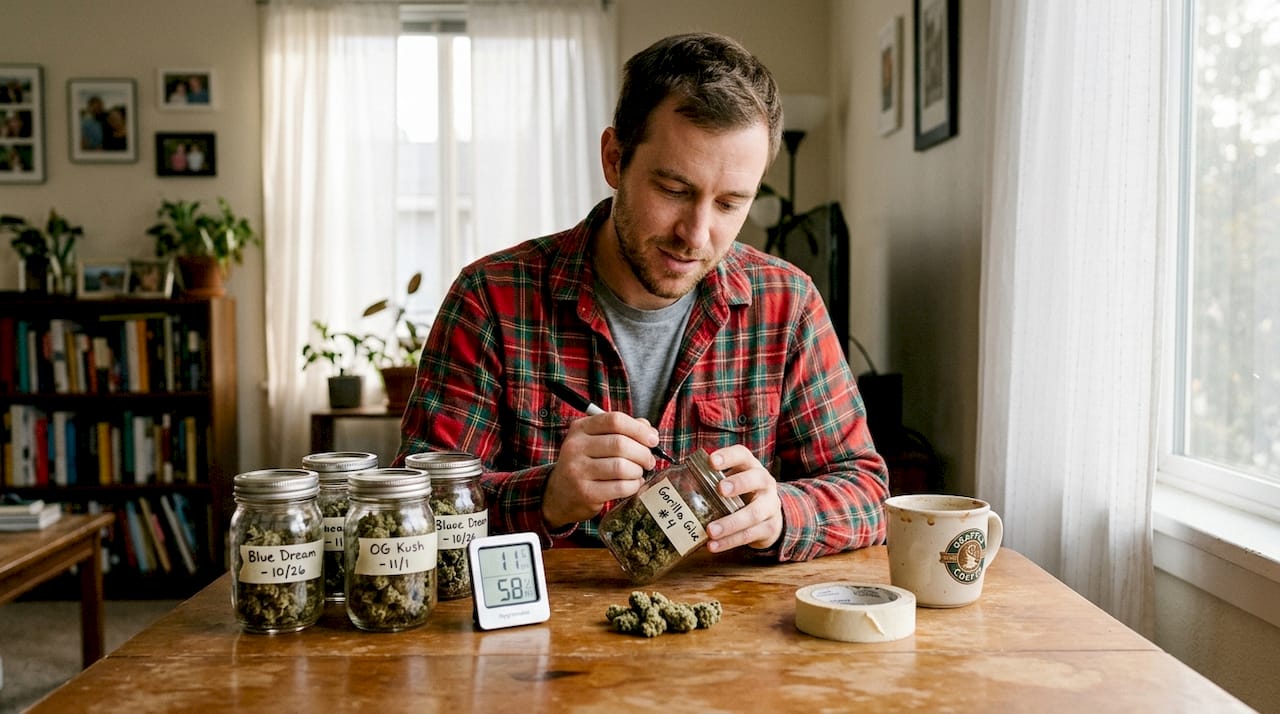
Pro Tip: Label every jar with the strain name, the date you opened it, and the THC or CBD percentage. This helps you rotate products properly and avoid accidentally using older, degraded flower when you think you’re reaching for something fresh.
For a deeper look at cannabis storage best practices, the fundamentals of freshness and safety go hand in hand.
Step-by-step guide: How to safely store cannabis at home
Having gathered your tools and understood your goals, here’s exactly how to implement safe home storage.
-
Choose the right container. Use an airtight glass jar for flower. Keep edibles and concentrates in their original child-resistant packaging whenever possible. If you transfer anything, use a labeled, sealed glass container.
-
Prep your storage space. Pick a cool, dark location away from windows, stoves, and bathrooms. A bedroom closet shelf or a dedicated cabinet works well. Avoid kitchens and bathrooms, where heat and humidity fluctuate constantly.
-
Add a humidity pack. Drop a 62% RH humidity pack into each jar of flower. This keeps the moisture level stable and prevents your product from drying out or getting too moist. Replace packs every two to three months.
-
Secure it. Place your containers inside a lockbox or small safe. Even if you live alone, this protects against unexpected guests, pet access, or household changes. A simple combination lockbox costs very little and adds a significant safety layer.
-
Label everything clearly. Every container should have the strain, date, and potency written on it. This prevents mix-ups and helps you use older products first.
-
Check your setup monthly. Open each container, smell the product, check for mold or unusual dryness, and replace humidity packs as needed.
Why does this matter beyond safety? Because potency loss exceeds 40% per year when products are stored poorly, and hot temperatures double the rate of degradation. You’re not just protecting people. You’re protecting the value of what you bought.
One firm rule: store away from food, out of kitchens and bathrooms, to avoid heat, humidity, and dangerous mix-ups. Never use the fridge or freezer unless you have a very specific reason. Condensation from temperature changes damages flower and concentrates quickly.
For more on how to safely store cannabis and tips on keeping cannabis fresh long-term, the details make a real difference.
Troubleshooting and common mistakes to avoid
Even the best setup can go astray. Here’s how to stay ahead of common pitfalls and keep your cannabis and household safe.
The most frequent mistakes people make with home cannabis storage are surprisingly simple. Mix-ups and improper storage lead to the majority of household incidents, and labeling and separation from food are the two most effective fixes.
Top mistakes to avoid:
- Storing cannabis in clear plastic bags on shelves
- Leaving products unsealed after each use
- Keeping cannabis in the kitchen or bathroom
- Mixing cannabis products with snacks or pantry items
- Using unlabeled containers
Here’s a breakdown of what degrades your product fastest:
| Degradation factor | Effect on cannabis | Prevention |
|---|---|---|
| Heat above 77°F | Breaks down cannabinoids fast | Cool, stable location |
| Direct sunlight | Destroys THC and terpenes | Opaque containers |
| High humidity (over 65%) | Promotes mold growth | Humidity packs |
| Excess air exposure | Oxidizes cannabinoids | Airtight seals |
| Wrong container | Trichome loss, contamination | Glass jars |
Knowing when your product has gone bad is also important. Signs of degraded cannabis include a faint or musty smell instead of the usual terpene-rich aroma, a noticeably brown or gray color, extreme dryness that causes flower to crumble into dust, or visible white mold on the surface. If you spot mold, do not try to salvage the product. Dispose of it safely.
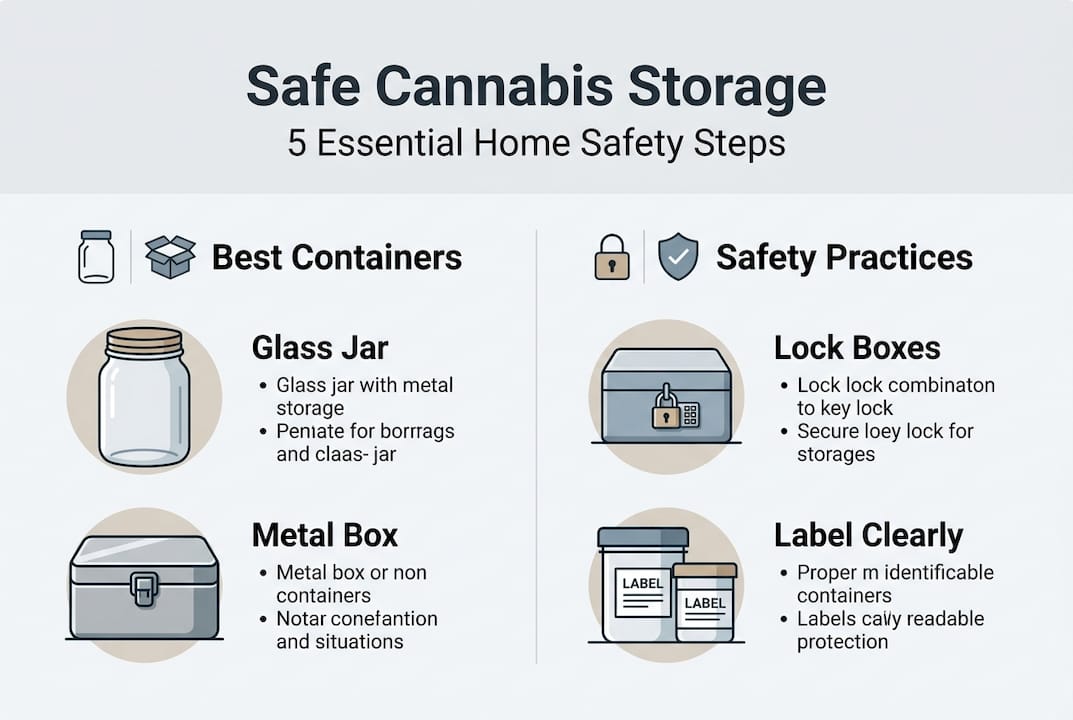
Pro Tip: Set a monthly calendar reminder to do a quick storage check. Open each container, inspect the product, check humidity pack color (most change when they’re spent), and reseal everything tightly. Five minutes once a month prevents most storage problems.
For a full breakdown of cannabis storage tips and a detailed cannabis storage guide, you’ll find practical solutions for every product type. You can also review the DCC packaging regulations to stay current on California’s legal requirements.
Special considerations for hemp-derived CBD and THCa in 2026
With general steps mastered, you’ll also want to know about special rules for hemp-derived cannabinoids this year.
In 2026, California’s regulatory landscape for hemp products has shifted. New 2026 California restrictions on hemp-derived THC sales outside the licensed cannabis market now apply, though products with less than 0.3% delta-9 THC remain federally legal. This means where you buy matters more than ever, but how you store these products at home follows the same rules as traditional cannabis.
For CBD and THCa storage, the same environmental and container standards apply for both potency and safety. Here’s a quick summary for hemp product storage:
- Use airtight glass jars with humidity packs
- Store in a cool, dark location away from heat and light
- Keep in a lockbox if children or pets are present
- Verify your product has third-party lab results and compliant labeling
- Check that packaging meets California’s child-resistant requirements
What most guides miss about safe home cannabis storage
Most storage guides stop at legal compliance, and that’s exactly where they fall short. Following the law is the floor, not the ceiling. Real safety in a cannabis-using household comes from proactive habits that go beyond what any regulation requires.
Here’s something we’ve noticed: the households that experience accidental exposure incidents aren’t usually reckless. They’re households where routines shifted. A new roommate moved in. A grandchild started visiting on weekends. A pet got more curious. The rules didn’t change, but the environment did, and the storage setup didn’t adapt.
Labeling, periodic product checks, and secure separation matter even in adults-only homes. Guests, service workers, and even your own forgetfulness are real variables. A lockbox isn’t just for kids. It’s for every scenario you haven’t planned for yet.
We also believe that investing in good storage reflects how seriously you take the products you’re using. If you’re choosing quality complete storage methods and premium flower, protecting that investment with proper storage is just the natural next step. It’s not extra effort. It’s part of responsible use.
Explore expert solutions for cannabis storage
Ready to upgrade your cannabis storage? At California Blendz, we pair premium hemp-derived CBD and THCa flower with the educational resources you need to store and use your products responsibly. Every product we carry comes with third-party lab results and compliant packaging, so you’re starting from a solid foundation.
Explore our full library of cannabis storage methods guides, sourced from real experience with Emerald Triangle-grown flower. Whether you’re building your first storage setup or refining a system you’ve had for years, we have the guidance and the products to help you do it right. Shop with confidence, store with intention.
Frequently asked questions
What are the safest containers for cannabis storage at home?
Glass containers maintain potency and avoid trichome loss better than plastic, making airtight glass jars with locking lids the top choice. Store them in a cool, dark place for best results.
Is it legal to store cannabis in the fridge or freezer in California?
It’s not illegal, but refrigerators and freezers cause condensation that degrades cannabis quality and texture. A stable room environment between 60 and 70 degrees Fahrenheit is a much better option.
How do I keep edibles safe from children at home?
Child exposure to edibles is the leading cause of accidental cannabis poisoning in California, so always keep edibles in their original child-resistant packaging and store them locked away, completely separate from food.
Do I need a lockbox for cannabis if I don’t have kids?
No specific law requires home lockboxes for cannabis, but secure storage protects against guest access, pet accidents, and unexpected household changes. It’s a simple, low-cost habit worth building.
Are hemp-derived CBD and THCa storage rules different in 2026?
Storage practices are the same, but 2026 restrictions affect where hemp products may be purchased in California. Always verify your product is compliant before storing and using it at home.


