
Best practices for cannabis storage to keep flower fresh
Written by Trevor

You just bought premium hemp-derived CBD or THCa flower, but how do you keep it fresh for weeks or months? Poor storage leads to dried-out buds, lost potency, and degraded flavors. Many cannabis users struggle with maintaining quality over time, especially in California’s warm climate. This guide covers practical storage criteria, compares effective methods, and helps you choose the best approach to preserve your flower’s cannabinoid and terpene profiles in 2026.
Table of Contents
- Criteria For Effective Cannabis Storage
- Top Cannabis Storage Options For 2026
- Comparing Storage Methods: Preservation Effectiveness And Usability
- Choosing The Best Storage Method For Your Cannabis Flower
- Explore California Blendz For Premium Cannabis Storage Solutions
Key takeaways
| Point | Details |
|---|---|
| Temperature and humidity control | Maintaining 60-70°F and 55-62% relative humidity prevents mold and preserves potency |
| Container selection matters | Airtight, opaque containers outperform plastic bags for long-term freshness |
| Light and oxygen exposure | Dark storage and minimal air contact reduce cannabinoid and terpene degradation |
| Different methods suit different needs | Glass jars work for frequent use while mylar bags excel for long-term storage |
| Consistent environment is key | Stable conditions preserve quality better than fluctuating temperature and humidity |
Criteria for effective cannabis storage
Understanding what damages cannabis flower helps you protect your investment. Four critical factors determine how well your flower maintains quality over time.
Temperature control sits at the foundation of effective storage. Maintaining correct temperature and humidity prevents mold and preserves potency. The ideal range is 60-70°F because higher temperatures accelerate terpene evaporation and cannabinoid breakdown. Below 60°F, you risk moisture condensation that promotes mold growth.
Humidity levels directly affect flower texture and freshness. Relative humidity between 55-62% keeps buds properly hydrated without creating conditions for mold or mildew. Too dry, and your flower becomes brittle and harsh to smoke. Too moist, and you invite bacterial growth that ruins entire batches.
Light exposure degrades cannabinoids through a process called photodegradation. UV rays break down THC, CBD, and other compounds that give cannabis its effects. Opaque or dark-colored containers block light penetration, significantly extending shelf life compared to clear glass or plastic.
Oxygen contact causes oxidation that transforms cannabinoids into less desirable compounds. Airtight containers limit this exposure, slowing the degradation process. Every time you open your storage container, you introduce fresh oxygen, so minimize how often you access your stash.
Pro Tip: Place small humidity control packs inside your storage containers to maintain stable moisture levels automatically. These two-way packs either absorb excess moisture or release it as needed, keeping your flower in the optimal range without constant monitoring.
Essential storage criteria checklist:
- Temperature stability between 60-70°F
- Relative humidity maintained at 55-62%
- Complete light protection through opaque materials
- Airtight seal preventing oxygen exposure
- Minimal handling to reduce contamination
Top cannabis storage options for 2026
Several container types have proven effective for preserving cannabis quality. Each option offers distinct advantages depending on your usage patterns and storage goals.
Glass airtight jars remain the gold standard for most users. Mason jars with rubber gasket seals preserve aroma and potency while allowing you to see your flower without opening the container. They’re reusable, easy to clean, and widely available at reasonable prices. The main drawback is light exposure if you use clear glass, though amber or cobalt jars solve this problem.
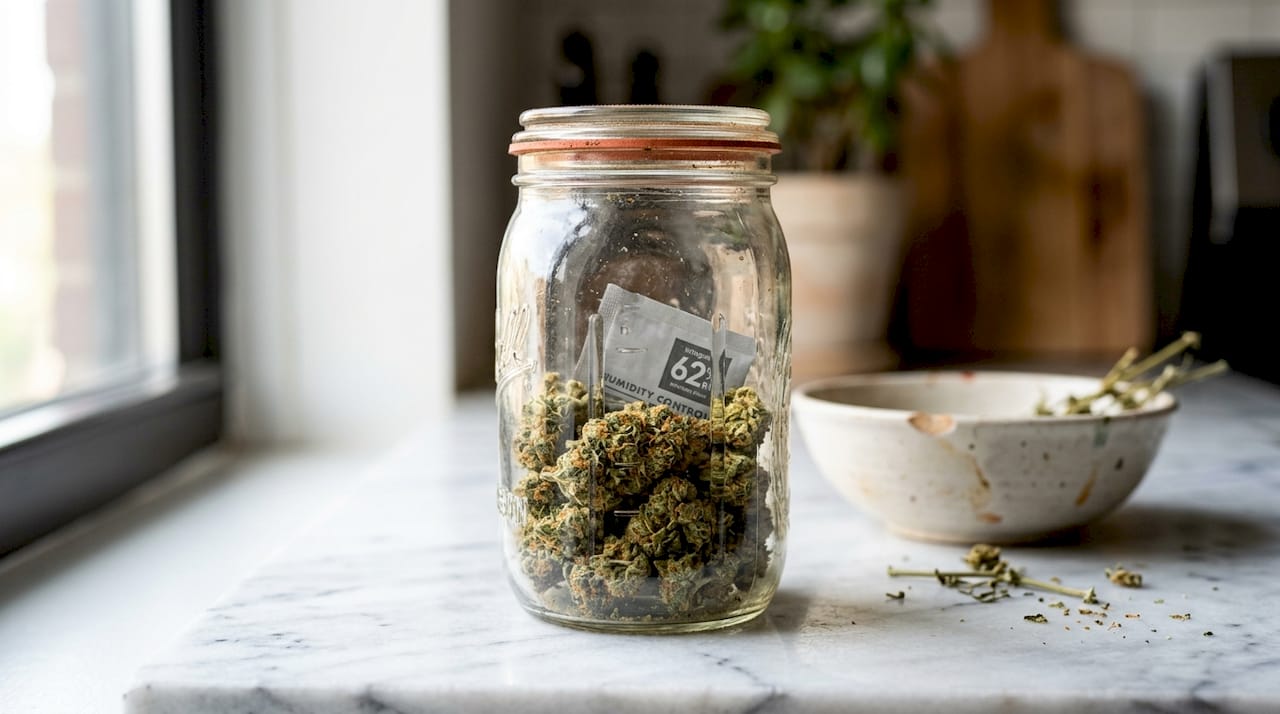
Mylar bags with oxygen absorbers offer excellent protection for long-term storage. These metallic bags block all light and create an oxygen-free environment when heat-sealed properly. They’re lightweight and space-efficient, making them ideal for storing multiple strains separately. However, you can’t easily reseal them after opening, and you can’t see your flower without opening the package.
Vacuum-sealed bags minimize oxygen exposure better than any other method. Commercial vacuum sealers remove nearly all air before sealing, dramatically slowing degradation. The compression can affect flower structure though, potentially crushing delicate trichomes and altering appearance. This method works best for long-term storage when you won’t access the flower frequently.
Humidity control packs have revolutionized home storage. These small packets maintain precise relative humidity levels inside any container, preventing both overdrying and excess moisture. Brands like Boveda and Integra Boost offer cannabis-specific products calibrated to the 55-62% range. They last several months before needing replacement.
Portable coolers serve a niche purpose for users who travel or attend events. Insulated containers protect flower from temperature swings during transport. They work well for short-term storage outside your home but aren’t ideal for long-term preservation due to limited airtight sealing.
Pro Tip: Rotate your stock by using older flower first and keeping newer purchases sealed until needed. This first-in, first-out approach ensures nothing sits too long. Also, avoid opening containers more than necessary, as each exposure introduces moisture and oxygen that accelerate degradation.
| Storage Method | Light Protection | Airtight Seal | Reusability | Cost |
|---|---|---|---|---|
| Glass jars | Moderate to high | Excellent | High | Low to moderate |
| Mylar bags | Excellent | Excellent | Low | Low |
| Vacuum-sealed bags | Excellent | Superior | Low | Moderate |
| Plastic containers | Poor to moderate | Poor | Moderate | Low |
| Humidity pack systems | Depends on container | Depends on container | High | Moderate |
Comparing storage methods: preservation effectiveness and usability
Choosing the right storage method requires weighing multiple factors against your specific needs. Different storage methods provide varying effectiveness in maintaining THC and terpene profiles over time.
Freshness retention varies significantly across methods. Glass jars combined with humidity control packs score highest for maintaining flower quality over 6-12 months. The transparent nature of glass lets you monitor condition without opening, while humidity packs prevent moisture fluctuations. Mylar bags with oxygen absorbers come close but lack visual monitoring capabilities.
Potency preservation depends primarily on oxygen and light exclusion. Vacuum-sealed bags excel here by removing nearly all oxygen, though the compression trade-off affects appearance and texture. Mylar bags offer similar protection without compression when properly sealed. Standard plastic containers and bags perform poorly, allowing both light penetration and air exchange that degrade cannabinoids rapidly.
Cost-effectiveness favors reusable options for regular users. Glass jars require an initial investment but last indefinitely with proper care. Humidity packs need periodic replacement every few months, adding ongoing costs. Single-use mylar and vacuum bags cost less upfront but accumulate expenses over time, making them better suited for long-term storage rather than daily use.
Usability considerations include access frequency, portability, and storage space. Glass jars shine for flower you access weekly, offering easy opening and resealing. Mylar bags work better when you want to store multiple strains compactly or need lightweight portability. Vacuum-sealed options suit bulk storage when you won’t access the flower for months.
Glass jar advantages:
- Easy visual inspection without opening
- Infinitely reusable with minimal maintenance
- Excellent airtight seal with proper gaskets
- Widely available in various sizes
Glass jar disadvantages:
- Clear glass allows light exposure
- Breakable during transport
- Takes up more storage space
- Heavier than alternative options
Mylar bag advantages:
- Superior light blocking properties
- Lightweight and space-efficient
- Low upfront cost
- Excellent for organizing multiple strains
Mylar bag disadvantages:
- Single-use or difficult to reseal
- No visual inspection without opening
- Requires heat sealer for best results
- Can puncture or tear easily
Choosing the best storage method for your cannabis flower
Your ideal storage solution depends on usage patterns, environment, budget, and the specific type of flower you’re preserving. Let’s break down recommendations for common scenarios.
Frequent users benefit most from glass jars with humidity control packs. If you access your stash several times weekly, the convenience of screw-top jars outweighs other considerations. Choose amber or cobalt glass to block light, and store jars in a cool, dark cabinet. This setup balances accessibility with preservation, keeping flower fresh for several months.
Long-term storage demands maximum protection from degradation factors. Mylar bags with oxygen absorbers preserve potency longest, especially when stored in a cool, dark location. This method works perfectly for bulk purchases or seasonal storage. Vacuum sealing offers similar benefits but risks compromising flower structure.
Hemp-derived CBD flower requires careful humidity control to maintain cannabinoid profiles. CBD is relatively stable but still degrades with excessive heat, light, and moisture. Standard glass jar storage with 62% humidity packs works well for most CBD products. The key is preventing overdrying, which makes CBD flower harsh and reduces its therapeutic effects.
THCa flower presents unique challenges due to cannabinoid sensitivity and regulations. THCa converts to THC when exposed to heat, so cooler storage temperatures become even more critical. Dark, airtight containers stored in the coolest part of your home preserve THCa content longest. Some users refrigerate THCa flower, though this requires extremely airtight sealing to prevent moisture issues.
California’s warm climate creates additional storage challenges. Summer temperatures easily exceed the ideal 60-70°F range, accelerating degradation. Store your flower in interior closets or cabinets away from exterior walls. Avoid garages, cars, or anywhere that experiences temperature swings. Consider your home’s coolest room for storage locations.
Budget-conscious users can achieve excellent results with repurposed glass jars and affordable humidity packs. Clean mason jars work as well as expensive specialty containers when properly sealed. The $10-15 investment in humidity packs pays dividends in preserved quality, easily offsetting the cost through reduced waste.
Pro Tip: Label every container with the strain name, purchase date, and humidity pack installation date. This simple practice helps you track freshness and rotate stock effectively. Use masking tape and permanent marker for easy updates without damaging containers.
Quick decision guide:
- Daily use: Glass jars with humidity packs in dark cabinet
- Weekly use: Glass jars or resealable mylar bags with humidity control
- Monthly use: Mylar bags with oxygen absorbers in cool location
- Long-term storage: Vacuum-sealed bags or mylar with oxygen absorbers
- Bulk storage: Multiple mylar bags organized by strain and date
- Travel needs: Small glass jars or portable airtight containers
Explore California Blendz for premium cannabis storage solutions
Now that you understand effective storage practices, you need quality flower worth preserving. California Blendz offers premium hemp-derived CBD and THCa flower products sourced from California’s renowned Emerald Triangle. Every product undergoes rigorous lab testing to ensure purity, potency, and compliance.
The California Blendz website features extensive educational resources beyond product listings. You’ll find detailed guides on cannabinoid profiles, terpene effects, and consumption methods. The proper cannabis storage methods guide expands on the techniques covered here with additional tips for specific strains and situations. Shop confidently knowing you’re getting sustainably grown, transparently tested cannabis products designed for discerning consumers who value quality and freshness.
FAQ
How long can I store cannabis flower before it loses quality?
Most properly stored flower maintains quality for 6-12 months when kept at optimal temperature and humidity. Glass jars with humidity control packs in dark, cool locations preserve potency longest. After one year, expect gradual declines in terpene intensity and cannabinoid levels even with perfect storage.
What’s the best temperature for storing hemp-derived CBD and THCa flower?
The ideal storage temperature is 60-70°F (15-21°C) for both CBD and THCa flower. Temperatures above 70°F accelerate terpene evaporation and cannabinoid degradation. THCa flower benefits from the cooler end of this range since heat converts THCa to THC over time.
Are plastic bags safe for long-term cannabis storage?
Plastic bags promote rapid moisture loss and allow oxygen exposure that degrades cannabinoids and terpenes. They also generate static electricity that pulls trichomes off flower surfaces. Glass jars or mylar bags provide far superior protection for anything beyond a few days of storage.
Can I store cannabis flower in the fridge or freezer?
Refrigerators create moisture condensation problems unless you use completely airtight containers. Freezing preserves potency effectively but risks trichome damage from ice crystal formation and brittleness. If you freeze flower, use vacuum-sealed bags and avoid any handling until fully thawed to prevent trichome loss.
Recommended
- Are Mylar Bags a Good Choice for Storing Cannabis Flower? A Comprehens – California Blendz
- How to Keep Cannabis Fresh: A Practical Guide for 2025 – California Blendz
- 7 Essential Cannabis Storage Tips for Freshness and Potency – California Blendz
- Proper Cannabis Storage Methods: Complete Guide – California Blendz


