
Risks of Synthetic Cannabinoids – Health and Legal Impact
Written by Trevor

Finding products that align with your wellness goals can sometimes feel confusing, especially when artificial ingredients enter the mix. For health-conscious adults across California, understanding the differences between naturally grown hemp and synthetic cannabinoids is more important than ever. With synthetic cannabinoids linked to unpredictable and severe health consequences, learning how these lab-made chemicals compare to organic options empowers you to make choices that truly support your health and peace of mind.
Table of Contents
- What Are Synthetic Cannabinoids?
- Types and Forms of Synthetic Cannabinoids
- How Synthetic Cannabinoids Affect The Body
- Legal Regulations in California and Beyond
- Health Risks and Adverse Side Effects
- Choosing Safer Organic Cannabis Alternatives
Key Takeaways
| Point | Details |
|---|---|
| Synthetic Cannabinoids Are Artificial | These compounds are laboratory-engineered to mimic natural cannabinoids but often pose greater health risks. |
| Health Risks Are Significant | Users may experience severe psychological and physiological effects, including acute psychosis and cardiovascular issues. |
| Legal Landscape Is Complex | In many areas, including California, synthetic cannabinoids face strict regulations as they are often unregulated and harmful. |
| Choose Organic Alternatives | Organic cannabis offers a safer option, emphasizing natural cultivation and rigorous quality control, reducing health risks. |
What Are Synthetic Cannabinoids?
Synthetic cannabinoids are laboratory-engineered chemical compounds specifically designed to artificially interact with the human body’s endocannabinoid system. Unlike natural cannabis derivatives, these substances are manufactured to mimic cannabinoid receptor interactions with potentially dangerous consequences.
Originally developed as research tools for scientific investigation, synthetic cannabinoids have evolved into recreational substances that pose significant health risks. These chemicals are engineered to bind aggressively to cannabinoid receptors, often producing effects far more intense and unpredictable than natural THC. Their chemical structures can vary widely, making them challenging to regulate and potentially more harmful than traditional cannabis products.
Unlike naturally occurring cannabinoids found in hemp or marijuana plants, synthetic versions are completely artificial. They are typically sprayed onto inert plant materials and marketed under street names like “Spice” or “K2”. The lack of standardization means each batch can have dramatically different potency and chemical composition, creating substantial risks for users who might encounter unexpectedly strong psychoactive effects or severe physiological reactions.
Pro tip: Always verify the source and legality of any cannabinoid product, and consult healthcare professionals before experimenting with unfamiliar substances.
Types and Forms of Synthetic Cannabinoids
Synthetic cannabinoids come in diverse chemical structures and physical forms, typically categorized by their method of production and delivery. Multiple chemical families exist, including AM, CP, HU, and JWH compounds, each with unique molecular characteristics that determine their interaction with human cannabinoid receptors.
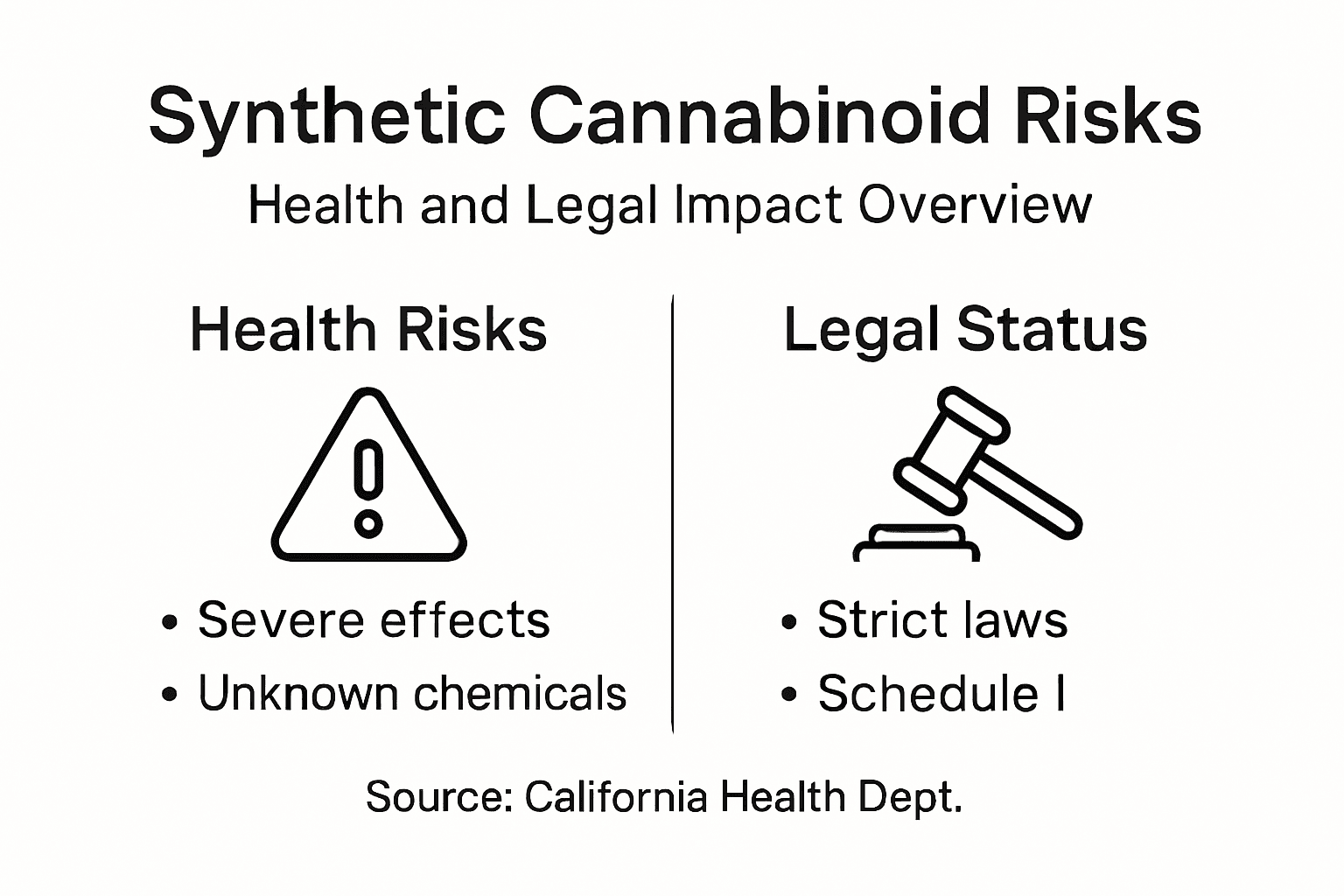
The most common physical forms of synthetic cannabinoids include herbal blends, e-liquids, and powdered substances. Herbal blends are typically inert plant materials sprayed with synthetic cannabinoid solutions, often sold under street names like “Spice” or “K2”. These products are designed for smoking and can vary dramatically in potency. E-liquids represent another popular delivery method, allowing users to vaporize synthetic cannabinoids through electronic cigarette devices, which can make consumption seem more discreet and technologically modern.
Chemically, these substances are engineered to be potent agonists of CB1 and CB2 cannabinoid receptors, often producing far more intense effects than natural THC. Their lipid-soluble nature means they vaporize easily and can be quickly absorbed by the body. This characteristic, combined with their unpredictable composition, makes synthetic cannabinoids particularly dangerous, as users cannot reliably predict the strength or potential side effects of each batch.
Pro tip: Always prioritize personal safety by avoiding unregulated synthetic substances and consulting medical professionals about potential health risks.
How Synthetic Cannabinoids Affect The Body
Synthetic cannabinoids interact aggressively with the human body by directly targeting cannabinoid receptors in multiple organ systems. Unlike natural cannabis compounds, these synthetic substances bind more intensely to CB1 and CB2 receptors, triggering complex physiological responses that can quickly overwhelm the body’s normal regulatory mechanisms.
The neurological impacts are particularly severe. These compounds can induce rapid and unpredictable psychological effects, including acute psychosis, extreme anxiety, and profound cognitive disruption. Cardiovascular systems are also dramatically affected, with users experiencing dangerous symptoms like accelerated heart rates, hypertension, and potentially life-threatening arrhythmias. The rapid and intense receptor activation can cause sudden changes in blood pressure and heart function that differ significantly from natural cannabinoid interactions.
Multisystem complications arise from synthetic cannabinoids’ ability to interact beyond traditional cannabinoid receptors. Potential consequences include oxidative stress, systemic inflammation, and cellular damage across neurological, renal, hepatic, and cardiovascular tissues. The pharmacological potency of these substances means that even small quantities can produce outsized physiological responses, making them exponentially more dangerous than traditional cannabis products.
Pro tip: If you experience any unusual physical or mental symptoms after potential exposure to synthetic cannabinoids, seek immediate medical attention and provide healthcare professionals with as much detailed information as possible.
Legal Regulations in California and Beyond
In California, synthetic cannabinoids occupy a complex legal landscape, with strict regulations targeting illicit substances. These compounds are explicitly prohibited under both federal and state laws, despite attempts by manufacturers to circumvent restrictions by marketing products as ‘incense’ or ‘not for human consumption’.
The legal framework surrounding synthetic cannabinoids is particularly nuanced in California. The Drug Enforcement Administration (DEA) has classified numerous synthetic cannabinoid variants as Schedule I controlled substances, effectively banning their production, distribution, and possession. While the 2018 Farm Bill legalized hemp-derived products containing less than 0.3% delta-9 THC, it created significant legal ambiguity that synthetic cannabinoid manufacturers have attempted to exploit. These substances often enter the market disguised as hemp derivatives, creating substantial challenges for law enforcement and regulatory agencies.
California’s approach extends beyond state boundaries, with robust enforcement mechanisms designed to combat the proliferation of synthetic cannabinoids. The state’s Department of Cannabis Control works closely with federal agencies to identify and remove these dangerous substances from circulation. Penalties for possession, distribution, and manufacturing of synthetic cannabinoids can include significant fines, criminal charges, and potential imprisonment, reflecting the serious public health risks associated with these compounds.
Here’s a summary of major legal actions targeting synthetic cannabinoids in California:
| Agency Involved | Key Regulatory Action | Enforcement Focus |
|---|---|---|
| DEA | Schedule I classification | Bans numerous synthetic compounds |
| California Dept. of Cannabis Control | Joint enforcement with federal agencies | Targets illicit production and sales |
| Law Enforcement | Criminal investigations and prosecutions | Seizes illegal products and imposes penalties |
Pro tip: Always verify the legal status of any cannabis-related product and purchase only from licensed, reputable sources to ensure personal safety and legal compliance.
Health Risks and Adverse Side Effects
Synthetic cannabinoids pose extreme health risks, with extensive adverse health implications that far exceed those of natural cannabis. These artificially engineered compounds can trigger a cascade of dangerous physiological and psychological responses, making them potentially life-threatening even in small doses.

The neurological consequences are particularly alarming. Users may experience sudden and severe psychiatric symptoms including acute psychosis, extreme anxiety, aggressive behavior, and significant cognitive impairment. Cardiovascular systems are also dramatically compromised, with documented cases of hypertensive crises, rapid heart rates, chest pain, and increased risk of heart attack. The unpredictable chemical composition means that each interaction with synthetic cannabinoids can produce dramatically different and potentially catastrophic health outcomes.
Chronic exposure introduces long-term health risks that extend beyond immediate physiological reactions. Repeated use has been linked to kidney dysfunction, liver damage, respiratory complications, and potential neurological deterioration. Mental health consequences can include persistent psychiatric disorders, increased risk of depression, potential development of substance dependency, and heightened susceptibility to suicidal ideation. The cumulative impact of synthetic cannabinoids represents a significant public health challenge, with potential for severe, irreversible damage to multiple organ systems.
Pro tip: If you or someone you know experiences unusual symptoms after potential synthetic cannabinoid exposure, seek immediate medical attention and provide healthcare professionals with comprehensive information about the substance.
Choosing Safer Organic Cannabis Alternatives
Navigating cannabis consumption safely requires understanding the critical differences between synthetic and organic cannabis cultivation practices. Organic cannabis represents a significantly safer alternative to synthetic cannabinoids, focusing on natural cultivation methods that minimize exposure to harmful chemicals and potential health risks.
Organic cannabis production prioritizes sustainable agricultural practices that eliminate synthetic pesticides, fertilizers, and potentially dangerous chemical interventions. Licensed dispensaries offering thoroughly tested, organically grown cannabis provide consumers with products that undergo rigorous quality control, ensuring potency verification and contaminant screening. This approach stands in stark contrast to the unpredictable and potentially hazardous world of synthetic cannabinoids, where chemical compositions can vary dramatically and pose severe health threats.
Consumers seeking safer alternatives should prioritize several key factors when selecting cannabis products. These include purchasing from licensed dispensaries, requesting comprehensive third-party lab testing results, understanding product origins, and choosing cultivators committed to sustainable, organic growing practices. Organic cannabis not only reduces potential chemical exposure but also supports environmentally responsible agricultural methods that minimize ecological impact while potentially offering a cleaner, more natural product experience.
To better understand the risks, here’s a comparison between synthetic cannabinoids and organic cannabis:
| Aspect | Synthetic Cannabinoids | Organic Cannabis |
|---|---|---|
| Origin | Artificially engineered in labs | Grown naturally from plants |
| Regulatory Oversight | Frequently unregulated and inconsistent | Subject to strict quality controls |
| Potency Consistency | Highly variable and unpredictable | Standardized and tested for potency |
| Health Risks | Elevated risk of severe side effects | Fewer acute and long-term health risks |
| Sustainability | Often linked to chemical waste | Produced through sustainable methods |
| Recommended Use | Not medically approved or recommended | Used safely under regulation for medical or recreational purposes |
Pro tip: Always request and review detailed lab testing certificates when purchasing cannabis products, and choose sources that demonstrate transparent cultivation and processing practices.
Choose Natural Safety with Organic Cannabis from California Blendz
Synthetic cannabinoids pose serious health and legal risks as highlighted in the article. The unpredictable potency and harmful side effects make these artificial compounds dangerous alternatives to natural cannabis. If you are seeking a safer, more reliable experience, consider switching to organically grown cannabis products that emphasize transparency, consistent quality, and legal compliance.

Explore our carefully curated selections like The Founder’s Collection – California Blendz and The THCa Prestige Vault – California Blendz which offer sustainably cultivated, lab-tested hemp-derived flowers and THCa. Each product is sourced responsibly from California’s Emerald Triangle to deliver relaxation and relief free from synthetic risks. Don’t compromise your health or legal standing; shop trusted cannabis today at California Blendz and experience wellness done right.
Frequently Asked Questions
What are synthetic cannabinoids?
Synthetic cannabinoids are artificially engineered chemicals designed to mimic the effects of natural cannabinoids by interacting with the body’s endocannabinoid system. They are often far more potent and unpredictable than natural THC, posing significant health risks.
How do synthetic cannabinoids affect the body?
Synthetic cannabinoids bind aggressively to cannabinoid receptors, leading to severe and unpredictable effects such as acute psychosis, anxiety, and cardiovascular complications. They can trigger rapid changes in heart rate and blood pressure and may lead to long-term organ damage.
What are the legal regulations surrounding synthetic cannabinoids?
Synthetic cannabinoids are classified as Schedule I controlled substances, making their production, distribution, and possession illegal. Many products may attempt to circumvent these laws but are still subject to strict enforcement measures to protect public health.
What are the health risks of synthetic cannabinoids compared to organic cannabis?
Synthetic cannabinoids pose greater health risks due to their unpredictable chemical composition and potential for severe side effects including acute psychological symptoms, cardiovascular issues, and chronic health concerns. In contrast, organic cannabis undergoes rigorous testing and is produced without harmful synthetic chemicals.
Recommended
- Is Delta 8 CBD? – What You Need To Know – California Blendz
- HHC vs THC: Understanding the Differences, Benefits, and Legality – California Blendz
- Cannabidiol (CBD) – What We Know and What We Don’t – California Blendz
- Hemp Legality in 2025 – What Changes for Californians – California Blendz
- Die 9H HHC Wirkung: Wirkung, Nutzen und mögliche Risiken im Überblick – Weedforfriends


