
California Cannabis Laws 2025: Everything You Need to Know
Written by California Blendz

Legal cannabis in California is no longer just a headline. More than 3.6 million american adults now participate in a rapidly evolving market shaped by new consumer protections and stricter product standards. As the state revises cannabis regulations in 2025, both new and seasoned consumers face a maze of rules that can impact daily choices. Staying current with California’s legal definitions, purchase limits, and compliance demands gives every american a better shot at safe, confident participation in the legal cannabis space.
Table of Contents
- Defining Legal Cannabis In California 2025
- Types Of Cannabis: THC, THCa, And CBD
- Licensing And Sales Regulations For Retailers
- Consumer Rights And Purchase Limits
- Taxation, Compliance, And Legal Risks
Key Takeaways
| Point | Details |
|---|---|
| Legal Framework | California permits recreational and medical cannabis for adults over 21, with specific possession and cultivation limits. Compliance with local regulations is essential due to variations in restrictions. |
| Consumer Protections | Comprehensive labeling and testing regulations prioritize consumer safety, ensuring access to accurate information regarding potency and product composition. |
| Retail Compliance | Cannabis retailers must navigate strict licensing and operational guidelines, including security protocols and purchase limits, to ensure public safety and legal adherence. |
| Taxation Challenges | The industry faces complex taxation obligations, requiring meticulous financial management and risk mitigation to avoid legal and financial penalties. |
Defining Legal Cannabis in California 2025
California continues to refine its cannabis regulations, creating a nuanced legal landscape that balances consumer access with public safety. In March 2025, the California Department of Cannabis Control announced critical regulatory reforms designed to streamline administration and enhance consumer protections.
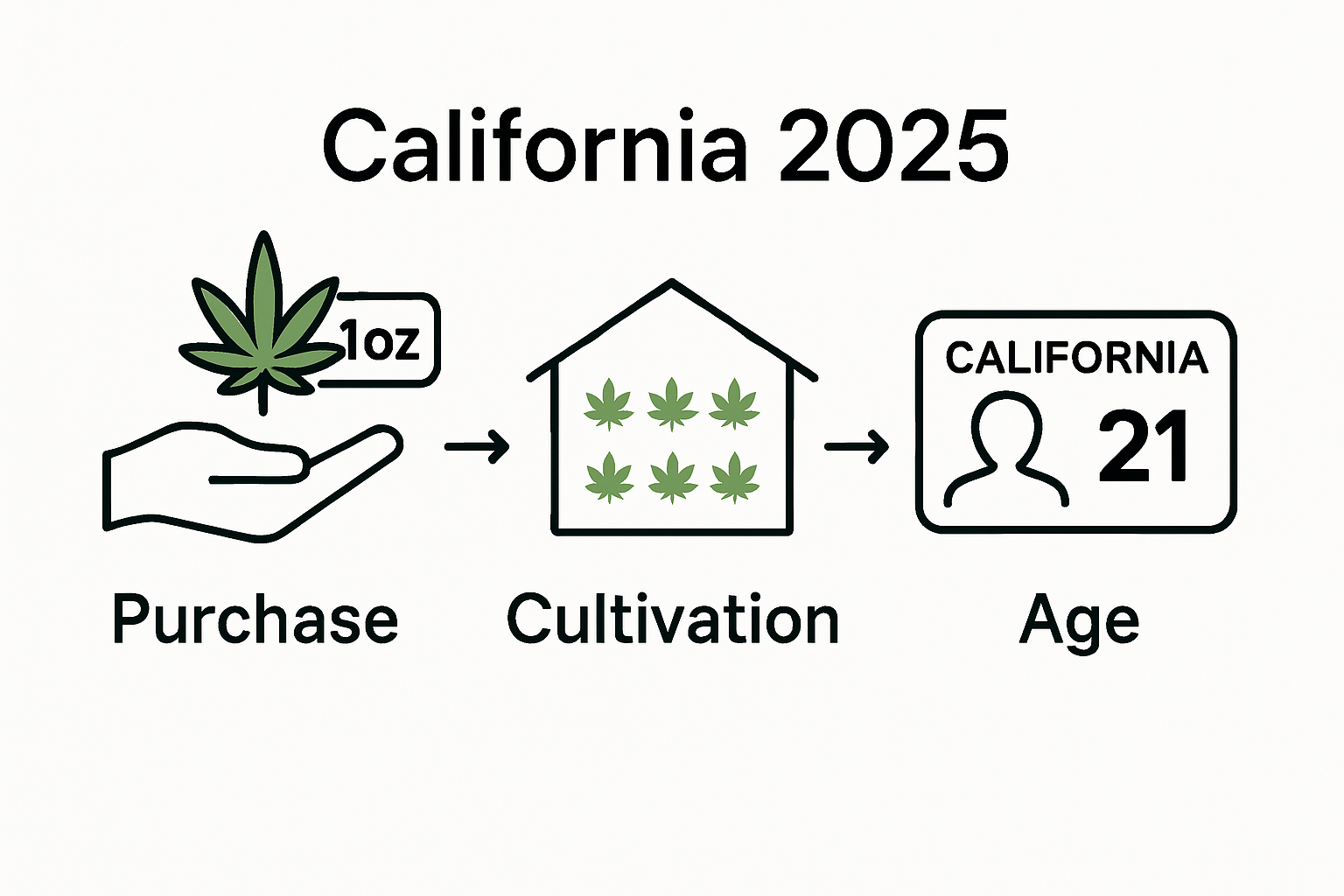
The legal framework for cannabis in California now encompasses several key dimensions. Recreational and medical cannabis remain legal for adults over 21, with specific guidelines governing possession, cultivation, and consumption. Individuals can legally possess up to one ounce (28.5 grams) of cannabis flower and cultivate up to six plants per household for personal use. Consumption remains restricted to private residences, with prohibitions on public use and driving under the influence.
Understanding the legal nuances is crucial for consumers. Commercial cannabis activities require strict licensing and compliance with state regulations. Retailers must maintain comprehensive product labeling standards that provide transparency about potency, origin, and potential effects. The state continues to prioritize consumer safety through rigorous testing requirements, ensuring products meet stringent quality and safety benchmarks.
Beyond individual consumption, California’s 2025 cannabis laws reflect a sophisticated approach to regulation. Local jurisdictions retain the authority to establish additional restrictions, creating a complex but adaptive legal environment. Taxation and revenue allocation remain critical components, with cannabis-generated funds supporting public education, youth prevention programs, and community development initiatives. This evolving regulatory landscape demonstrates California’s commitment to responsible cannabis management while respecting individual consumer rights.
Types of Cannabis: THC, THCa, and CBD
The cannabis landscape in California continues to evolve, with three primary cannabinoids defining the market: THC, THCa, and CBD. Each compound offers unique properties and legal considerations that consumers must understand. Federal and state efforts are increasingly focused on regulating these intoxicating hemp-derived products, particularly those containing delta-8, delta-10 THC, and other emerging cannabinoids.
Tetrahydrocannabinol (THC) remains the primary psychoactive compound in cannabis, responsible for the traditional “high” experience. Tetrahydrocannabinolic acid (THCa) represents the non-psychoactive precursor to THC, which converts to active THC when heated. Understanding the key differences between THCa and THC is crucial for consumers navigating the complex cannabis market. Cannabidiol (CBD) stands apart as a non-intoxicating compound praised for potential wellness benefits.

California’s regulatory framework has adapted to address the nuanced nature of these cannabinoids. The California Department of Cannabis Control’s 2025 reforms specifically target product safety and labeling standards for THC, THCa, and CBD. These regulations aim to ensure consumers receive accurate information about product composition, potency, and potential effects.
The legal status of these cannabinoids remains complex. While THC is strictly regulated for recreational and medical use, THCa exists in a more nuanced legal space. Legislative proposals are increasingly focused on total THC content definitions, potentially closing existing regulatory loopholes. Consumers must stay informed about these evolving regulations, understanding that the legal landscape for cannabis compounds continues to shift rapidly in response to new scientific understanding and market dynamics.
Licensing and Sales Regulations for Retailers
Navigating the cannabis retail landscape in California requires a comprehensive understanding of complex licensing requirements. Retailers must obtain specific cannabis retail licenses that differentiate between storefront and delivery-only operations, each with unique operational guidelines and compliance standards. The regulatory framework is designed to ensure public safety, product quality, and responsible distribution.
The licensing process involves rigorous documentation and adherence to state regulations. Businesses must demonstrate comprehensive security protocols, maintain detailed record-keeping systems, and comply with strict age verification procedures. Curbside delivery operations are permitted under specific conditions, including mandatory video surveillance and robust age verification mechanisms. Retailers are restricted to selling cannabis products between 6:00 a.m. and 10:00 p.m., though local jurisdictions may impose additional time constraints.
Financial and operational barriers to entry remain significant. Prospective cannabis retailers must navigate substantial initial investment requirements, including licensing fees, security infrastructure, and compliance training. Background checks, substantial startup capital, and ongoing regulatory compliance are critical components of maintaining a legal cannabis retail operation. Local municipalities may impose additional zoning restrictions, further complicating the licensing landscape.
The evolving regulatory environment demands continuous adaptation. Retailers must stay informed about changing regulations, maintain meticulous compliance documentation, and implement robust tracking systems for inventory and sales. Success in California’s cannabis market requires not just entrepreneurial spirit, but a deep commitment to understanding and implementing complex regulatory requirements that prioritize public safety and responsible commerce.
Consumer Rights and Purchase Limits
California’s cannabis regulations prioritize consumer protection through comprehensive purchase guidelines and age restrictions. Licensed retailers are mandated to verify customer age rigorously, ensuring that adult-use consumers are 21 or older and medicinal patients are 18 or older with appropriate physician documentation. These stringent verification processes protect both consumers and businesses from potential legal complications.
Purchase limits represent a critical aspect of consumer rights in the cannabis market. Individuals can legally possess up to one ounce (28.5 grams) of cannabis flower and cultivate six plants per household. Retailers must track and enforce these limits, preventing excessive purchases that could potentially violate state regulations. Standardized operating hours further enhance consumer safety, with sales transactions restricted to between 6:00 a.m. and 10:00 p.m., ensuring controlled and responsible distribution.
Beyond quantity restrictions, consumers have fundamental rights to product information, quality assurance, and transparent labeling. Retailers must provide comprehensive details about product potency, origin, and potential effects. Medical cannabis patients receive additional protections, including access to specialized products and potentially higher purchase limits. The regulatory framework emphasizes informed consumer choice, requiring detailed product testing and clear communication of cannabinoid content.
The evolving legal landscape demands ongoing consumer education. Rights and restrictions can change rapidly, making it essential for cannabis consumers to stay informed about current regulations. Local municipalities may impose additional restrictions beyond state guidelines, creating a complex regulatory environment that requires careful navigation. Consumers must remain proactive, understanding their rights while respecting the comprehensive legal framework designed to ensure safe, responsible cannabis consumption.
Taxation, Compliance, and Legal Risks
The cannabis industry in California operates under a complex web of taxation and regulatory requirements that demand meticulous attention from businesses and consumers. Cannabis retailers must navigate multiple tax obligations, including state sales tax and specific cannabis excise taxes. Businesses are required to register for seller’s permits and maintain rigorous financial documentation, with regular tax return filings serving as a critical compliance mechanism.
Legal risks represent a significant challenge for cannabis businesses. Enforcement actions by regulatory bodies target unlicensed operations and potential safety violations, creating a high-stakes environment that demands absolute regulatory compliance. Violations can result in substantial financial penalties, license suspension, or complete business closure. Retailers must implement comprehensive tracking systems, maintain detailed transaction records, and ensure strict adherence to both state and local regulatory requirements.
The taxation structure for cannabis businesses is multilayered and complex. State regulations impose an excise tax of 15% on retail sales, with additional local municipalities potentially adding their own tax rates. Businesses must carefully calculate and remit these taxes, understanding that improper reporting can trigger significant legal and financial consequences. Understanding cannabis user privacy considerations becomes crucial in maintaining comprehensive compliance and protecting both business and consumer interests.
Navigating the legal landscape requires proactive risk management. Businesses must invest in ongoing staff training, maintain robust compliance documentation, and stay current with rapidly evolving regulations. The cannabis industry’s complex legal environment demands continuous education, with potential regulatory changes requiring swift adaptation. Successful cannabis businesses view compliance not as a burden, but as a fundamental strategy for long-term sustainability and growth in a highly regulated market.
Stay Ahead in California’s Evolving Cannabis Landscape with Quality You Can Trust
Navigating the complexities of California cannabis laws in 2025 means understanding stringent regulations around THC, THCa, and CBD products. Staying compliant and informed is essential to enjoy cannabis safely and legally. At California Blendz, we simplify your experience by offering organically grown, lab-tested hemp-derived flowers that meet state regulations. Explore our carefully curated selection in The THCa Prestige Vault where transparency and quality are top priorities.
Take control of your cannabis journey today by choosing products that align with California’s strict purchase limits and labeling standards. Discover the difference that sustainable cultivation and rigorous testing make by browsing Emerald Tier Society now. Visit California Blendz to shop confidently knowing you comply with the latest laws while enjoying premium cannabis wellness.
Frequently Asked Questions
What are the possession limits for cannabis under California law in 2025?
Individuals can legally possess up to one ounce (28.5 grams) of cannabis flower and cultivate up to six plants per household for personal use.
What is the difference between THC, THCa, and CBD?
THC is the primary psychoactive compound responsible for the ‘high,’ THCa is the non-psychoactive precursor to THC, and CBD is a non-intoxicating compound often associated with wellness benefits.
How are cannabis products tested for safety and quality in California?
California mandates rigorous testing requirements for cannabis products, ensuring they meet stringent quality and safety benchmarks, which includes comprehensive product labeling standards that disclose potency and potential effects.
What are the legal risks associated with operating a cannabis business in California?
Cannabis businesses face significant legal risks, including enforcement actions for unlicensed operations and safety violations. Non-compliance can result in financial penalties, license suspension, or closure of the business.


