
Cannabis strains guide: Choose the right effect for wellness
Written by Trevor

Most cannabis consumers walk into a dispensary, scan the menu, and pick based on one of three labels: indica, sativa, or hybrid. It feels logical. Indica for sleep, sativa for energy, hybrid for somewhere in between. But modern science shows these labels are largely a myth, and the real drivers of your experience are the specific cannabinoids and terpenes inside each flower. This guide breaks down what those compounds actually do, why the old categories mislead you, and how to choose a strain that genuinely supports your wellness goals.
Table of Contents
- How cannabis strains have been traditionally classified
- Why science debunks the indica vs sativa myth
- Key compounds: Cannabinoids and terpenes explained
- How to choose the right cannabis strain for wellness
- Best cannabis strains for wellness and relaxation: Examples
- Find organic, lab-tested strains for your wellness
- Frequently asked questions
Key Takeaways
| Point | Details |
|---|---|
| Labels are unreliable | Scientific research proves that indica and sativa labels don’t predict effects. |
| Compounds drive effects | The real effect of a strain is set by cannabinoids and terpenes, not plant name. |
| Lab testing matters | Always check Certificates of Analysis for verified cannabinoid and terpene content. |
| Wellness picks | For gentle effects, seek high-CBD, myrcene-rich, organic strains with transparent lab data. |
How cannabis strains have been traditionally classified
The terms indica, sativa, and hybrid have roots in 18th-century botany, originally used to describe plant shape and geography rather than effects. Over time, the cannabis industry repurposed these labels to set consumer expectations. Cannabis strains are traditionally classified as indica for relaxing body effects, sativa for uplifting mental energy, and hybrid for a balanced blend of both.
Dispensaries leaned hard into this system because it gave budtenders a simple shorthand. Customers found it easy to remember. The labels spread across menus, packaging, and culture until they became the default language of cannabis shopping.
Here is a quick look at what those traditional associations looked like:
| Category | Traditional effect | Common use case |
|---|---|---|
| Indica | Relaxing, sedating | Evening, sleep, stress relief |
| Sativa | Energizing, uplifting | Daytime, creativity, focus |
| Hybrid | Balanced | Flexible, mood-dependent |
The problem? These associations were built on anecdote and marketing, not chemistry. Plant shape does not determine how a strain affects your body or mind. Two flowers labeled “indica” can produce completely different experiences depending on their actual chemical makeup. If you are just starting out, exploring CBD strains for beginners is a smarter entry point than chasing a category label.
Key limitations of the traditional view:
- No standardized testing was used to verify label accuracy
- Grower naming was often arbitrary or marketing-driven
- Plant genetics were rarely verified through lab analysis
- Consumer expectations were shaped by culture, not chemistry
Why science debunks the indica vs sativa myth
Here is where things get genuinely interesting. Researchers analyzed 90,000+ cannabis samples and found no reliable chemical distinction between products labeled indica versus sativa. The chemical profiles overlapped so significantly that the labels carried almost no predictive value.
A separate analysis of empirical data on morphology confirmed the same conclusion: plant appearance and strain name do not reliably link to the effects a user will feel. What actually matters is the internal chemistry, specifically the ratio of cannabinoids and the terpene profile.
“The chemical profiles of indica and sativa strains overlap so extensively that the labels are essentially meaningless for predicting effects.” — National Geographic, citing cannabis research
This is not a minor footnote. It changes how you should shop entirely. A “sativa” strain high in myrcene, a sedating terpene, may actually make you sleepy. A strain labeled “indica” with high limonene content might feel uplifting and clear-headed. The label tells you almost nothing useful.
What actually shapes your experience:
- THC percentage: Drives psychoactive intensity
- CBD percentage: Modulates and softens THC effects
- Terpene profile: Shapes mood, sedation, energy, and focus
- Your own biology: Tolerance, endocannabinoid system sensitivity, and prior use all matter
Understanding the entourage effect in CBD flower helps explain why these compounds work better together than in isolation. The interaction between cannabinoids and terpenes creates effects that neither compound produces alone.
Key compounds: Cannabinoids and terpenes explained
So if labels do not predict effects, what does? The answer comes down to two compound families: cannabinoids and terpenes. Effects are driven by cannabinoids and terpenes like myrcene and limonene, not by strain category or plant shape.
Cannabinoids are the primary active compounds:
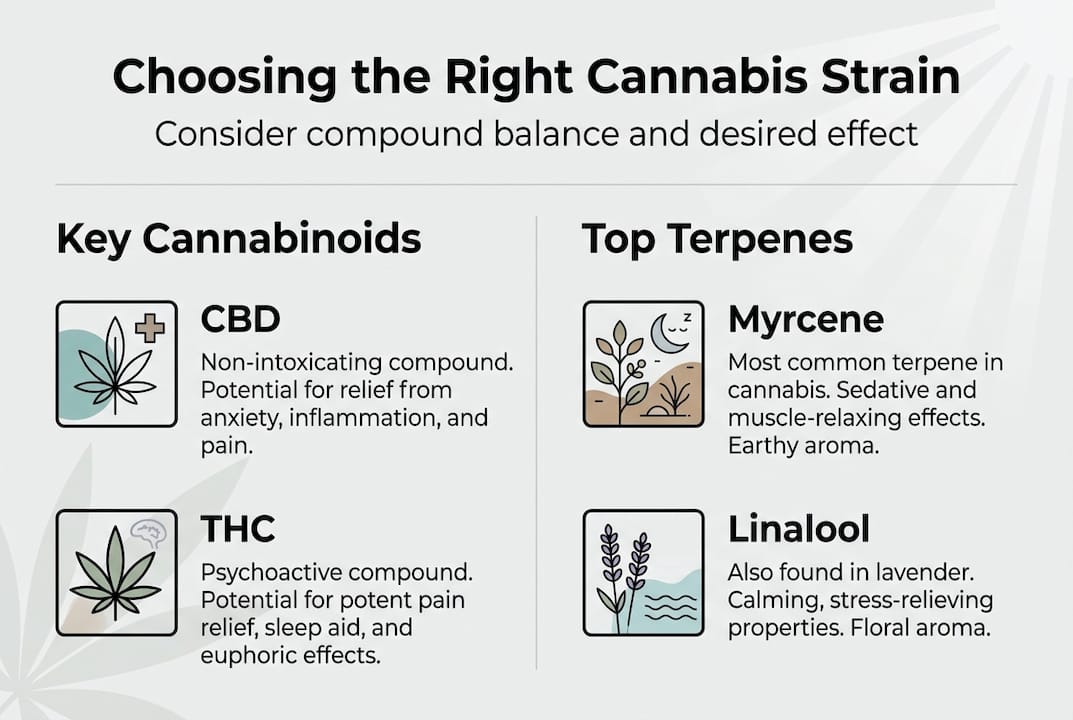
- THC (tetrahydrocannabinol): The main psychoactive compound. Higher percentages generally mean stronger intoxication, though terpenes can significantly modify that experience.
- CBD (cannabidiol): Non-intoxicating and calming. It can reduce anxiety, ease tension, and soften the intensity of THC when both are present.
- CBG and CBN: Minor cannabinoids gaining attention for focus and sleep support respectively, though research is still developing.
Terpenes are aromatic compounds that shape the character of your experience:
- Myrcene: The most common cannabis terpene. Earthy, musky, and strongly sedating. Strains high in myrcene tend to feel heavy and relaxing.
- Limonene: Citrusy and bright. Associated with mood elevation and stress relief. Often found in strains that feel uplifting.
- Linalool: Floral and lavender-like. Calming and anxiety-reducing. Common in strains used for sleep and tension relief.
- Pinene: Sharp and piney. May support alertness and counteract some THC-related memory effects.
Exploring terpene benefits in CBD flower gives you a deeper look at how each terpene contributes to your overall experience. And when you understand the entourage effect theory, it becomes clear why a full-spectrum flower with multiple terpenes often outperforms an isolated compound.

Pro Tip: Always request or download the Certificate of Analysis (COA) before buying any flower. A COA from a third-party lab shows exact cannabinoid percentages and terpene content, giving you real data instead of marketing language.
How to choose the right cannabis strain for wellness
Armed with this scientific understanding, here is how to pick a strain that truly fits your wellness goals. The process is simpler than it sounds once you know what to look for.
- Define your desired effect first. Are you chasing deep sleep, stress relief, post-workout recovery, or a calm afternoon? Your target outcome determines which cannabinoid and terpene profile to seek.
- Read the COA, not the label. Look for third-party lab results that confirm cannabinoid percentages and terpene content. Organic cultivation practices should also be documented.
- Novice users: start low and slow. Start with low THC in the 10 to 15% range, prioritize high CBD, and look for myrcene or linalool as dominant terpenes. These profiles offer gentle relaxation without overwhelming intensity. The best CBD strains for beginners are a great starting point.
- Experienced users: go deeper into terpene nuance. Higher THC can work well when paired with the right terpene profile. Explore varied combinations to find what produces your ideal state.
- Match strain to time of day. Myrcene-heavy strains suit evenings. Limonene-forward options work better for daytime use. Check out nighttime strains for sleep if rest is your primary goal.
- Prioritize safety and sourcing. Review cannabis flower safety tips and understand the benefits of low THC cannabis if you are sensitive to psychoactive effects.
Pro Tip: Keep a simple journal for your first few sessions. Note the strain name, COA data, dose, and how you felt. After three or four sessions, patterns emerge that help you zero in on your ideal profile faster than any label ever could.
Best cannabis strains for wellness and relaxation: Examples
To give you a head start, here are some lab-tested strains loved by wellness-focused users. Seek myrcene-dominant, balanced THC/CBD profiles when your goal is relaxation or stress relief.
- ACDC: Extremely high CBD with minimal THC. Myrcene-dominant. Ideal for daytime stress relief without any psychoactive effect. A top pick for beginners and those sensitive to THC.
- Harlequin: A balanced 5:2 CBD to THC ratio. Offers gentle relaxation with mild mental clarity. Great for post-exercise recovery or unwinding without sedation.
- Granddaddy Purple: Rich in myrcene and linalool. Delivers deep physical relaxation and is widely used for evening wind-down routines and sleep support.
- Northern Lights: A classic for sleep. Heavy myrcene content, moderate THC, and a deeply sedating body effect. Best reserved for nighttime use.
- Lifter: A hemp-derived CBD strain with earthy and citrus notes. High CBD, low THC, and a terpene profile that supports calm focus. Popular among wellness users who want clarity without intoxication.
For practical use cases, ACDC and Harlequin suit daytime stress and recovery. Granddaddy Purple and Northern Lights are better suited for evening routines. Explore CBD strains for relaxation and top strains for relaxing for more curated options. If you want to understand how flower specifically supports calm, CBD flower for relaxation covers the topic in detail.
Pro Tip: When comparing strains, look at the terpene percentage on the COA, not just the name. A strain with 1.5% myrcene will feel noticeably more sedating than one with 0.3%, even if both carry the same THC level.
Find organic, lab-tested strains for your wellness
You now have the framework to shop smarter, read lab results with confidence, and choose strains based on real chemistry rather than outdated labels. The next step is finding a source you can actually trust.
At California Blendz, every flower in our catalog is organically grown, sourced from California’s Emerald Triangle, and backed by third-party lab results you can actually read. We make it easy to filter by effect, browse COA data, and find the right strain whether you are brand new to cannabis or a seasoned consumer looking for something specific. No guesswork, no vague labels. Just clean, transparent products built for people who take their wellness seriously.
Frequently asked questions
Are indica and sativa still useful categories when picking strains?
No. Indica and sativa labels do not reliably predict effects. Your experience depends on cannabinoid ratios and terpene content, not the category name on the package.
What should you look for in a wellness-focused cannabis strain?
Prioritize lab-tested, organic strains with documented CBD and THC levels and relaxing terpenes like myrcene or linalool. A COA provides the most reliable information for making a confident choice.
Is high THC always better for experienced users?
Not always. Terpene profile and your desired outcome matter more than THC percentage alone. A high-THC strain with myrcene may sedate rather than energize, regardless of its sativa label.
How can I be sure a strain is organic and safe?
Always check for a third-party Certificate of Analysis, confirm organic cultivation documentation, and buy from vendors who publish their lab-tested COA results openly and consistently.
Recommended
- Indica vs Sativa: 60% Hybrids & Chemistry-Based Effects – California Blendz
- 7 Steps to Effect-Based Cannabis Selection for Wellness – California Blendz
- Discover the Top 3 Cannabis Strains for Relaxing – California Blendz
- The Best Winter Strains to Keep You Warm and Cozy During Winter – California Blendz
- Todo lo que necesitas saber sobre las semillas de cannabis


