
Transparency in Cannabis Sourcing: Building Trust
Written by Trevor

Finding trustworthy hemp-derived CBD and THCa products can feel confusing for many health-conscious adults in California who want relaxation with peace of mind. The desire for natural wellness makes transparency in cannabis sourcing more important than ever, as it gives you a clear view into how your products are grown and tested. This overview explains what true transparency means, how to spot lab-tested, ethically produced options, and why these details matter for safety and quality.
Table of Contents
- What Transparency In Cannabis Sourcing Means
- Types Of Sourcing Models And Traceability Methods
- Lab Testing, Certifications, And Accurate Labeling
- Legal, Regulatory, And Ethical Compliance Factors
- Risks Of Non-Transparent Sourcing And Consumer Protections
- How To Identify Truly Transparent Cannabis Brands
Key Takeaways
| Point | Details |
|---|---|
| Transparency is Crucial | Consumers demand detailed information on cannabis sourcing to ensure safety, quality, and ethical practices. |
| Utilize Technology for Traceability | Blockchain and digital platforms enhance product traceability, offering consumers confidence in product origins. |
| Lab Testing is Essential | Third-party lab testing and accurate labeling are vital for verifying product integrity and consumer safety. |
| Ethical Compliance Matters | Adhering to legal and ethical standards in cannabis production fosters consumer trust and industry accountability. |
What Transparency in Cannabis Sourcing Means
Transparency in cannabis sourcing represents a comprehensive approach to providing consumers with complete visibility into product origins, cultivation practices, and quality assurance processes. At its core, this practice goes far beyond simple labeling - it’s about creating an open communication channel between cannabis producers and consumers, ensuring every aspect of the product’s journey can be traced and verified.
In practice, transparency means detailed documentation of a product’s entire lifecycle. This includes clear supply chain documentation covering cultivation methods, harvesting techniques, processing standards, and third-party testing protocols. Consumers want to know exactly where their cannabis originates, how it was grown, and what steps were taken to ensure its safety and potency. Trusted producers provide comprehensive lab results showing cannabinoid profiles, terpene compositions, and screening for potential contaminants like pesticides or heavy metals.
Effective cannabis sourcing transparency also involves regulatory compliance and ethical production standards. This means adhering to state-level agricultural regulations, maintaining sustainable growing practices, and demonstrating a commitment to environmental stewardship. Producers committed to transparency will openly share information about their growing environments, whether indoor or outdoor, and the specific techniques used to produce high-quality cannabis flowers. These practices help build consumer trust by demonstrating a commitment to quality, safety, and responsible production.
Pro tip: Always request and review the complete certificate of analysis for any cannabis product you purchase, which provides detailed insights into the product’s chemical composition and potential contaminants.
Types of Sourcing Models and Traceability Methods
Cannabis sourcing models have evolved significantly, with modern approaches focusing on comprehensive traceability and technological innovation. Digital supply chain technologies now enable producers to track every stage of cannabis production, from seed selection to final product distribution, providing unprecedented transparency for consumers and regulatory bodies.
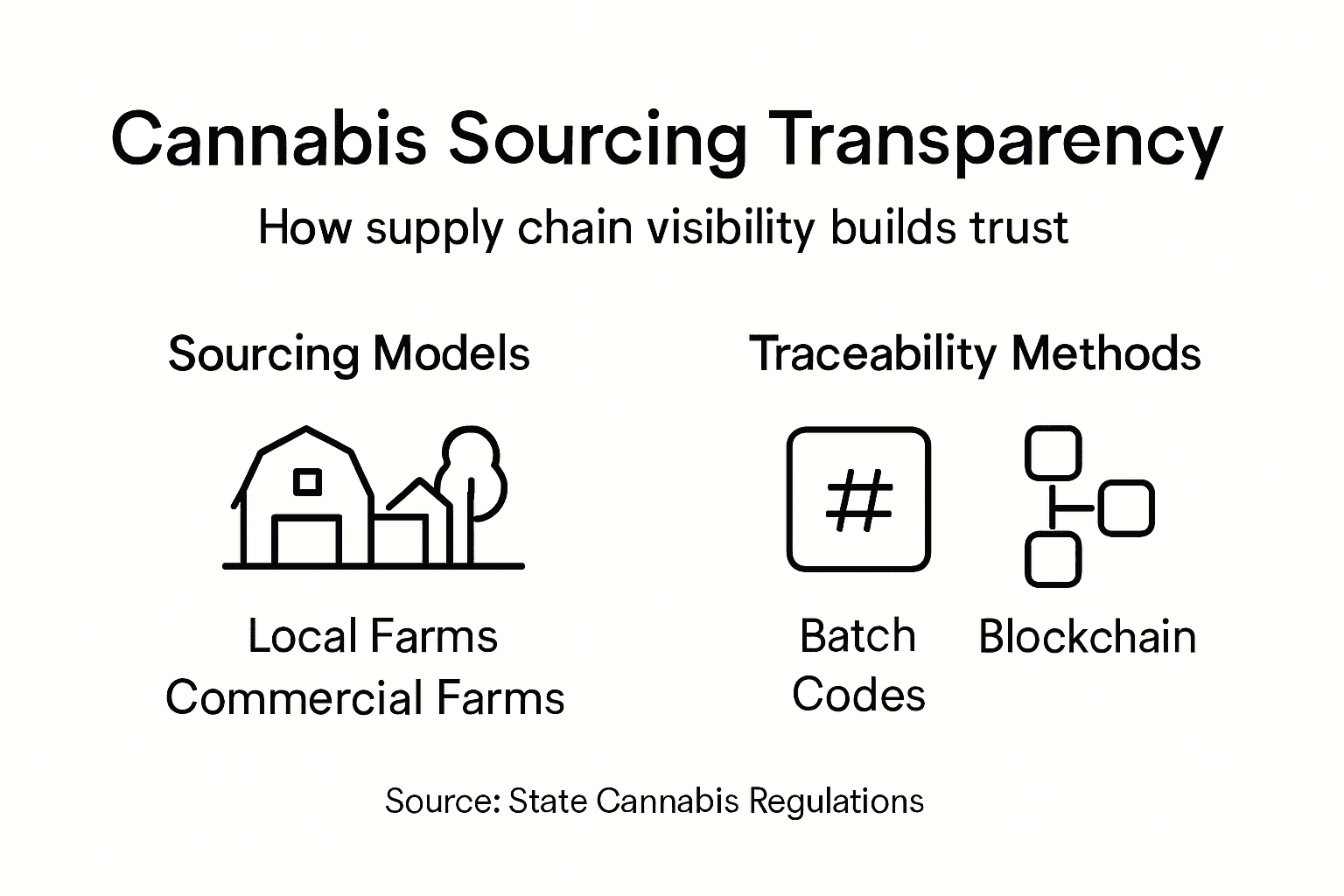
Traditionally, cannabis sourcing models have ranged from small-scale local cultivation to large-scale commercial production. These models typically include vertical integration, where a single company manages multiple production stages, and collaborative networks involving specialized cultivators, processors, and distributors. Modern traceability methods incorporate advanced tracking technologies such as RFID tags, blockchain systems, and comprehensive digital documentation platforms that record detailed information about plant genetics, growing conditions, harvesting techniques, and processing protocols.
Blockchain technology has emerged as a particularly powerful traceability tool in cannabis sourcing. Blockchain-based traceability solutions create immutable records that prevent tampering and provide real-time visibility into product provenance. These systems allow for instant verification of a product’s entire journey, including precise details about cultivation practices, lab testing results, and compliance documentation. By creating a transparent, decentralized record-keeping approach, blockchain technologies address critical challenges in cannabis supply chain management, enhancing consumer trust and regulatory compliance.
Here’s a comparison of popular cannabis sourcing traceability methods:
| Method | How It Works | Advantages | Limitations |
|---|---|---|---|
| RFID Tags | Assigns unique ID to each item | Real-time tracking, easy audits | Initial cost, tag loss |
| Digital Platforms | Centralized tracking systems | Accessible data, quick updates | Cybersecurity concerns |
| Blockchain | Decentralized digital ledger | Tamper-proof, real-time updates | Technical complexity |
| Manual Logs | Written records at each step | Low-tech, minimal setup required | Prone to errors, less secure |
Pro tip: When evaluating cannabis products, look for sources that provide comprehensive digital traceability documentation, including blockchain or digital tracking systems that offer complete transparency from seed to sale.
Lab Testing, Certifications, and Accurate Labeling
Lab testing represents the cornerstone of cannabis product safety and consumer transparency. Cannabis laboratory accreditation standards ensure rigorous testing protocols that examine multiple aspects of product quality, including cannabinoid content, potential contaminants, and overall safety. These comprehensive assessments go beyond simple potency measurements, providing consumers with detailed insights into the chemical composition and potential risks associated with cannabis products.

Certification processes involve stringent quality management systems that validate a laboratory’s technical competence. Accreditation for testing laboratories typically follows ISO/IEC 17025 standards, which establish strict guidelines for technical capabilities, equipment calibration, and consistent testing methodologies. These certifications cover critical analyses including pesticide screening, heavy metal detection, microbiological contaminant testing, and precise cannabinoid profiling. By adhering to these internationally recognized standards, laboratories demonstrate their commitment to producing reliable and accurate product information.
Accurate labeling is the final critical component in building consumer trust. Modern cannabis labels must provide comprehensive information, including total cannabinoid content, batch-specific testing results, potential allergens, and clear dosage instructions. Regulatory requirements mandate that labels include precise percentages of THC, CBD, and other significant cannabinoids, along with warnings about potential effects and recommended usage. This level of detail empowers consumers to make informed decisions about their cannabis products, ensuring they understand exactly what they are purchasing and consuming.
Pro tip: Always cross-reference the product’s lab testing certificate with the information printed on the label, and don’t hesitate to contact the manufacturer directly if you need additional clarity about testing results.
Legal, Regulatory, and Ethical Compliance Factors
Navigating the complex landscape of cannabis regulation requires a comprehensive understanding of legal frameworks that vary significantly across different jurisdictions. Medical cannabis regulatory frameworks demonstrate the intricate challenges of creating consistent governance models that balance public safety, consumer rights, and industry development. These frameworks encompass multiple dimensions, including cultivation licenses, distribution protocols, quality control standards, and stringent compliance requirements that protect both consumers and producers.
Ethical considerations play a crucial role in developing responsible cannabis sourcing practices. Controlled cannabis supply chain experiments highlight the importance of integrating preventive health measures with regulatory compliance. This approach involves creating transparent systems that minimize potential risks, ensure product safety, and maintain rigorous standards throughout the production and distribution process. Ethical compliance goes beyond legal requirements, emphasizing responsible business practices that prioritize consumer health, environmental sustainability, and social responsibility.
Comprehensive legal compliance in cannabis sourcing involves multiple interconnected elements. These include obtaining proper state and federal licenses, adhering to strict cultivation and processing regulations, maintaining detailed documentation of product origins, and implementing robust quality control mechanisms. Producers must navigate complex legal landscapes that often involve different regulatory requirements at local, state, and national levels, ensuring that every stage of production meets or exceeds established safety and quality standards. This multifaceted approach requires continuous monitoring, adaptation, and commitment to maintaining the highest levels of legal and ethical integrity.
Pro tip: Always verify a cannabis producer’s current licensing status and regulatory compliance through official state regulatory databases before making a purchase.
Risks of Non-Transparent Sourcing and Consumer Protections
Non-transparent cannabis sourcing represents a significant threat to consumer safety and public health. Cannabis supply chain risks reveal multiple potential hazards that emerge when production and distribution lack comprehensive oversight. These risks range from product contamination to potential legal complications, creating a complex landscape of potential consumer vulnerabilities that extend beyond simple product quality concerns.
Contaminant exposure poses one of the most immediate dangers in non-transparent cannabis markets. Health risks from unregulated cannabis include potential exposure to harmful substances like heavy metals, microbial pathogens, and unauthorized pesticides. Vulnerable populations are particularly at risk, as inconsistent testing and limited traceability can allow dangerous products to circulate without adequate screening. These contaminants can lead to serious health complications, ranging from short-term allergic reactions to potential long-term medical issues.
The broader implications of non-transparent sourcing extend into legal and economic domains. Lack of clear supply chain documentation can contribute to illicit market persistence, potentially undermining legitimate cannabis businesses and creating environments where unregulated products proliferate. Consumers face increased risks of purchasing mislabeled, improperly tested, or potentially dangerous products when sourcing lacks comprehensive transparency. This environment not only threatens individual consumer health but also undermines the broader regulatory frameworks designed to ensure safe, responsible cannabis distribution.
This table summarizes common risks of non-transparent cannabis sourcing and how consumers can protect themselves:
| Risk Area | Specific Dangers | Consumer Protection Action |
|---|---|---|
| Product Contamination | Pesticides, heavy metals, microbes | Request and review lab certificates |
| Mislabeled Potency | Incorrect THC/CBD amounts | Cross-check label with COA |
| Illicit Production | Unregulated, illegal sourcing | Verify licensing and compliance status |
| Traceability Gaps | Missing product history | Prefer brands with digital tracking |
Pro tip: Always request and thoroughly review a product’s complete certificate of analysis, which provides detailed information about its chemical composition and potential contaminant levels.
How to Identify Truly Transparent Cannabis Brands
Identifying genuinely transparent cannabis brands requires a systematic approach that goes beyond marketing claims. Consumers must develop critical evaluation skills to assess a brand’s commitment to transparency, focusing on verifiable evidence of quality, safety, and ethical production. Key indicators include comprehensive documentation, third-party lab testing, and willingness to share detailed product information.
Certificate of Analysis (COA) interpretation serves as a critical tool for determining brand transparency. These documents provide definitive proof of a product’s chemical composition, contaminant levels, and overall quality. Consumers should look for COAs that include comprehensive cannabinoid profiles, detailed screening for potential contaminants like pesticides and heavy metals, and batch-specific testing results. Truly transparent brands make these certificates easily accessible, often providing direct links or QR codes that allow immediate verification of laboratory data.
Beyond lab testing, transparent cannabis brands demonstrate their commitment through multiple channels. This includes clear communication about cultivation practices, sustainable growing methods, supply chain documentation, and proactive sharing of information about their production processes. Reputable brands typically provide extensive details about their sourcing, including information about specific growing regions, cultivation techniques, and the environmental conditions under which their cannabis is produced. They are also typically willing to answer consumer questions, provide educational resources, and maintain open lines of communication about their products.
Pro tip: Always cross-reference a brand’s COA with the actual product packaging and verify the laboratory’s accreditation to ensure the highest level of transparency and authenticity.
Discover True Transparency with California Blendz
Building trust in cannabis sourcing is more than just a promise — it is a commitment to clear, verifiable information about every product you consume. If you value detailed lab testing, ethical cultivation, and full supply chain visibility as highlighted in the article, explore The Founder’s Collection – California Blendz. Our carefully curated hemp-derived CBD and THCa flowers come from sustainably grown, lab-tested sources in California’s Emerald Triangle, giving you confidence in every purchase.
Don’t settle for uncertainty in your cannabis experience. Visit California Blendz today to access extensive third-party lab results, learn more about our farming practices, and shop with peace of mind. For those seeking exclusive quality and comprehensive transparency, check out The THCa Prestige Vault – California Blendz. Take the next step toward trusted wellness now.
Frequently Asked Questions
What does transparency in cannabis sourcing involve?
Transparency in cannabis sourcing involves providing consumers with clear visibility into product origins, cultivation practices, and quality assurance processes. It includes detailed documentation covering every stage of the cannabis lifecycle, from cultivation to testing and distribution, ensuring that consumers can verify product information.
Why is lab testing important in cannabis sourcing?
Lab testing is crucial as it ensures the safety and quality of cannabis products. It examines cannabinoid content, identifies potential contaminants, and assesses overall safety. Consumers can use lab results to make informed decisions about the products they purchase.
How can consumers verify a cannabis product’s transparency?
Consumers can verify a product’s transparency by reviewing its Certificate of Analysis (COA), which details the product’s chemical composition and potential contaminants. Additionally, they should look for brands that openly share information about their cultivation practices and provide easy access to lab testing results.
What risks are associated with non-transparent cannabis sourcing?
Non-transparent cannabis sourcing poses risks such as product contamination, incorrect labeling, and potential legal issues. These risks can lead to exposure to harmful substances, inconsistent product quality, and an increased likelihood of consuming unsafe cannabis products.
Recommended
- Understanding Cannabis Product Transparency: A Comprehensive Guide – California Blendz
- Product Transparency in Cannabis: Building Trust and Safety – California Blendz
- Buying Cannabis Online Safely: A Step-by-Step Guide – California Blendz
- Understanding Sourcing Premium Cannabis Flower – California Blendz


