
History of Cannabis in California: Laws and Impact
Written by Trevor

Finding organic hemp products that align with your wellness values often leads to questions about the roots of cannabis in California. Understanding this plant’s journey reveals how legal measures, like the early 1913 prohibition in California, emerged from social and political factors instead of genuine health concerns. By exploring how past misconceptions shaped modern laws and market standards, you gain the knowledge needed to make thoughtful and informed choices in today’s evolving cannabis landscape.
Table of Contents
- Early Cannabis Use And Misconceptions
- Prohibition, Stigmatization, And Federal Laws
- Medical Marijuana Era And Proposition 215
- Recreational Legalization And Regulatory Shift
- Modern Market, Compliance, And Consumer Rights
Key Takeaways
| Point | Details |
|---|---|
| Early Prohibition | Cannabis prohibition in California began in 1913, driven by social prejudice rather than public health concerns. |
| Medical Cannabis Reform | Proposition 215 in 1996 marked a pivotal shift by legalizing medical cannabis, challenging existing federal classifications. |
| Recreational Legalization | Proposition 64 in 2016 legalized recreational cannabis, introducing a framework focused on regulation and social justice. |
| Ongoing Compliance and Consumer Rights | The modern cannabis market in California emphasizes consumer protection through strict regulations on quality and safety standards. |
Early Cannabis Use and Misconceptions
Cannabis has a complex and misunderstood history in California, deeply rooted in social dynamics and evolving legal perceptions. Early cannabis prohibition in California began in 1913 as a bureaucratic measure that had more to do with immigration fears and racial prejudices than actual public health concerns. Contrary to popular belief, cannabis was not widely known or used during this period, and the initial legal restrictions were more symbolic than substantive.
Before prohibition, cannabis had been utilized for medical purposes, with a rich global history spanning thousands of years. Western medical practitioners incorporated cannabis into their pharmacopeia by the 1850s, recognizing its potential therapeutic applications. However, social misconceptions and political maneuvering would soon transform public perception, leading to increasingly restrictive policies that marginalized cannabis and its potential benefits.
The early misconceptions about cannabis were primarily driven by xenophobic narratives and sensationalized media portrayals. Immigration tensions, particularly around Mexican laborers in the early 20th century, played a significant role in criminalizing the plant. These narratives often portrayed cannabis as a dangerous substance associated with racial minorities, effectively weaponizing drug policy as a tool of social control and discrimination.
Pro tip: When exploring cannabis history, always approach the narrative with a critical eye and seek out multiple historical perspectives to understand the complex social dynamics that shaped drug policy.
Prohibition, Stigmatization, and Federal Laws
The path to cannabis prohibition in California was paved by complex social and political dynamics. California’s earliest cannabis restrictions emerged in 1913, initiated by the State Board of Pharmacy as part of a broader narcotics regulation effort. These initial legal measures were less about public health and more about controlling immigrant populations and reinforcing racial stereotypes during the Progressive Era.
The federal government soon followed California’s lead, implementing the Marihuana Tax Act of 1937, which effectively criminalized cannabis nationwide. Drug arrest patterns intensified dramatically by the 1930s, with cannabis-related offenses becoming a significant component of drug enforcement strategies. The Controlled Substances Act of 1970 dealt the most significant blow, categorizing cannabis as a Schedule I substance with supposedly no medical value, a classification that persists despite mounting scientific evidence challenging this designation.
The stigmatization of cannabis was not merely a legal phenomenon but a deeply ingrained social construct. Media portrayals, political rhetoric, and systemic racism worked in tandem to create a narrative that painted cannabis users as dangerous and deviant. This stigma had far-reaching consequences, disproportionately affecting minority communities and creating lasting social and economic barriers for individuals caught in the criminal justice system.
Pro tip: When discussing cannabis history, always recognize the complex intersection of legal, social, and racial dynamics that shaped drug policy.
Medical Marijuana Era and Proposition 215
Proposition 215 revolutionized medical cannabis use in California, marking a groundbreaking moment in the state’s cannabis history. Passed in 1996, this landmark legislation, officially known as the Compassionate Use Act, fundamentally transformed the legal landscape by providing patients with unprecedented access to medical cannabis. The law represented a radical departure from previous prohibitionist policies, creating a legal framework that recognized cannabis as a legitimate medical treatment for individuals suffering from various chronic conditions.

The Compassionate Use Act specifically protected patients and their designated caregivers from criminal prosecution for possessing and cultivating cannabis when recommended by a physician. This protection was crucial, as it challenged the existing federal classification of cannabis as a Schedule I substance with no medical value. By empowering patients and medical professionals, Proposition 215 initiated a paradigm shift in how society perceived cannabis, moving away from pure criminalization toward a more nuanced understanding of its potential therapeutic applications.
Beyond its immediate legal implications, the law set a precedent for medical cannabis reform across the United States. California became a trailblazer, inspiring other states to reconsider their approach to medical cannabis. The legislation also played a critical role in reducing the stigma surrounding cannabis use, particularly for patients seeking relief from conditions like chronic pain, cancer-related symptoms, and neurological disorders. By centering patient care and medical necessity, Proposition 215 began dismantling decades of punitive drug policies.
Pro tip: When exploring medical cannabis options, always consult with a healthcare professional and thoroughly understand your local legal regulations.
Recreational Legalization and Regulatory Shift
Proposition 64 transformed California’s cannabis landscape in 2016, legalizing recreational cannabis use for adults 21 and over. This groundbreaking legislation represented a fundamental shift from prohibition to regulated access, fundamentally reimagining the state’s approach to cannabis. The law introduced comprehensive regulatory frameworks that addressed quality control, consumer safety, and social justice concerns, marking a significant departure from previous punitive drug policies.
The regulatory transformation brought complex challenges alongside its progressive vision. Licensing became intricate, with multiple agency oversights and stringent compliance requirements. High taxation and operational costs created significant barriers for small businesses, while simultaneously creating opportunities for larger corporate cannabis entities. The law also incorporated critical social justice provisions, including expungement mechanisms for prior cannabis-related convictions and provisions aimed at addressing historical inequities in drug enforcement.
California’s cannabis regulatory environment continues evolving with ongoing challenges like black market competition and federal banking restrictions. The state must balance expanding legal access with public health considerations, creating a nuanced regulatory ecosystem that addresses multiple stakeholder needs. Potential federal reclassification could dramatically reshape this landscape, potentially improving banking access and reducing illicit market dynamics.
Pro tip: Always verify current cannabis regulations and understand local licensing requirements before entering the cannabis market.
The following table compares medical and recreational cannabis regulation in California:
| Aspect | Medical Cannabis | Recreational Cannabis |
|---|---|---|
| Legalization Year | 1996 (Proposition 215) | 2016 (Proposition 64) |
| Access Requirements | Physician recommendation | Age 21+ with valid ID |
| Key Regulatory Focus | Patient rights, medical need | Consumer safety, tax revenue |
| Social Justice Provisions | Limited, early focus | Expungement, equity initiatives |
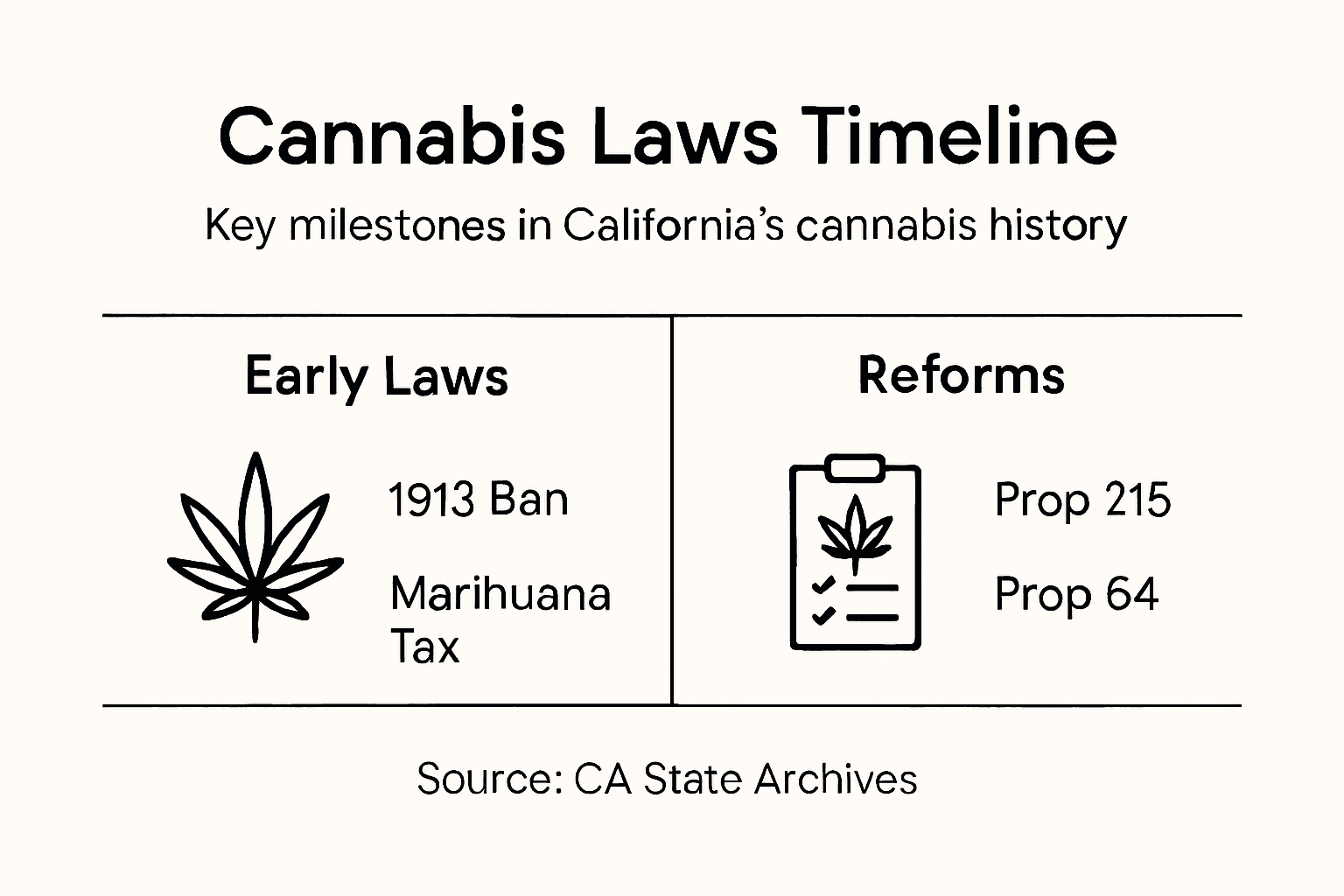
Here’s a summary of major milestones in California cannabis regulation:
| Year | Event | Impact |
|---|---|---|
| 1913 | First prohibition laws | Restricted use, fueled by social and racial bias |
| 1937 | Marihuana Tax Act | Criminalization at the federal level began |
| 1970 | Controlled Substances Act | Classified cannabis as Schedule I substance |
| 1996 | Proposition 215 | Legalized medical use; shifted public perception |
| 2016 | Proposition 64 | Legalized adult recreational use, new regulations |
Modern Market, Compliance, and Consumer Rights
California’s cannabis regulatory landscape continues evolving with increasingly complex compliance requirements and consumer protection frameworks. The modern market demands sophisticated approaches to quality control, transparency, and responsible consumption. Stakeholders must navigate intricate licensing procedures, stringent testing protocols, and ongoing regulatory refinements that aim to create a safe, equitable cannabis ecosystem.
The state’s commitment to industry integrity is evident through targeted initiatives. Research grants support comprehensive cannabis policy studies investigating implementation challenges, public safety considerations, and market equity. These academic research efforts provide critical insights into developing evidence-based regulations that balance consumer rights, business opportunities, and public health concerns. By systematically examining market dynamics, policymakers can create more nuanced and responsive regulatory frameworks.
Consumer protection remains a paramount concern in California’s cannabis market. Regulations now mandate rigorous product testing, clear labeling requirements, potency disclosures, and strict quality control measures. These standards aim to mitigate potential risks, ensure product safety, and empower consumers with comprehensive information about their cannabis purchases. However, challenges persist, including addressing market accessibility, reducing licensing barriers for small businesses, and continuing to combat illicit market competition.
Pro tip: Always verify product lab testing results and understand your local cannabis regulations before making a purchase.
Discover the Legacy and Quality Behind California Cannabis Today
Understanding the complex history of cannabis laws and social dynamics in California reveals why quality and transparency matter more than ever in your cannabis journey. For those navigating the evolving legal landscape and seeking products that honor both tradition and innovation, finding lab-tested, sustainably grown options is essential. Whether you want to experience the therapeutic benefits recognized since Proposition 215 or explore the new possibilities opened by recreational legalization, trust in your source is key.
Explore premium, hemp-derived THCa flower and concentrates from The THCa Prestige Vault – California Blendz where quality meets compliance. Our curated collections reflect California’s Emerald Triangle legacy of organic cultivation combined with modern regulatory standards.

Take control of your cannabis experience now with confidence by visiting California Blendz. Browse The Founder’s Collection – California Blendz for thoughtfully selected flowers designed to deliver relaxation or relief every time. Act today to enjoy carefully sourced products that respect the history and future of cannabis in California.
Frequently Asked Questions
What were the initial reasons for cannabis prohibition in California?
The early cannabis prohibition in California began in 1913 and was largely influenced by immigration fears and racial prejudices rather than public health concerns. These initial legal restrictions were more symbolic than substantive.
How did Proposition 215 change the perception of cannabis?
Passed in 1996, Proposition 215, also known as the Compassionate Use Act, allowed patients access to medical cannabis while protecting them from criminal prosecution. This legislation marked a significant shift in how society perceived cannabis, moving towards recognizing its therapeutic potential.
What impact did Proposition 64 have on cannabis regulation in California?
Proposition 64, enacted in 2016, legalized recreational cannabis for adults 21 and over, introducing a comprehensive regulatory framework that prioritized consumer safety, quality control, and social justice initiatives, which was a major shift from previous prohibitionist policies.
How does California’s medical cannabis regulation differ from recreational cannabis regulation?
Medical cannabis requires a physician’s recommendation for access, focusing on patient rights and medical need, while recreational cannabis is available to adults 21 and over, emphasizing consumer safety and tax revenue generation.
Recommended
- Uncovering the Fascinating History of CBD Flower: From Ancient Times t – California Blendz
- Green Revolution: The Destigmatization of Cannabis Revolt – California Blendz
- The Fascinating History of CBD and How it was Discovered: From Ancient – California Blendz
- Cannabis Culture in California – Wellness and Law Impact – California Blendz


