
CBD Flower vs Oils: Choosing the Best Fit
Written by Trevor

Finding the right CBD product can feel overwhelming with so many choices in California. Whether you want immediate relaxation or long-lasting relief, understanding the difference between CBD flower and oils makes all the difference. Both come from high-CBD hemp plants but their effects, onset, and experience can be quite different. This guide highlights the essentials of each format, making it easier to choose a high-quality, lab-tested option that fits your wellness routine.
Table of Contents
- Defining CBD Flower And Oils
- How Each Form Delivers Effects
- Comparing Potency, Onset, And Duration
- Usage, Safety, And Side Effects
- Legal Status And Product Quality Standards
Key Takeaways
| Point | Details |
|---|---|
| CBD Flower vs. Oils | CBD Flower offers a full-spectrum experience with rapid effects, while CBD Oils provide precise dosing and longer-lasting support. |
| Consumption Methods | Choose CBD Flower for immediate relief through inhalation or Oils for discreet, easy oral dosing. |
| Onset and Duration | CBD Flower effects begin within 5–15 minutes, lasting 2–4 hours; Oils take 15–120 minutes to kick in but last 4–8 hours. |
| Safety and Quality | Always verify third-party lab testing for potency and contaminants before purchasing CBD products. |
Defining CBD Flower and Oils
CBD flower and CBD oils represent two distinct approaches to consuming cannabidiol, each offering unique characteristics that appeal to different preferences and lifestyles. While both derive from the same source, hemp plants bred to contain high levels of CBD, they differ fundamentally in form, preparation, and how your body processes them. Understanding these differences is essential for choosing the product that aligns with your wellness goals and consumption style.
CBD flower is the raw, dried bud of female hemp plants, harvested specifically for its high cannabidiol content and minimal THC levels. When you use CBD flower, you’re getting a full-spectrum product containing not just CBD but also beneficial terpenes, flavonoids, and other cannabinoids that work together in what’s called the entourage effect. You can smoke it using traditional methods, vape it with a dry herb vaporizer, or even infuse it into edibles and beverages. The experience feels natural and resembles traditional cannabis consumption, which appeals to many California consumers looking for a familiar ritual alongside their wellness routine. Quality indicators include visible trichomes (the sparkling crystals on buds), vibrant color, and a fresh aroma that indicates proper cultivation and storage practices.
CBD oils, by contrast, are concentrated extracts made by processing hemp flowers to isolate or concentrate cannabidiol. These oils are typically consumed sublingually (under the tongue), mixed into food, or added to beverages. The extraction process removes plant material while concentrating the beneficial compounds, resulting in a more potent, standardized dose. Because oils provide precise dosing information, they’re ideal if you need consistent, measurable amounts of CBD. Understanding how cannabidiol functions as a nonpsychoactive compound helps clarify why both forms are popular among health-conscious adults seeking therapeutic benefits without intoxication.
The choice between these two formats often comes down to lifestyle and preference. Flower enthusiasts appreciate the ritualistic aspect and full-spectrum profile, while oil users value convenience, precise dosing, and portability. Both forms are legal in California when derived from hemp containing less than 0.3% THC by dry weight, and both should be purchased from vendors who provide third-party lab testing results confirming cannabinoid content and purity.
Here’s a concise comparison of CBD flower and oils to help you quickly identify their key differences:
| Aspect | CBD Flower | CBD Oils |
|---|---|---|
| Consumption Method | Smoked or vaped | Sublingual or ingested |
| Dosing Precision | Harder to measure consistently | Easily measurable per drop |
| Onset of Effects | 5–15 minutes | 15–120 minutes |
| Duration of Effects | 2–4 hours | 4–8 hours |
| Convenience | Requires equipment | Portable and discreet |
| Plant Compounds | Full-spectrum (entourage) | Varies: full/broad/isolates |
| Respiratory Concerns | Possible with smoke/vapor | None with oral use |
| Ideal Use Case | Acute, rapid relief | Steady, sustained support |
Pro tip: If you’re new to CBD, start with oils for predictable dosing, then explore flower once you understand your ideal daily intake, since transitioning between formats becomes seamless once you know your preferences.
How Each Form Delivers Effects
The way CBD enters your body fundamentally changes when and how you experience its effects. This distinction matters significantly if you’re seeking immediate relief versus sustained support throughout your day. CBD flower and oils take completely different routes through your system, resulting in vastly different timelines and duration of effects that should influence your choice.
When you smoke or vape CBD flower, cannabinoids travel directly into your lungs and rapidly enter your bloodstream. This inhalation method produces effects within 5 to 15 minutes, making it ideal for California residents managing acute stress, sudden discomfort, or moments when you need quick relief. The effects typically peak around 30 minutes and gradually fade over 2 to 4 hours. This fast onset works wonderfully if you’re addressing specific situations like pre-work anxiety or unexpected tension. However, the tradeoff is that inhalation produces shorter-lasting effects compared to other consumption methods. Additionally, when you smoke flower, you’re accessing the complete plant profile through how cannabinoids work together synergistically, which some users report enhances the overall experience.
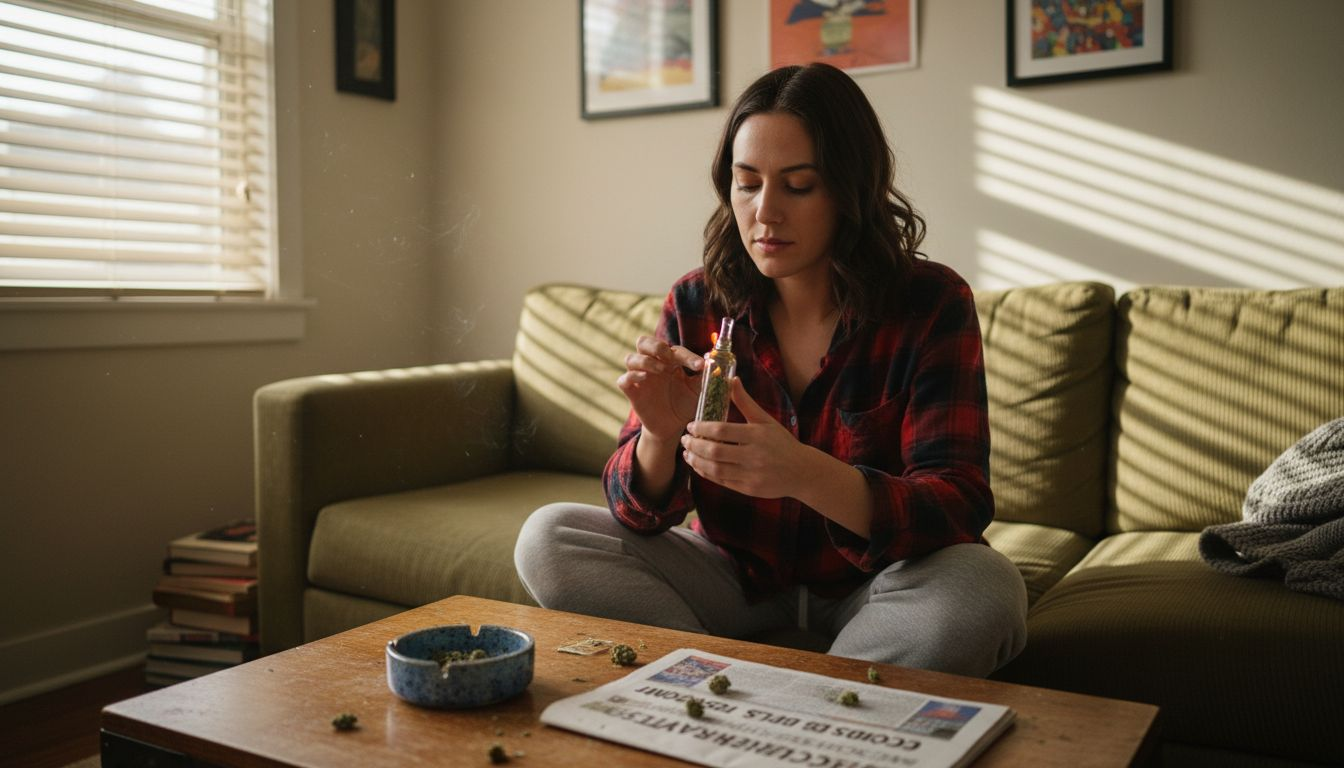
CBD oils operate on a completely different timeline. Whether you place them under your tongue (sublingual) or mix them into food, oils are absorbed through mucous membranes or your digestive system. Sublingual absorption takes approximately 15 to 30 minutes to produce noticeable effects, while edibles and beverages can take 45 minutes to 2 hours since they must pass through your digestive tract first. The advantage here is longevity. These effects typically last 4 to 8 hours, making oils better suited for maintaining consistent CBD levels throughout your day. This extended duration appeals to health-conscious adults seeking steady, predictable support rather than rapid relief. How CBD interacts with your endocannabinoid system determines these absorption patterns and explains why oil users experience delayed but prolonged benefits.
Your choice depends on your lifestyle and what you’re addressing. Need something for stressful meetings or sudden discomfort? Flower delivers speed. Seeking baseline wellness support or managing chronic tension throughout your day? Oils provide consistency. Many California consumers actually use both, rotating between flower for immediate situations and oils for sustained daily wellness. Understanding your body’s response patterns and your specific needs will guide you toward the format that works best for your routine.
Pro tip: Track your effects for the first week with whichever format you choose, noting the timing of onset, peak intensity, and duration, so you can adjust your dosing schedule and method based on real data rather than guessing.
Comparing Potency, Onset, and Duration
When comparing CBD flower and oils, three factors fundamentally shape your experience: how powerful each dose is, how quickly it works, and how long the effects stick around. These metrics aren’t just academic details. They directly influence which product fits your daily routine and wellness goals. Understanding the differences helps you make an informed decision rather than discovering through trial and error what works for your body.
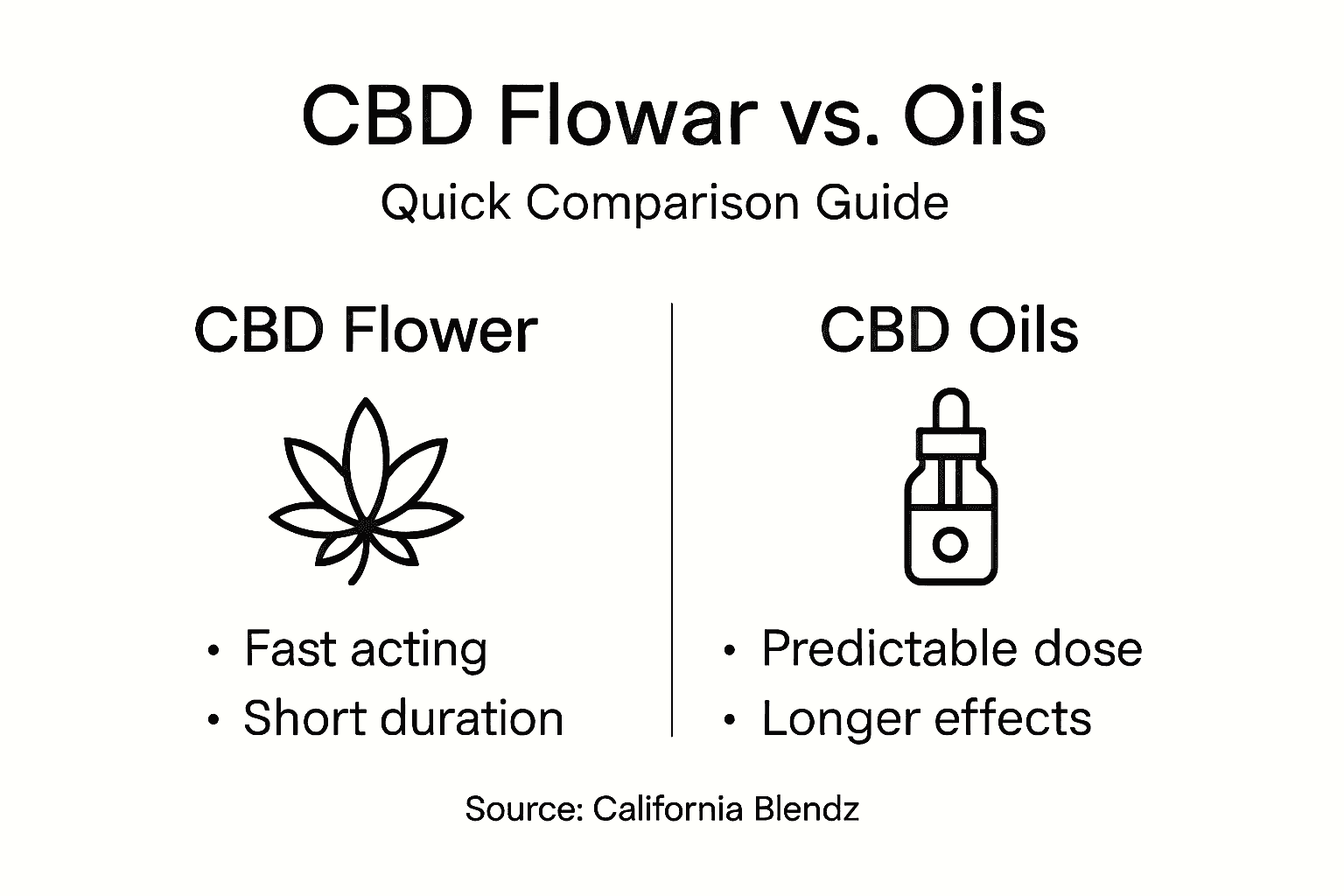
Potency and bioavailability tell you how much CBD your body actually uses from what you consume. CBD flower typically offers bioavailability between 31% to 45%, meaning your body absorbs roughly one third to half of the cannabinoids you inhale. Oils, on the other hand, have lower bioavailability ranging from 6% to 20% because they pass through your digestive system and liver, where some compounds break down before reaching your bloodstream. This sounds like flower wins, but here’s the catch: flower’s higher bioavailability delivers faster results over a shorter window, while oils’ lower bioavailability creates sustained, steady effects. Understanding how potency varies in cannabis flower reveals that concentration matters more than you might think. A 20% CBD flower might deliver more absolute cannabinoids per serving than a lower-concentration oil, even accounting for absorption rates.
Onset times differ dramatically between these forms. CBD flower produces noticeable effects within minutes of inhalation, typically reaching peak intensity around 15 to 30 minutes before gradually declining. This rapid onset makes flower the obvious choice if you need immediate relief from acute stress or discomfort. Oils take considerably longer to kick in. Sublingual oils begin working around 15 to 30 minutes, while oil-based edibles or beverages can take 45 minutes to 2 hours since they must pass through your entire digestive tract. This delayed onset frustrates some users at first, but patience pays off. Once oils take effect, they maintain steady support for 6 to 8 hours, compared to flower’s 2 to 4 hour window. For California residents managing all-day wellness needs, oils provide consistent background support that flower simply cannot match.
Duration differences create distinct use cases. Flower’s shorter lifespan makes it ideal for targeted, situational support. Oils excel at maintaining stable cannabinoid levels throughout your day. Many experienced users actually employ both products strategically. They use flower for acute moments when they need quick relief, then use oils for baseline, sustained wellness support. Your lifestyle, schedule, and specific needs should guide this choice. Someone managing pre-meeting anxiety benefits from flower’s speed. Someone addressing chronic tension throughout an 8-hour workday benefits from oils’ consistency. The best approach respects these differences rather than assuming one form works for every situation.
Pro tip: Start by testing one form for a full week, tracking onset time, peak effects, and duration in a simple note app, then switch to the other form for comparison so you have personal data rather than generic timelines to guide your final choice.
Usage, Safety, and Side Effects
CBD carries a strong safety profile compared to many wellness supplements, but understanding how to use each form safely and recognizing potential side effects matters before you start. Both flower and oils deliver cannabidiol effectively, yet they present different safety considerations and usage patterns that deserve your attention. This is where product quality and informed consumption become non-negotiable.
When using CBD flower, you’re inhaling vapor or smoke directly into your lungs. This consumption method introduces respiratory considerations that oral oils simply don’t involve. Vaping reduces some risks compared to smoking by avoiding combustion, but it still introduces warm vapor into your respiratory system. Some users experience mild throat irritation or coughing initially as their lungs adjust. Oils avoid these respiratory concerns entirely. Instead, oils require careful attention to dosing since they offer concentrated cannabinoid content. You must measure your doses accurately to avoid taking more than intended. The good news is that CBD itself causes minimal side effects. Most commonly reported are dry mouth, slight fatigue, changes in appetite, and occasional diarrhea. These effects are typically mild and dose-dependent, meaning they decrease when you lower your intake. Understanding how CBD may interact with medications becomes important if you take prescriptions regularly, as CBD can affect how your body processes certain drugs.
Product quality dramatically impacts safety for both forms. Since CBD products remain loosely regulated at the federal level, purchasing from reputable California vendors matters enormously. Look for third-party lab testing that confirms cannabinoid content, verifies THC levels stay below 0.3%, and screens for contaminants like heavy metals, pesticides, and mold. California Blendz products come with transparent lab results because quality assurance protects your health. Inferior products from unreliable sources may contain unexpected contaminants or inaccurate cannabinoid labeling, turning a wellness choice into a health risk.
Usage best practices differ between forms. With flower, start with small amounts and observe how your body responds over several hours before increasing. With oils, begin with the lowest recommended dose, typically 5 to 10 milligrams, and gradually increase only after assessing your response. If you take medications, consult your healthcare provider before adding CBD since interactions are possible. Your individual health status, current medications, and body chemistry all influence how CBD affects you, making personalized caution smarter than following generic guidelines.
Pro tip: Keep a simple usage log for your first two weeks, noting the time, amount, method, and how you feel hourly, so you can identify your optimal dose and timing while detecting any side effects specific to your body.
Legal Status and Product Quality Standards
Navigating the legal landscape of CBD products in California requires understanding federal regulations, state-specific rules, and quality standards that protect consumers. The good news is that hemp-derived CBD is federally legal when it meets one critical requirement: containing less than 0.3% THC by dry weight. This threshold matters because it distinguishes hemp from marijuana under federal law. However, legal status extends beyond THC percentages. State regulations, local ordinances, and evolving standards around product quality create a complex environment where choosing reputable vendors becomes your best protection.
In California specifically, CBD products derived from hemp are legal for adults to purchase and use. This applies to both flower and oils, provided they meet federal THC requirements and comply with California’s cannabis regulations. The state has established rigorous testing and labeling standards that legitimate vendors must follow. Hemp-derived CBD legality hinges on that 0.3% THC threshold, but California goes further by requiring third-party lab testing, accurate potency labeling, and safety screenings for contaminants. CBD flower faces occasional scrutiny because some jurisdictions associate any smokable plant material with cannabis restrictions, even though legal hemp flower is technically distinct. Oils typically encounter fewer regulatory hurdles since they’re concentrated extracts rather than plant material. Both forms remain completely legal when sourced properly and purchased from compliant vendors.
Product quality standards separate trustworthy CBD from questionable alternatives. A legitimate vendor provides third-party lab certificates of analysis showing exact cannabinoid content, THC verification, and contaminant screening results. California Blendz publishes these results transparently because quality assurance protects your investment and health. When shopping, verify that labs tested for heavy metals, pesticides, mold, solvents, and microbial contaminants. Accurate labeling matters too. A product labeled as 500 milligrams of CBD should actually contain 500 milligrams, not 250 or 750. Reputable vendors stand behind their products with consistent, verifiable results. Avoid retailers offering vague product information, missing lab results, or suspiciously cheap pricing that suggests corners were cut.
Your role as a consumer involves asking the right questions. Request lab reports before purchasing. Check whether the vendor operates transparently about sourcing and cultivation practices. California’s Emerald Triangle produces premium hemp through sustainable methods that justify higher quality and pricing. Cheap CBD often reflects poor cultivation, inadequate testing, or undisclosed contamination. The slight premium you pay for verified, lab-tested products from established California vendors returns dividends through guaranteed potency, purity, and peace of mind.
For a quick reference, here’s how to evaluate CBD product quality and safety when shopping in California:
| Product Check | What to Look For | Why It Matters |
|---|---|---|
| Lab Report (COA) | Independent third-party proof | Verifies safety and potency |
| THC Content | Below 0.3% by dry weight | Ensures federal compliance |
| Contaminants Tested | No pesticides/heavy metals | Reduces health risks |
| Accurate Labeling | Matches CBD content listed | Guarantees correct dosing |
| Batch Number | Clearly identified on label | Tracks product back to source |
Pro tip: Before purchasing any CBD product, request the Certificate of Analysis from the retailer and verify it matches the product batch number, was issued within the last year, and shows testing results from an independent third-party lab rather than the manufacturer’s own facility.
Find Your Perfect CBD Experience with California Blendz
Choosing between CBD flower and oils requires understanding your unique needs for relief, wellness, and lifestyle. Whether you value the rapid effects of smoking full-spectrum CBD flower or prefer the consistent, measurable dosing of oils, California Blendz offers trusted, lab-tested options grown sustainably in California’s Emerald Triangle. Explore our carefully curated selections to match your preference, knowing each product adheres to strict quality and legal standards.
Start your journey by browsing The Founder’s Collection – California Blendz for premium, organic flower or check out current savings in our DEALS – California Blendz. Visit California Blendz today and discover the perfect CBD product that fits your routine and elevates your wellness. Don’t wait to experience the natural benefits tailored just for you.
Frequently Asked Questions
What are the main differences between CBD flower and CBD oils?
CBD flower is the raw, dried bud of hemp plants that offers a full-spectrum product with various cannabinoids. In contrast, CBD oils are concentrated extracts that provide a more potent and standardized dose, typically consumed sublingually or in food.
How quickly do CBD flower and oils deliver effects?
CBD flower generally produces effects within 5 to 15 minutes after consumption due to quick absorption into the bloodstream, while CBD oils can take 15 minutes to 2 hours, depending on whether they are taken sublingually or edibles.
What are the dosing considerations for CBD flower versus oils?
Dosing CBD flower can be less precise since it’s harder to measure consistently, whereas CBD oils offer more accurate dosing through measurement per drop. Users should start with lower amounts and adjust based on their response.
Are there any safety concerns associated with using CBD flower or oils?
CBD flower can have respiratory concerns due to inhalation, whereas oils generally don’t pose these issues. However, both forms can cause mild side effects like dry mouth and fatigue. It’s important to purchase high-quality products tested for contaminants to ensure safety.
Recommended
- CBD Flower Benefits: Everything You Need to Know – California Blendz
- How to Spot Quality Flower: A Comprehensive Guide – California Blendz
- CBD Flower in 2025: Benefits, Uses, and Buying Tips – California Blendz
- Budget-Friendly Hemp Flower vs Top Shelf CBD Flower: Which Option is R – California Blendz


