
Cannabis Tolerance and Breaks: How It Impacts Your Effects
Written by California Blendz

Over one in three American adults who use cannabis regularly report needing higher doses over time to feel the same effects. This rising tolerance is not just a personal hurdle, but a widespread reality that affects how people manage their wellness, recreation, and even medical needs. Understanding exactly how tolerance develops and learning practical strategies to manage it can help any American user get more out of every cannabis experience while minimizing unwanted side effects.
Table of Contents
- What Cannabis Tolerance Means
- How Tolerance Develops Over Time
- Types and Lengths of Tolerance Breaks
- Managing Withdrawal and Support Strategies
- Using CBD/THCa During T‑Breaks
- Preventing Tolerance Return
Key Takeaways
| Point | Details |
|---|---|
| Understanding Cannabis Tolerance | Cannabis tolerance results from regular exposure to cannabinoids, leading to reduced sensitivity and requiring larger doses for the same effects. |
| Implementing Tolerance Breaks | Periodic tolerance breaks of varying lengths can help reset cannabinoid receptor sensitivity, enhancing the overall cannabis experience. |
| Managing Withdrawal Symptoms | Effective strategies such as hydration, balanced nutrition, and mental health support can ease withdrawal symptoms during tolerance breaks. |
| Preventing Tolerance Return | Mindful usage practices, including dosage management and varying consumption methods, can help maintain cannabinoid sensitivity over time. |
What Cannabis Tolerance Means
Cannabis tolerance is a physiological response where your body becomes less sensitive to the effects of cannabinoids after repeated exposure. When you consume cannabis regularly, your endocannabinoid system adapts, requiring increasingly larger amounts to achieve the same intensity of effects. This biological mechanism happens gradually, often without users realizing their consumption patterns are changing.
The development of cannabis tolerance occurs through neurological adaptations in your brain’s receptor systems. Specifically, frequent cannabis consumption leads to downregulation of cannabinoid receptors, meaning these receptors become less responsive over time. Regular users might notice they need higher doses or more potent strains to experience the same euphoric, relaxing, or medicinal effects they initially encountered. Some users might also experience reduced sensitivity to specific cannabinoids like THC or CBD.
Key indicators of developing cannabis tolerance include:
- Needing larger quantities to achieve previous effects
- Experiencing diminished intensity of typical cannabis responses
- Feeling less pronounced psychoactive or therapeutic impacts
- Requiring longer consumption intervals to maintain similar sensations
Understanding cannabis potency and tolerance is crucial for responsible consumption. By recognizing these physiological changes, users can make informed decisions about their cannabis use, potentially implementing strategic tolerance breaks or adjusting consumption patterns to maintain desired effects.
How Tolerance Develops Over Time
The progression of cannabis tolerance is a complex neurological process involving intricate changes within the body’s endocannabinoid system. Neurological adaptations occur gradually, with the brain’s cannabinoid receptors becoming less responsive through repeated exposure. This biological mechanism means that frequent cannabis consumers will require progressively larger quantities to achieve the same psychoactive or therapeutic effects they initially experienced.
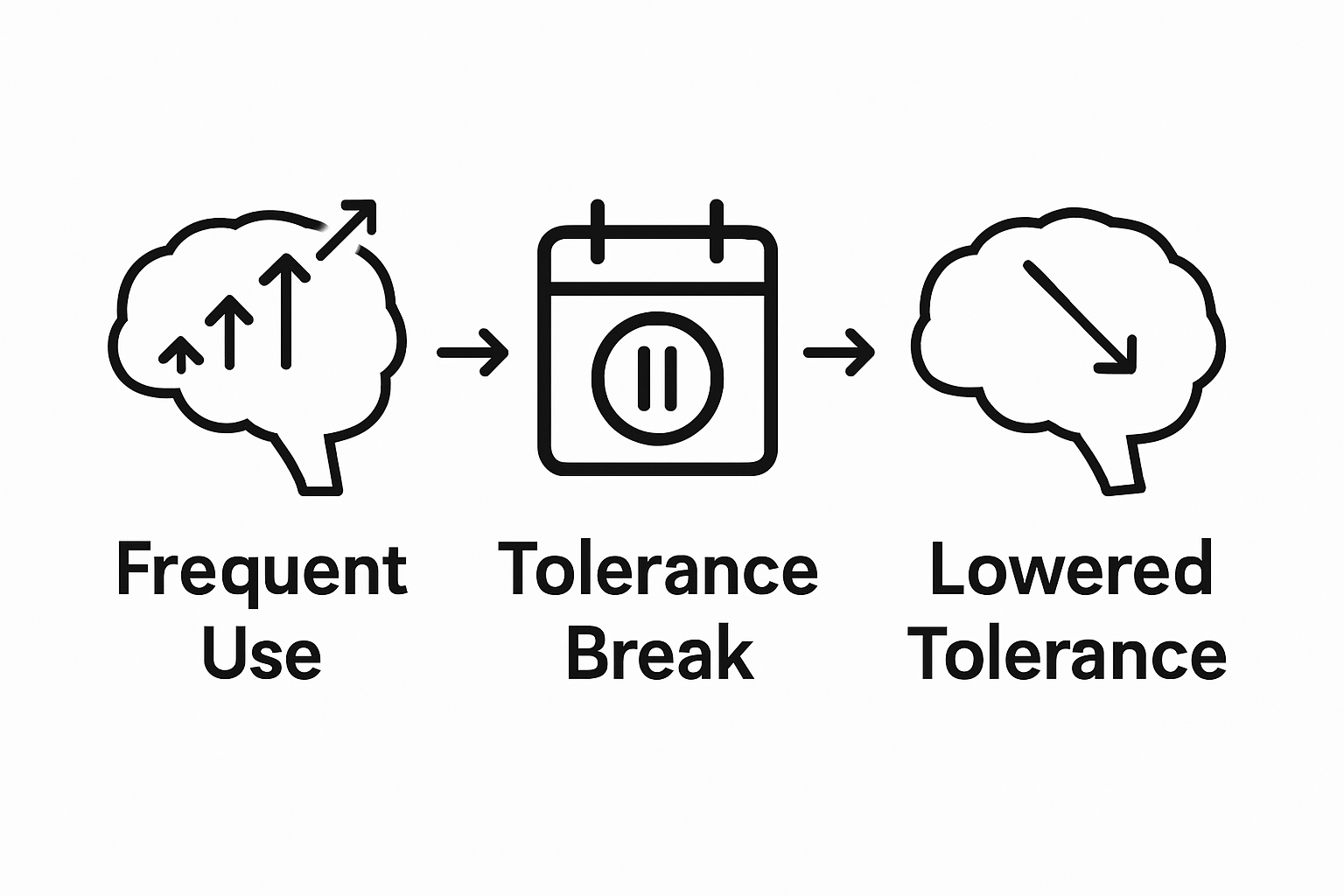
Researchers have identified specific physiological mechanisms driving tolerance development. The primary process involves CB1 receptor downregulation, where the brain’s cannabinoid receptors become less sensitive and decrease in overall density. Prolonged cannabis consumption triggers these neurochemical changes, essentially causing the brain to adapt by reducing its sensitivity to cannabinoids like THC.
The rate of tolerance development varies significantly among individuals and depends on several critical factors:
- Frequency of cannabis consumption
- Total quantity consumed per session
- Individual metabolic differences
- Specific cannabinoid concentrations
- Personal endocannabinoid system sensitivity
Understanding these nuanced tolerance mechanisms empowers users to make informed decisions about their cannabis consumption. By recognizing how tolerance develops, individuals can implement strategic approaches like periodic breaks or dosage management to maintain the desired effects and minimize potential neurological adaptation.
Types and Lengths of Tolerance Breaks
Tolerance breaks, commonly known as T breaks, are strategic periods of cannabis abstinence designed to reset the body’s cannabinoid receptor sensitivity. Varying break lengths offer different benefits, with durations ranging from a few days to several weeks. The primary goal is to allow the endocannabinoid system to recalibrate, ultimately restoring the body’s natural responsiveness to cannabis compounds.

Researchers suggest that the optimal tolerance break duration depends on individual factors such as consumption patterns, metabolism, and overall cannabis usage. Neurochemical reset periods typically range from 21 to 30 days, providing sufficient time for CB1 receptor density to return to baseline levels. During this period, the body gradually eliminates stored cannabinoids and reduces neurological adaptation, helping users regain their initial sensitivity to cannabis effects.
Types of tolerance breaks can be categorized based on duration and individual goals:
-
Short Break: 2-7 days
- Minimal receptor sensitivity restoration
- Quick reset for occasional users
-
Standard Break: 14-21 days
- Moderate receptor sensitivity improvement
- Recommended for regular consumers
-
Extended Break: 30-45 days
- Comprehensive neurological reset
- Ideal for long-term heavy users
Effective tolerance management strategies require personal awareness and commitment. By understanding individual consumption patterns and selecting an appropriate break length, users can optimize their cannabis experience and maintain the desired therapeutic or recreational effects.
Managing Withdrawal and Support Strategies
Cannabis withdrawal represents a challenging period where users experience physiological and psychological changes during their tolerance break. Withdrawal symptoms can manifest in multiple ways, including mood fluctuations, disrupted sleep patterns, and physical discomfort. Understanding these potential challenges helps individuals prepare and develop effective coping mechanisms to successfully navigate their cannabis abstinence journey.
Researchers have identified several common withdrawal experiences that users might encounter. Comprehensive management strategies focus on holistic approaches to mitigate discomfort and support overall wellness. These strategies encompass physical, mental, and lifestyle modifications designed to ease the transition and minimize potential negative experiences associated with sudden cannabis discontinuation.
Key support strategies for managing cannabis withdrawal include:
-
Hydration and Nutrition
- Drink plenty of water
- Consume nutrient-dense foods
- Maintain balanced electrolyte levels
-
Physical Health Management
- Regular exercise
- Consistent sleep schedule
- Stress reduction techniques
-
Mental Health Support
- Meditation practices
- Journaling
- Social support networks
Cannabis tolerance management requires patience and self-awareness. By implementing these comprehensive strategies, individuals can effectively navigate withdrawal symptoms, support their body’s recalibration process, and ultimately achieve a more balanced cannabis consumption experience.
Using CBD/THCa During T‑Breaks
Cannabis alternatives can play a strategic role during tolerance breaks, offering potential relief and support without compromising the reset process. THCa and CBD provide unique opportunities to maintain wellness while allowing the body’s cannabinoid receptors to recalibrate. These non-intoxicating compounds can help manage withdrawal symptoms and support overall physiological balance during the abstinence period.
Understanding the nuanced differences between cannabinoids is crucial for effectively navigating a tolerance break. THCa, in its raw form, offers potential therapeutic benefits without psychoactive effects, making it an excellent option for individuals seeking natural support. CBD provides additional advantages, including potential stress reduction and relaxation without interfering with the body’s receptor reset process. These compounds can help mitigate some of the challenging aspects of cannabis abstinence.
Strategic approaches for using cannabinoids during T‑breaks include:
-
CBD Integration
- Low-dose CBD for stress management
- Potential sleep support
- Anxiety reduction
-
THCa Considerations
- Non-psychoactive consumption
- Potential anti-inflammatory benefits
- Supporting overall wellness
-
Consumption Methods
- Tinctures
- Capsules
- Low-temperature herbal preparations
Balancing cannabinoid consumption requires careful consideration and personal awareness. By understanding individual needs and selecting appropriate cannabinoid alternatives, users can effectively support their body during tolerance breaks while maintaining overall wellness and preparing for a more responsive cannabis experience.
Preventing Tolerance Return
Cannabis tolerance management requires strategic and proactive approaches to maintain long-term cannabinoid sensitivity. Consumption patterns play a crucial role in preventing rapid tolerance development, with mindful usage being the primary defense against diminishing effects. Users can implement multiple techniques to preserve their body’s responsiveness to cannabis compounds and minimize the risk of quick receptor desensitization.
Strategic consumption techniques involve careful modulation of dosage, frequency, and product selection. Cannabinoid rotation strategies can significantly impact tolerance progression, allowing users to maintain a more balanced and responsive endocannabinoid system. This approach involves deliberately varying consumption methods, cannabinoid profiles, and intake frequencies to prevent neurological adaptation.
Key strategies for preventing tolerance return include:
-
Dosage Management
- Start with minimal effective doses
- Avoid consistent high-potency consumption
- Practice incremental consumption increases
-
Consumption Variety
- Rotate between different cannabinoid profiles
- Alternate between consumption methods
- Explore various cannabis strains
-
Mindful Usage Practices
- Implement periodic breaks
- Monitor individual response
- Track consumption patterns
Understanding cannabis potency empowers users to make informed decisions about their consumption. By maintaining awareness and implementing these strategic approaches, individuals can effectively manage their cannabis tolerance, ensuring a more consistent and enjoyable experience while minimizing the risk of rapid receptor desensitization.
Reset Your Cannabis Experience with California Blendz
Struggling with cannabis tolerance and looking for effective ways to reclaim the full benefits of your cannabis routine? Frequent consumption often leads to reduced effects, leaving you needing larger doses or more potent strains to feel the same impact. Understanding how tolerance develops and using strategic breaks are key to revitalizing your cannabis experience. At California Blendz, we offer premium, lab-tested products designed to support your tolerance management journey with quality and transparency you can trust.
Explore our thoughtfully curated collections like The THCa Prestige Vault and THCa 50/50 Hybrid for potent, sustainably grown options ideal for balancing effects during tolerance breaks or for mindful consumption. Visit California Blendz now to discover how you can maintain cannabinoid sensitivity and enhance your wellness routine today.
Frequently Asked Questions
What is cannabis tolerance?
Cannabis tolerance refers to the body’s decreased sensitivity to the effects of cannabinoids after repeated use, requiring larger quantities to achieve the same effects.
How does cannabis tolerance develop over time?
Cannabis tolerance develops through neurological adaptations, particularly the downregulation of cannabinoid receptors, leading to reduced sensitivity and requiring higher doses for the same effects.
What are tolerance breaks, and how long should they last?
Tolerance breaks are periods of abstinence from cannabis aimed at resetting receptor sensitivity. Breaks typically range from a few days to 30 days or more, depending on individual factors and usage patterns.
What strategies can help manage withdrawal during tolerance breaks?
Effective strategies for managing withdrawal include staying hydrated, maintaining a balanced diet, practicing regular exercise, and utilizing mental health support techniques like meditation and journaling.
Recommended
- 7 Smart Ways to Take a Cannabis Tolerance Break Effectively – California Blendz
- Understanding Tolerance for CBD: What You Need to Know – California Blendz
- Understanding Cannabis Potency Explained: A Closer Look – California Blendz
- How Does the Entourage Effect Work? – California Blendz
- Why Cycle Supplements: Safer, Smarter Supplement Use


