
Cannabinoid Potency Explained: Finding Your Ideal Strength
Written by Trevor

Finding the right balance in cannabis wellness products can be confusing for many adults in California. This is especially true as research shows that THC concentrations have surged from around 4-6 percent in the 1980s to over 20 percent in today’s samples. Understanding cannabinoid potency is essential when you want natural relief and tailored effects. This guide reveals how different cannabinoid strengths, lab testing methods, and legal requirements shape your experience and help you make informed choices.
Table of Contents
- What Cannabinoid Potency Really Means
- Types of Cannabinoids and Potency Differences
- How Lab Testing Determines Product Strength
- Legal and Labeling Factors in Cannabis Potency
- Choosing the Right Potency for Your Needs
Key Takeaways
| Point | Details |
|---|---|
| Understanding Cannabinoid Potency | Cannabinoid potency measures the concentration of active compounds like THC and CBD, impacting both physiological and psychological effects. |
| Importance of Lab Testing | Accurate lab testing ensures consumers know the exact cannabinoid profile and potency, enhancing safety and informed consumption. |
| Legal and Labeling Compliance | Cannabis products must meet labeling regulations that provide critical information on cannabinoid concentrations and health considerations. |
| Personalized Consumption Approach | Consumers should consider personal tolerance and desired effects when selecting cannabis potency, starting low and adjusting as needed. |
What Cannabinoid Potency Really Means
Cannabinoid potency represents the concentration and strength of active compounds within cannabis products, primarily measuring the levels of delta-9-tetrahydrocannabinol (THC) and cannabidiol (CBD). Cannabis potency data from research reveals a dramatic transformation in cannabis composition over recent decades, with THC concentrations dramatically increasing from approximately 4-6% in the 1980s to over 20% in contemporary samples.
Understanding potency goes beyond simple percentages. It involves comprehending how different cannabinoid concentrations impact physiological and psychological experiences. Key aspects of cannabinoid potency include:
- Total cannabinoid percentage
- Ratio of THC to CBD
- Specific terpene profile
- Potential psychoactive effects
- Individual metabolic response
Historically, marijuana contained minimal psychoactive compounds. Marijuana potency research demonstrates a remarkable progression from approximately 1% THC in the 1960s to contemporary products reaching 20-30%, with concentrated extracts potentially containing up to 90% THC. This substantial increase carries significant implications for potential health risks, including increased chances of addiction and adverse psychological reactions.
Potency isn’t just about strength—it’s about understanding how different cannabinoid concentrations interact with your body’s endocannabinoid system. Consumers should recognize that higher potency doesn’t automatically translate to a better experience, but rather requires careful, informed consumption.
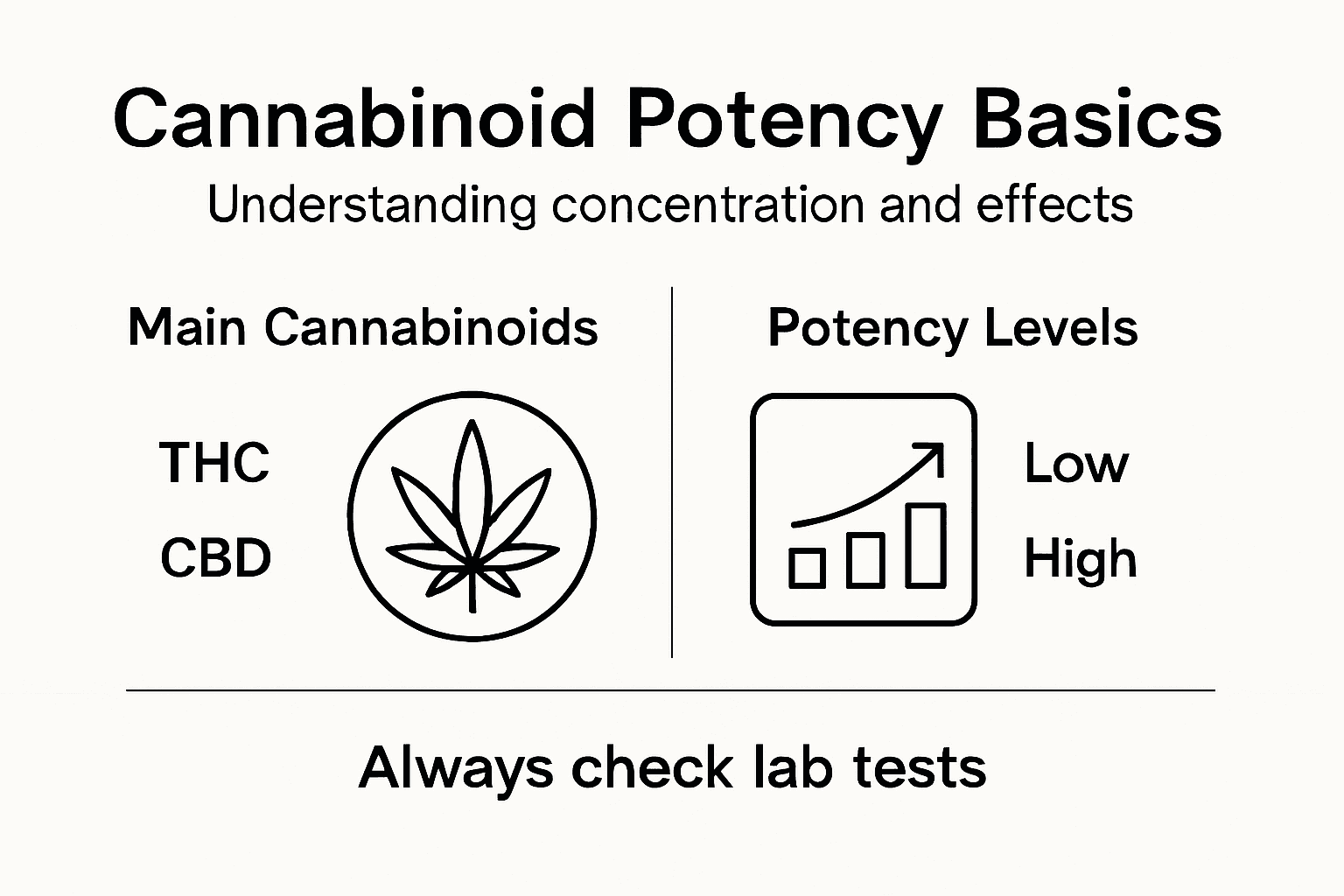
Pro tip: Always start with lower potency products and gradually understand your individual tolerance and response to different cannabinoid concentrations.
Types of Cannabinoids and Potency Differences
Cannabis contains a complex array of compounds, with researchers identifying over 100 distinct cannabinoids that produce varied physiological effects. Cannabinoid classification research reveals three primary categories of these compounds: phytocannabinoids (plant-derived), endocannabinoids (naturally produced in the body), and synthetic cannabinoids (laboratory-created).
The most prominent cannabinoids with significant potency differences include:
- Delta-9-THC: Primary psychoactive compound
- Cannabidiol (CBD): Non-psychoactive therapeutic compound
- Cannabinol (CBN): Mildly psychoactive, formed from THC degradation
- Cannabigerol (CBG): Non-psychoactive precursor to other cannabinoids
- Tetrahydrocannabivarin (THCV): Potentially appetite-suppressing variant
Cannabinoid receptor interactions demonstrate that each compound interacts differently with the human endocannabinoid system. THC primarily binds to CB1 receptors in the brain, producing psychoactive effects, while CBD modulates these interactions, potentially reducing THC’s intense psychological impacts. This complex interaction explains why different cannabinoids produce such varied physiological responses.
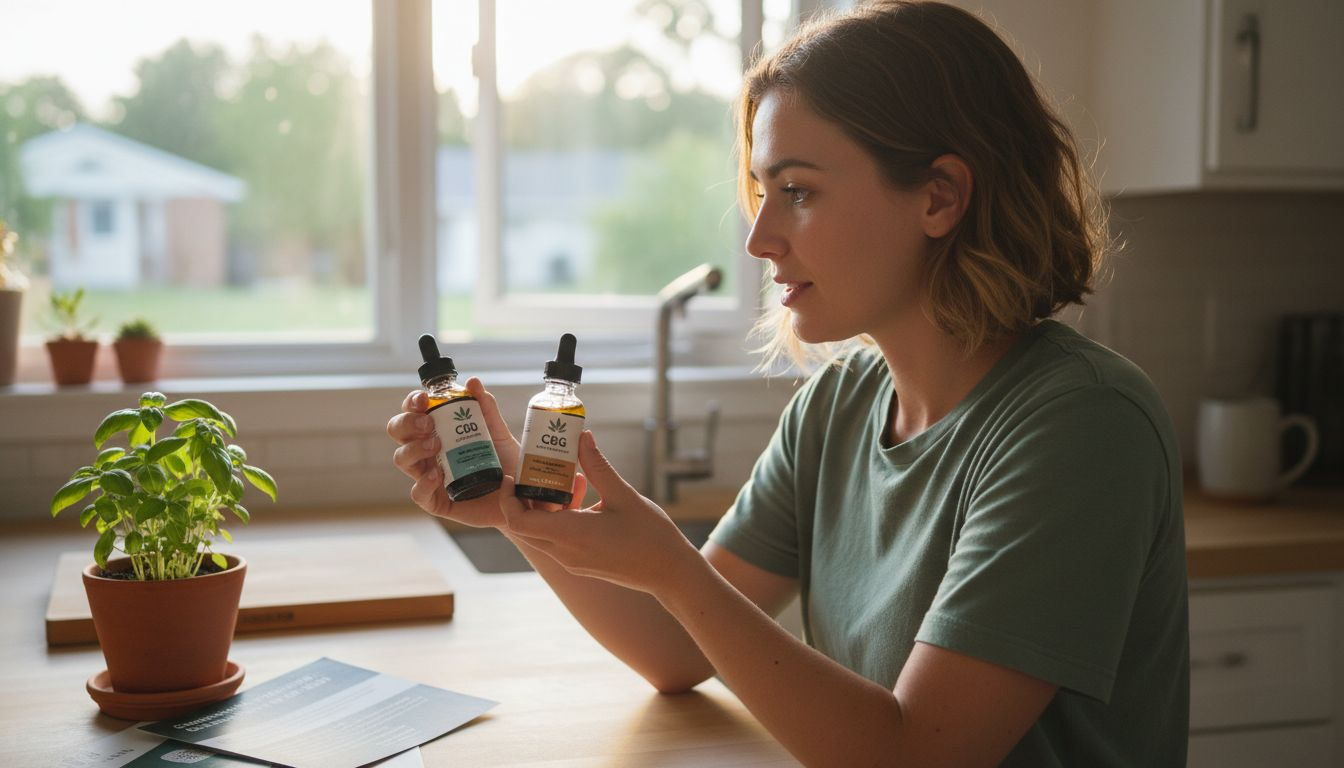
Here is a quick comparison of key cannabinoids and their primary effects:
| Cannabinoid | Main Effect | Typical Potency Range | Unique Characteristic |
|---|---|---|---|
| Delta-9-THC | Psychoactive | 1-90% (extracts) | Drives euphoric experience |
| CBD | Non-psychoactive | 1-30% | Reduces anxiety and stress |
| CBN | Mildly psychoactive | 0.1-2% | Sedative, from THC breakdown |
| CBG | Non-psychoactive | 0.1-1% | Anti-inflammatory potential |
| THCV | Psychoactive variant | Trace-5% | Appetite suppressant effect |
Understanding potency isn’t just about total percentage, but about how specific cannabinoids interact with individual body chemistry. Some consumers may experience more pronounced effects from lower percentages of certain cannabinoids, while others might require higher concentrations to achieve desired outcomes.
Pro tip: Always consult with a healthcare professional and start with low-potency products to understand your individual cannabinoid sensitivity and response.
How Lab Testing Determines Product Strength
Cannabinoid potency testing represents a sophisticated scientific process that ensures consumers receive accurate, safe, and reliable cannabis products. Laboratory testing protocols utilize advanced analytical techniques to precisely measure the concentration of active compounds within cannabis samples.
The primary analytical methods for determining cannabinoid potency include:
- Gas Chromatography (GC): Separates and identifies chemical compounds
- High-Performance Liquid Chromatography (HPLC): Quantifies cannabinoid concentrations
- Mass Spectrometry (MS): Provides detailed molecular analysis
- Liquid Chromatography-Ultraviolet (LC-UV): Measures absorption spectra
- Liquid Chromatography-Mass Spectrometry (LC-MS/MS): Offers highest precision
Cannabis laboratory quality assurance involves rigorous standardization processes that guarantee measurement accuracy. Laboratories use calibrated reference materials, maintain strict quality control protocols, and often pursue ISO accreditation to ensure consistent and reliable potency assessments. These methods allow for precise identification of cannabinoid percentages, helping consumers understand exactly what they’re consuming.
The testing process typically involves multiple steps, including sample preparation, extraction, analysis, and verification. Sophisticated instruments can detect minute variations in cannabinoid concentrations, providing consumers with detailed information about product composition, potential effects, and therapeutic potential.
Cannabis lab testing methods vary in precision and purpose:
| Testing Method | Accuracy Level | Main Use | Sample Type |
|---|---|---|---|
| Gas Chromatography (GC) | Moderate | Compound separation | Plant material |
| High-Performance Liquid Chromatography (HPLC) | High | Cannabinoid quantification | Extracts and flower |
| Mass Spectrometry (MS) | Very high | Molecule identification | Any sample |
| LC-MS/MS | Highest | Complex analysis | Concentrates and isolates |
Pro tip: Always review the laboratory testing certificate when purchasing cannabis products to understand the exact cannabinoid profile and potency levels.
Legal and Labeling Factors in Cannabis Potency
Cannabis product regulation represents a complex landscape of evolving legal requirements designed to protect consumer safety and ensure transparent product information. Cannabis labeling regulations mandate comprehensive disclosure of critical product details, including precise cannabinoid concentrations and potential health considerations.
Key legal requirements for cannabis product labeling typically include:
- Total THC and CBD percentages
- Standardized health warning symbols
- Child-resistant packaging specifications
- Batch or lot identification numbers
- Manufacturer contact information
- Recommended storage conditions
- Potential allergen disclosures
FDA cannabis product regulations highlight the ongoing complexity of legal standards across different jurisdictions. While federal and state guidelines can differ significantly, the primary goal remains consistent: providing consumers with accurate, transparent information about product composition, potency, and potential effects.
The intricate regulatory environment means that cannabis product labeling must balance scientific precision with consumer comprehension. Manufacturers must navigate a nuanced legal landscape that requires detailed technical information while ensuring that labels remain clear, accessible, and compliant with multiple regulatory frameworks.
Pro tip: Always carefully review product labels and verify third-party lab testing certificates to understand the exact cannabinoid profile and legal compliance of your cannabis products.
Choosing the Right Potency for Your Needs
Cannabis potency selection requires a nuanced approach that considers individual physiological and psychological factors. Patient-specific dosing strategies emphasize the importance of personalized cannabis consumption, recommending a careful, gradual approach to finding your ideal product strength.
Key considerations for selecting the right potency include:
- Personal tolerance level
- Previous cannabis experience
- Specific health or wellness goals
- Desired effects (relaxation, pain relief, sleep support)
- Potential interactions with existing medications
- Individual metabolic response
- Comfort with psychoactive effects
Therapeutic cannabinoid ratios play a crucial role in determining the most appropriate product. The balance between THC and CBD concentrations significantly influences the overall experience, with different ratios producing distinct effects. Some combinations may enhance therapeutic benefits, while others might mitigate potential side effects.
Beginners and those with lower tolerance should start with lower potency products, typically those containing 5-10% THC or a balanced CBD:THC ratio. More experienced users might opt for higher potency options, but should still approach new products with caution and mindfulness of individual sensitivity.
Pro tip: Start with the lowest effective potency and gradually adjust, keeping a detailed journal to track your response and find your optimal cannabinoid balance.
Discover Your Perfect Cannabis Potency with California Blendz
Finding the right cannabinoid potency can feel overwhelming given the complex range of THC and CBD levels. If you want to avoid unpredictable effects and confidently select products that match your tolerance and wellness goals, California Blendz is here to help. Our carefully curated THCa Bundle – California Blendz offers a variety of lab-tested, organic flower options so you can explore cannabinoid strengths safely and effectively.
Start your journey to balanced, enjoyable cannabis experiences now. Visit California Blendz to access detailed product information, third-party lab results, and user-friendly filters that make potency selection simple. For those seeking premium options with precise cannabinoid profiles, explore The Founder’s Collection – California Blendz and elevate your cannabis routine today.
Frequently Asked Questions
What does cannabinoid potency mean?
Cannabinoid potency refers to the concentration and strength of active compounds in cannabis products, primarily focusing on the levels of THC and CBD.
How do I determine the right potency for my needs?
To choose the right potency, consider factors like your personal tolerance, previous experience with cannabis, specific health goals, desired effects, and individual metabolic response.
What are the main cannabinoids and their effects?
Key cannabinoids include delta-9-THC (psychoactive), CBD (non-psychoactive), CBN (mildly psychoactive), CBG (non-psychoactive), and THCV (psychoactive with appetite-suppressing effects), each producing different physiological responses.
Why is lab testing important for cannabis products?
Lab testing ensures accuracy in product strength and safety by measuring the concentration of cannabinoids. It helps consumers understand what they are consuming and provides assurance of quality and compliance.
Recommended
- Understanding Cannabis Potency Explained: A Closer Look – California Blendz
- Understanding Cannabis Flower Potency Guide – California Blendz
- Cannabis Potency Guide: Complete Breakdown for 2024 – California Blendz
- Understanding Cannabis Potency Myths and Realities – California Blendz
- Hvilken styrke skal jeg vælge? – Cannaone CBD olie


