
Cannabis and the Endocannabinoid System – Why It Matters
Written by Trevor

More than 80 percent of American adults are seeking safer, natural ways to support their health. If you are exploring organic, lab-tested THCa and CBD products in California, understanding how your endocannabinoid system works is key. By learning about its vital components, you can make informed choices for balance and wellness while using cannabis compounds to enhance mind and body harmony.
Table of Contents
- Endocannabinoid System: Key Components And Functions
- How Cannabis Compounds Interact With The ECS
- THCa, CBD, And Other Key Cannabinoids
- Health Impacts And Potential Benefits
- Risks, Safety, And Legal Considerations
Key Takeaways
| Point | Details |
|---|---|
| Endocannabinoid System Components | The ECS consists of endocannabinoids, cannabinoid receptors (CB1 and CB2), and metabolic enzymes that collectively maintain physiological balance. |
| Interactions with Cannabis Compounds | Cannabinoids like THC and CBD interact with ECS receptors differently, influencing various physiological responses including mood and pain management. |
| Potential Health Benefits and Risks | Cannabis may offer therapeutic potential for conditions like chronic pain and anxiety, but also carries risks like cognitive impairment and cardiovascular issues. |
| Legal and Safety Considerations | Consumers should be aware of local cannabis regulations and seek professional guidance regarding health assessments before using cannabis. |
Endocannabinoid System: Key Components and Functions
The endocannabinoid system (ECS) represents a complex biological network critical for maintaining physiological balance across multiple bodily systems. Unlike traditional regulatory mechanisms, the ECS functions as a sophisticated communication network that helps manage numerous critical processes. Research reveals this system comprises three primary components: endocannabinoids, cannabinoid receptors, and metabolic enzymes.
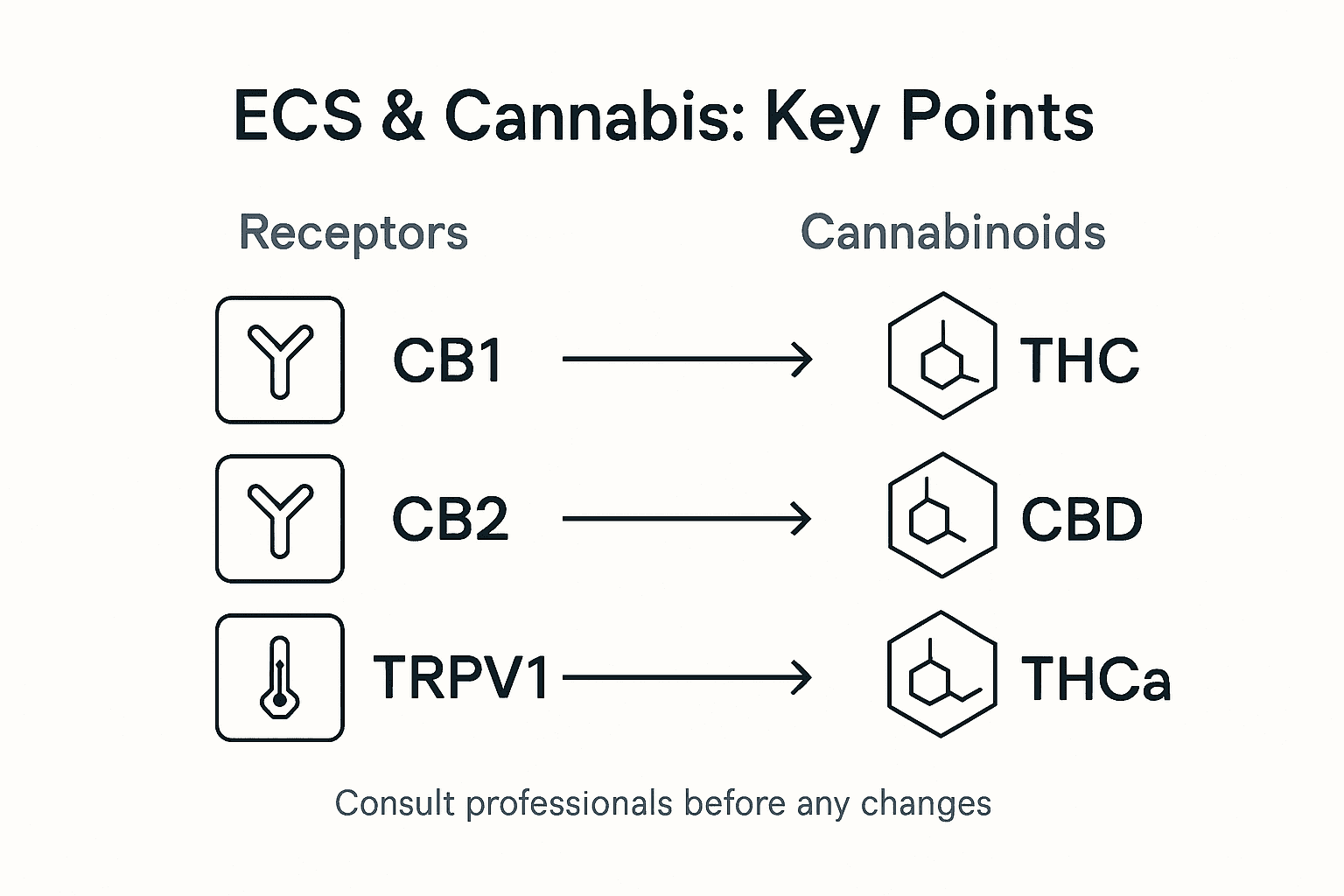
Two primary cannabinoid receptors, CB1 and CB2, play pivotal roles in the ECS’s functionality. CB1 receptors predominantly reside in the brain and central nervous system, influencing neural activities like motor coordination, learning, and memory. In contrast, CB2 receptors are primarily located within immune tissues, modulating inflammatory responses and immune system functions. These receptors act as intricate communication portals, receiving signals from endocannabinoids and translating them into specific cellular responses.
Endocannabinoids serve as the body’s internally produced molecular messengers, with two primary molecules identified: anandamide and 2-arachidonoylglycerol (2-AG). These lipid-based neurotransmitters interact dynamically with CB1 and CB2 receptors, helping regulate critical physiological processes such as appetite, pain sensation, immune response, and emotional states. Research from health authorities indicates the ECS plays a crucial homeostatic role across vertebrate species, maintaining internal balance and responding to environmental changes.
Pro tip: Consider periodic blood tests or consulting a healthcare professional to understand how your individual endocannabinoid system might be functioning and potentially impacting your overall wellness.
Here’s a summary of key endocannabinoid system components and their main functions:
| Component | Location | Main Function |
|---|---|---|
| CB1 Receptors | Brain, central nervous system | Regulate motor skills, memory, learning |
| CB2 Receptors | Immune tissues | Control immune response, inflammation |
| Anandamide | Throughout body | Modulate appetite and mood |
| 2-AG | Throughout body | Influence pain sensation, immunity |
How Cannabis Compounds Interact With the ECS
Cannabis compounds engage with the endocannabinoid system through sophisticated molecular interactions that demonstrate remarkable complexity. Scientific research reveals that primary cannabinoids like tetrahydrocannabinol (THC) and cannabidiol (CBD) interact uniquely with cannabinoid receptors, producing diverse physiological responses. THC predominantly binds to CB1 receptors in the brain, creating psychoactive effects, while other cannabinoids modulate receptor activity with more nuanced mechanisms.

Cannabidiol (CBD) presents a particularly intriguing interaction mechanism. Clinical studies demonstrate that CBD does not directly bind to CB1 or CB2 receptors like THC. Instead, it indirectly influences the endocannabinoid system by modulating receptor activity and slowing the breakdown of endogenous cannabinoids like anandamide. This unique approach allows CBD to support internal balance and potentially mitigate stress responses without producing intoxicating effects.
The interaction between cannabis compounds and the endocannabinoid system involves complex signaling pathways that extend beyond simple receptor binding. Different cannabinoids can activate or inhibit various receptor sites, influencing neurotransmitter release, immune responses, and overall physiological homeostasis. Some cannabinoids work synergistically, creating what researchers call the “entourage effect,” where multiple compounds enhance each other’s therapeutic potential.
Pro tip: When exploring cannabis products, prioritize understanding the specific cannabinoid profile and potential interactions with your individual endocannabinoid system by consulting with healthcare professionals.
THCa, CBD, and Other Key Cannabinoids
Groundbreaking research on cannabinoids reveals a complex world of over 113 unique compounds found within the Cannabis plant, each with distinctive properties and potential therapeutic applications. While tetrahydrocannabinol (THC) and cannabidiol (CBD) remain the most well-known, the diversity of cannabinoids extends far beyond these two primary molecules. THC and CBD represent just the tip of the iceberg in understanding the intricate chemical landscape of cannabis compounds.
THCa, the acidic precursor to THC, represents a particularly fascinating molecular form. Unlike activated THC, THCa does not produce psychoactive effects when consumed in its raw state. Cannabinoids like CBC (cannabichromene) have emerged as promising compounds with potential anti-inflammatory and analgesic properties. Scientific investigations suggest that these compounds evolved through sophisticated genetic mechanisms, with ancestral enzymes demonstrating remarkable multi-functional capabilities that enable diverse cannabinoid production.
The therapeutic potential of minor cannabinoids continues to intrigue researchers and medical professionals. Each cannabinoid interacts with the endocannabinoid system uniquely, producing nuanced physiological responses. Some compounds may work synergistically, creating what experts call the “entourage effect,” where multiple cannabinoids enhance each other’s therapeutic potential. This complex interaction suggests that whole-plant extracts might offer more comprehensive benefits compared to isolated cannabinoid compounds.
Pro tip: Consult with healthcare professionals and review third-party lab testing results to understand the specific cannabinoid profile of any cannabis product you are considering.
The table below compares major cannabinoids found in cannabis and their notable effects:
| Cannabinoid | Psychoactive? | Key Potential Benefit | Unique Property |
|---|---|---|---|
| THC | Yes | May relieve pain | Binds CB1, produces ‘high’ |
| CBD | No | May reduce anxiety | Indirect ECS modulation, non-intoxicating |
| THCa | No | Possible anti-inflammatory | Only converts to THC when heated |
| CBC | No | May aid inflammation | Less researched, non-intoxicating |
Health Impacts and Potential Benefits
Cannabis research reveals a complex landscape of potential therapeutic applications and health considerations. The endocannabinoid system’s interaction with cannabis compounds demonstrates promising potential for addressing various medical conditions while simultaneously presenting nuanced health risks. Some FDA-approved cannabis-derived medications already exist for treating specific conditions like seizures and chemotherapy-induced nausea, signaling a growing recognition of cannabis’s medical potential.
The health impacts of cannabis are multifaceted and deeply individualized. Comprehensive studies from public health organizations indicate that cannabis consumption can influence multiple bodily systems, with outcomes significantly dependent on factors like consumption frequency, potency, age of first use, and individual physiological characteristics. Potential benefits include symptom management for chronic pain, potential anxiety reduction, and neurological condition support, while risks encompass cognitive impairment, increased mental health vulnerability, and potential cardiovascular complications.
Cannabis compounds demonstrate remarkable complexity in their interaction with human physiology. Different cannabinoids like CBD and THC can produce varying effects, with some potentially offering neuroprotective, anti-inflammatory, and mood-stabilizing properties. The emerging scientific consensus suggests that responsible, informed cannabis use—under professional medical guidance—might provide therapeutic value for specific health conditions while minimizing potential adverse effects.
Pro tip: Always consult healthcare professionals and undergo comprehensive medical evaluation before incorporating cannabis products into your wellness routine, ensuring personalized and safe consumption.
Risks, Safety, and Legal Considerations
Cannabis consumption presents a complex landscape of potential health considerations that demand careful, informed approach. Academic research highlighting safety concerns emphasizes the critical need for comprehensive understanding of potential physiological and psychological impacts. The interaction between cannabis compounds and individual human biology can produce varied responses, ranging from therapeutic benefits to potential health risks that require nuanced evaluation.
Psychoactive effects represent a significant area of medical scrutiny. Cannabis can influence mood, cognitive function, and cardiovascular systems, with potential implications for mental health and neurological processing. Specific risks include potential mood alterations, cardiovascular strain, and complex drug interactions that may compromise individual wellness. Healthcare professionals increasingly recommend thorough medical consultation and personalized risk assessment before cannabis consumption.
Legal considerations surrounding cannabis remain intricate and jurisdiction-dependent. While some regions have liberalized cannabis regulations, federal and state laws continue to evolve, creating a complex regulatory environment. Consumers must remain informed about local legal frameworks, understanding that cannabis possession, consumption, and distribution laws can vary dramatically between different geographic locations. Personal responsibility, adherence to local regulations, and maintaining awareness of potential health implications are crucial.
Pro tip: Consult with healthcare professionals, review current local legal regulations, and conduct comprehensive personal health assessments before incorporating cannabis into your wellness routine.
Discover Balance Through the Power of the Endocannabinoid System
Understanding how the endocannabinoid system influences your wellness can open new doors to natural relief and relaxation. If you are seeking products that align with your body’s internal communication system and want to explore how cannabinoids like THCa and CBD interact to support balance consider exploring our curated collections. California Blendz offers premium hemp-derived flowers and blends that are organically grown and lab-tested to ensure purity and potency.

Take control of your well-being today by choosing products designed with the complexity of your endocannabinoid system in mind. Browse The THCa Prestige Vault – California Blendz for exceptional THCa flower options. Or explore curated selections in The Founder’s Collection – California Blendz for balanced cannabinoid profiles. Start your journey toward informed natural wellness at California Blendz and experience carefully crafted cannabis products that meet your unique needs.
Frequently Asked Questions
What is the endocannabinoid system and why is it important?
The endocannabinoid system (ECS) is a complex biological network that helps maintain physiological balance across multiple bodily systems. It consists of endocannabinoids, cannabinoid receptors (CB1 and CB2), and metabolic enzymes, playing a crucial role in regulating processes such as appetite, pain sensation, and immune response.
How do cannabis compounds like THC and CBD interact with the endocannabinoid system?
THC primarily binds to CB1 receptors in the brain, producing psychoactive effects. In contrast, CBD does not bind directly to these receptors but modulates their activity, potentially providing therapeutic benefits without intoxication. Together, they impact various physiological responses in the body.
What are the potential health benefits of cannabis derived from the endocannabinoid system?
Research suggests that cannabis compounds may alleviate chronic pain, reduce anxiety, and support neurological health. They interact with the ECS to promote homeostasis while potentially minimizing issues related to mood, inflammation, and pain.
What are the risks associated with cannabis consumption and the endocannabinoid system?
Cannabis can have varying effects on mood, cognitive function, and cardiovascular systems. Risks may include cognitive impairment, increased mental health vulnerability, and potential cardiovascular complications. It’s essential to consult a healthcare professional before use to understand the individual risks and benefits.
Recommended
- Unlocking the Secrets of Endocannabinoids: How They Impact Health and – California Blendz
- The CB1 Receptor: Unlocking the Secrets of the Endocannabinoid System – California Blendz
- The Role of ECS in the Brain: Understanding the Endocannabinoid System – California Blendz
- The Synergistic Relationship Between Anandamide and CBD: Exploring the – California Blendz


